
Students enter school with an implicate identity embedded in personal ‘ways of knowing’ and sense-making that exist before and beyond normative categorical academic identifications. Students with cognitive capacities that are non-discursive, supra-rational, or otherwise outside conventional methods of assessment are either not academically recognized or intentionally disregarded by schools as academically nonviable. Schools impose upon learners normative cognitive verbal-based and numerical grids that filter out learners’ atypical insights or render them meaningless. Nonconventional learners are unquestionably intelligent, but they are also dissentient and distrustful of what is not derived from personal, lived experience. Learners with unique modes of knowing are often maligned as ‘non-academic’, shamed as ‘slow’, or marginalized in rigid program tracks designed for disabled or transgressive students. They are often ostracized by their cognitively conventional classmates and implicitly stigmatized by administrators and faculty who define the criteria and tightly control processes of academic success. In school environments of systemic exclusion, atypical leaners - including black, indigenous, Asian, and people of color (BIPOC) - often undergo micro-aggressions, isolation, invalidation, and diminished belonging. Violence is perpetrated upon learners.
In schools without programs and learning communities featuring inclusiveness of diverse ways of knowing and being, atypical learners are 'Othered' and suffer disfigurement of Being via restrictive educational configurations. Students demonstrating anomalous learning abilities, however strong, are implicitly and explicitly targeted as academic ‘outlaws’, held back behind the bars of ‘no-entry’ into academic grace and ‘no-escape’ from subordinate academic status. Learning in most schools is, therefore, a zero/sum game. That is, typical math and word-based learners ‘win’ and atypical, tacit learners ‘lose’. The epistemic need of non-discursive, intuitive or bodily-kinesthetic learners to feel they are a part of and contributor to cooperative classroom inquiry is squashed and their epistemic self-confidence lost. Atypical, perspicacious learners encounter stiff and ongoing pressure to ‘disappear’ themselves within a schools’ surveillance state of conventional learning. They are constantly adjusted to conform to an abstract normed image of a learner. Non-conventional learners have little choice but to numb, maim, or cut away a part of their implicate identity by remaining to be a student in schools that define academic capacity strictly as numerical and verbal, turning away from the inner voices that insistently shout, "This is dangerous!"
Few educators are willing to discuss this problem of violent outcomes. As an irreducible matter of professional ethics, schools must overcome their destructive legacy of creating adverse experiences (ACEs) that result from ‘splitting’ objective vs. subjective, rational vs. non-rational, book learning vs. project-based team learning, etc. Exclusionary control over non-normative learning isolate creativity and epistemic and cognitive difference beyond the margins of curricula and, thereby, forsake human wholeness. As such, a body-mind catastrophe looms over atypical learners - students and faculty alike. My Project Human Completion offers a holistic and integral approach to cultivating an all-sided learner through school curricula that fosters rational, tacit, informal, and distributed understandings (e.g., intuition, revelations, epiphanies, and dreams), as found in art, myths, folklore, and depth psychology indivisibly joined to the empirical knowledge and practices of the techno-sciences (i.e., STEM). For the sake of our learners as engaged citizens, we must expand our schools' narrow one-sided understanding of learning, knowledge, intelligence, and Being as exclusively objective, rational, and measurable. Along that path, our schools can heal the cognitive and ontological disturbance they currently engender.
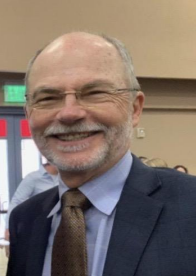
Peter M. Rojcewicz, PhD is a retired higher education administrator and professor, noetic learning theorist, folklorist, and poet, as well as an executive leadership consultant. He has researched international stories, beliefs, and manifestations of the mythic imagination. Trained in folklore and folk life, English and American literature, and depth psychology, he is an authority on archetypal images and symbols. He taught the liberal arts and humanities, fairy tales, myths, comparative religions, and folk belief systems at several universities, as well as at the C.G. Jung Foundation for Analytical Psychology, New York.
Peter is former Provost , Vice President of Academic Affairs, and Accreditation Liaison Officer at Pacifica Graduate Institute, Santa Barbara, CA. He served as Chief Academic Officer and Tenured Professor of Liberal Arts at University of the West, Vice President of Academic Affairs and Dean of Faculty at Antioch University Seattle, and Dean of the School of Holistic Studies, John F. Kennedy University, as well as Professor and Chair of the Department of Liberal Arts at The Juilliard School. He received his doctoral degree in Folklore & Folk Life from the University of Pennsylvania, where he earned the Dean’s Award for Distinguished Teaching.
His published articles on folk and popular beliefs and related anomalous cognitive experiences are based on field study and interviews with experiencers of high strangeness and the deep weird. His folklore scholarship on the enigmatic Men in Black phenomenon and extraordinary encounters with non-human entities is highly sighted in the humanistic-social science literature. He was invited to Dharamsala, India by the Fourteenth Dalai Lama to present his research on noetic folk wisdom .
A frequent speaker on arts education, Peter has lectured on poetic extra-rational knowing and noetic literacy at the Royal Society of Arts, London, Cornish College of the Arts, Seattle, and The Juilliard School, New York. He conducted teacher-training classes at the Nashville Center for the Arts. A recipient of the Worcester Poetry Prize and the Allen Ginsberg Prize: Honorable Mention, his poetry has appeared in literary journals and magazines, including Knock, Rattapallax, Tendril, Worcester Review, Paterson Literary Review, The Penn Review, and Gargoyle.