
Shadow Politics, August 23, 2026



Shadow Politics with Senator Michael D. Brown
The Warrior Behind the Spotlight: Hayden Panettiere's Legacy of Activism
A Tribute to Hayden Panettiere, Actress and Advocate with special guests Senator Paul Eric Strauss & Jeff Pantukhoff
Senator Paul Strauss, United States Senator, DC Shadow Congressional Delegation
https://x.com/SenPaulStrauss
https://www.instagram.com/senpaulstrauss/
https://www.gfoa.org/bio/paul-strauss
Jeff Pantukhoff is the founder, president, and driving force behind The Whaleman Foundation, a 501(c)(3) non-profit based in Lahaina, Hawaii, dedicated to the preservation and protection of cetaceans (whales, dolphins, and porpoises) and their ocean habitats. Pantukhoff is an award-winning underwater photographer, filmmaker, and marine conservationist.
https://whaleman.org/
Summary
Remembering the Activist Beyond the Actress
The episode is framed as a memorial conversation about Hayden Panettiere, with host Michael D. Brown emphasizing that her public legacy extended beyond acting. Brown, Liberty Jones, Senator Paul Eric Strauss, and Jeff Pantukhoff focus on her willingness to use celebrity visibility for causes she cared about. They describe her as unusually committed at a young age, particularly to marine-mammal protection, D.C. voting rights, and statehood. Throughout the discussion, the guests repeatedly distinguish between celebrity endorsement as a publicity gesture and the sustained, hands-on activism they say Panettiere practiced. The tone is personal and grieving, with all four speakers presenting memories intended to show the person they believed existed behind the public image.
From Whales to Washington Statehood
Senator Strauss recounts meeting Panettiere during the 2008 presidential campaign while D.C. superdelegates were preparing to meet Barack Obama. According to Strauss, she initially pressed him about marine-mammal legislation, and he answered that D.C.'s lack of full congressional representation prevented him from voting on such bills. He says that comparison between whales without a vote and District residents without full representation immediately drew her into the statehood movement. Strauss and Brown recall that she soon appeared in a D.C. statehood PSA and became the first celebrity face of what developed into the 51 Stars campaign. They portray her involvement as important not only for publicity but also for helping the movement understand how celebrity platforms could be used to reach wider audiences and younger voters.
Direct Action for Whales and Dolphins
Jeff Pantukhoff describes meeting Panettiere when she was fifteen on the set of Shanghai Kiss and recruiting her for the Save the Whales Again campaign. He says she traveled with him to see whales and other marine mammals and later joined a protest in Taiji, Japan, where she and others paddled into the water during a dolphin hunt. Pantukhoff recounts confrontations with fishermen, worldwide media coverage, and what he describes as an arrest warrant that was later resolved after meetings with diplomats. He characterizes her as a “true warrior” who was willing to place herself physically in difficult situations rather than serve only as a spokesperson. The discussion presents this direct action as the beginning of a long environmental partnership.
Voting, Youth Participation, and Political Agency
Liberty Jones asks what Panettiere's activism says about the relationship among courage, democratic participation, and advocacy. Strauss answers that Panettiere learned quickly that voting and political engagement were tools for advancing causes that young people already cared about. He says she used her first presidential election, youth-vote activity, and her public platform to connect political participation with environmental and social causes. Pantukhoff adds that she was inspired by other celebrities who used their visibility for humanitarian or environmental work and wanted to do the same. Together, the speakers portray her activism as an example of turning personal conviction into public agency rather than treating politics as separate from other forms of advocacy.
From Protest to Diplomacy and International Programs
Pantukhoff says Panettiere's work evolved from highly visible direct action toward diplomacy as well. He describes meetings with whaling nations' ambassadors, later discussions in Taiji, and work involving the International Whaling Commission and the Obama administration. He credits her with helping promote an international whale-disentanglement initiative and with lending visibility to efforts concerning fin whales and fishing-gear entanglement. His larger lesson is that activism requires judgment about when to confront and when to negotiate. The program therefore presents Panettiere's environmental work not as a single protest moment, but as a combination of media advocacy, direct action, diplomacy, filmmaking, and institutional engagement.
A Legacy of Courage and Continued Action
The final portion becomes increasingly personal as Brown, Jones, and Pantukhoff reflect on Panettiere's fame, the pressure she faced from childhood, and the warmth they say she showed in private interactions. Brown reads a PETA statement praising her marine-mammal advocacy and discusses a final campaign image centered on the confinement of whales and dolphins. Pantukhoff recalls her saying that an environmental award meant more to her than an acting award, while Jones urges listeners to “alchemize” the story by continuing the work she represented. Brown closes by describing her as a warrior with courage and by dedicating the program's final song to her memory. The episode's final message is that the speakers believe the best tribute is not only remembrance, but continued participation in the causes she championed.
Headlined Show, Shadow Politics August 23, 2026
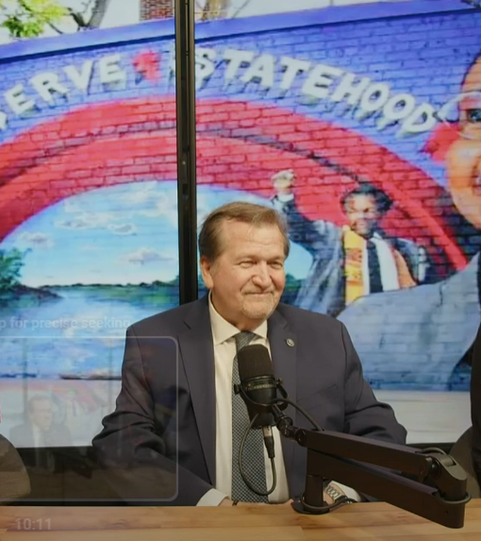
This Sunday we will be interviewing representatives from organizations where Hayden Panettiere devoted her time, celebrity and talent to making our world a better place. Hayden was more than an actor, she was an activist with a big heart, a humanitarian and philanthropist. She became an amazing spokesperson for People for the ethical treatment of Animals (PETA), the Whaleman Foundation, and the DC statehood movement. She cared deeply about saving the planet and all the creatures that inhabit it. Come find out who the real Hayden was. Yes, she was an accomplished actor, but she was so much more. Come find out who the real Hayden Panettiere was as we talk to those who knew her, worked with her and benefitted from her great generosity.

Shadow Politics


Shadow Politics is a grass roots talk show giving a voice to the voiceless. For more than 200 years the people of the Nation's Capital have ironically been excluded from the national political conversation. With no voting member of either house of Congress, Washingtonians have lacked the representation they need to be equal and to have their voices heard. Shadow Politics will provide a platform for them, as well as the millions of others nationwide who feel politically disenfranchised and disconnected, to be included in a national dialog.
We need to start a new conversation in America, one that is more inclusive and diverse and one that will lead our great nation forward to meet the challenges of the 21st century. At Shadow Politics, we hope to get this conversation started by bringing Americans together to talk about issues important to them. We look forward to having you be part of the discussion so call in and join the conversation. America is calling and we're listening… Shadow Politics is about America hearing what you have to say. It's your chance to talk to an elected official who has spent more than 30 years in Washington politics. We believe that if we start a dialog and others add their voices, we will create a chorus. Even if those other politicians in Washington don't hear you — Senator Brown will. He's on a mission to listen to what America has to say and use it to start a productive dialog to make our democracy stronger and more inclusive. If we are all part of the solution, we can solve any problem.
Speaker Identification
Speaker 1 - Prerecorded Theme / Announcer Voice
The program opens and closes with a short Shadow Politics theme or promotional segment. The individual voice is not identified in the transcript.
Speaker 2 - Michael D. Brown, Host
The opening identifies Michael D. Brown as the host and a United States Senator Emeritus from the District of Columbia. He conducts most of the interview, introduces the guests, offers personal recollections, reads a PETA statement, and closes the program.
Speaker 3 - Liberty Jones, Co-Host
Michael D. Brown explicitly introduces Liberty Jones as his co-host. She asks both guests questions about activism, democratic participation, courage, marine-mammal protection, and Hayden Panettiere's legacy.
Speaker 4 - Senator Paul Eric Strauss, Guest
The attached filename identifies Senator Paul Eric Strauss, and the transcript repeatedly addresses him as Senator Strauss. He discusses meeting Hayden Panettiere during the 2008 presidential campaign and her subsequent advocacy for District of Columbia statehood and voting rights.
Speaker 5 - Jeff Pantukhoff, Guest
The attached filename identifies Jeff Pantukhoff. The transcript identifies him as being with the Whaleman Foundation and describes his long collaboration with Hayden Panettiere on whale and dolphin advocacy, direct action, diplomacy, films, and International Whaling Commission efforts.
Speaker 1 - Prerecorded Theme / Announcer Voice: Democracy is a chorus, and it starts with you. Shadow Politics.
Let the midnight speak for the overlooked, the unheard, the strong and the weak. Senator Michael D. Brown holding open the door. Liberty Jones saying, “We're silent no more.” From the District streets to the nation's soul, [unclear lyric], makes the country whole.
Shadow Politics. Turn the dark into sound. When America listens, justice comes around.
Speaker 2 - Michael D. Brown: Hi, good evening, and welcome to Shadow Politics, an hour-long grassroots talk show which is on a mission to Make America Think Again. I'm your host, Michael D. Brown, United States Senator Emeritus from the District of Columbia, and along with my amazing co-host, Liberty Jones, we're interviewing the people who are making it happen - not always in front of the camera, but always ahead of the curve.
We're not going to tell you how to feel or who to vote for. We're just putting the information out there, because it's what goes on in the shadows that really makes the world go round. So come listen and learn, because the vote is a terrible thing to waste. And now, more than ever, we need everyone listening, learning, and engaged if we're going to Make America Think Again.
If you've got a question, call in at 888-627-6008.
Tonight we have a couple of special guests with us because we're going to talk about the advocacy work of Hayden Panettiere. Everybody's talking about the tragedy of this young woman, and it is a tragedy, passing away at [unclear phrase]. They're going over all of her acting credits, and we know what they are. She was a fine actress, but she was also a woman with a really great heart. She cared about people and cared about animals.
Tonight we have two special guests who worked closely with her and are going to tell us all about that.
Let me introduce first Senator Paul Eric Strauss. He's the United States Senator from the District of Columbia. He's been the United States Senator for the District of Columbia for, I don't know, like a hundred years. I can't remember how long it's been, Paul, but it's been at least twenty-five years, and we're thankful for his service. He's going to tell us about Hayden's activism and the statehood movement.
We also have Jeff Pantukhoff from the Whaleman Foundation. She was very, very passionate about saving whales and porpoises, these amazing animals, and he's going to tell us about her activism with his group.
So let's start with you, Senator Strauss. Thanks for being with us. Tell us how you met Hayden and how she got involved.
Speaker 4 - Senator Paul Eric Strauss: Well, you were there as well.
Speaker 2 - Michael D. Brown: I know, but you're the one that got her involved.
Speaker 4 - Senator Paul Eric Strauss: It was during the 2008 presidential campaign, and it was one of those rare times where you and I actually get to vote, because the Democratic Party recognizes us as automatic, or super, delegates. We had arranged a meeting with Senator Barack Obama, who was in the process of courting us, trying to get D.C. superdelegates to vote for him instead of Hillary Clinton.
And in the room was this bright, young, vivacious person who was pretty famous at the time, although I have to be honest: I didn't really know who she was. I think it was one of our younger interns who was super excited. When they introduced us all to each other and Hayden heard that I was a senator - that we were senators - she immediately began to talk about voting for this bill. It was some kind of Marine Mammal Protection Act, I guess. She started talking about the whales and how we had to vote for this bill.
I think you and I were just trying to focus because we didn't have a lot of time with Senator Obama and we wanted to be organized. She kept being very, very insistent, and I actually kind of brushed her off initially. I think I said something like, “Look, kid, I'm sure you have a lot of important things to say about fish, but I really need to focus on this right now. Maybe we could talk tomorrow.”
Of course that set her off even more, because she explained, “They're not fish. They're mammals. They produce milk. They have babies,” which, let's face it, is nothing that either one of us could do.
We agreed to meet the next day, and she laid out a case very professionally about the legislation. I explained, “Look, it's not that I wouldn't want to vote for this bill. I can't vote for any bill.”
She used words something like, “But we have to defend the whales. The whales can't vote.”
I said, “If you're talking about voteless mammals, we have 700,000 of them in D.C., and none of them are represented in Congress. But if we ever could make D.C. a state, then I could assure you there would be two senators who would be voting to protect the whales, the environment, and all of the causes that you probably believe in.”
She got it. From that moment on, she was part of the D.C. statehood movement and committed to helping us out. Although I know the whales remained her first love, she became an effective and powerful advocate for D.C. statehood, and we were lucky to have her on our side.
Speaker 2 - Michael D. Brown: And it's my recollection, Paul, that she made a commercial for us almost immediately. I remember the two of you doing a commercial several days after you met her. Isn't that true, even before we took it to the convention?
Speaker 4 - Senator Paul Eric Strauss: Absolutely. It was actually your slogan, the “Think Inside the Box” campaign, that you helped us come up with. She did what she did best, which was articulate a message in front of a camera in a way we hadn't really thought about before.
It was really that program that ended up becoming the 51 Stars campaign. We were recruiting all kinds of so-called Hollywood stars to help us get 51 stars on the American flag, but Hayden Panettiere was the very first one to step in front of a camera and advocate for D.C. statehood.
That spot became all over the place. It went viral before we really used that expression, and it made a big difference in our campaign to begin raising money, because at the time the check-off fund was the only way the delegation was getting funded. It wasn't like today. So that was a really important effort.
Speaker 2 - Michael D. Brown: Yeah, and - go ahead, Paul. I'm sorry. I think that was Jeff starting to weigh in.
Speaker 5 - Jeff Pantukhoff: Let me just add something to what Paul said, and that is that she was eighteen while all this was going on. She was eighteen years old.
Speaker 2 - Michael D. Brown: Paul and I have both raised teenage girls, so I don't know how you feel about it, Senator Strauss, but I was amazed that she got so involved so quickly. She was an amazing advocate, was she not?
Speaker 4 - Senator Paul Eric Strauss: She absolutely was, and she was really committed. It wasn't just advocacy for lip service. When she adopted a cause, she would do whatever it took, and I was impressed.
She wasn't just some kind of celebrity spokesperson for the whale campaign. This was someone - and Jeff can elaborate on it - who was in the water, putting herself in front of these whaling boats in Japan. When I heard these stories and how committed she was, you know, we talk about talking the talk and walking the walk. This was the first time I had an activist who would “swim the swim” and really go that extra mile. I think there was even an arrest warrant out for her.
Speaker 5 - Jeff Pantukhoff: Yeah, by the Japanese government. You're not going to believe the three days we spent in D.C. before you met her on that day when we all got to meet with Senator Obama.
To give the listening audience a little bit of history, Hayden was eighteen when we were in D.C. for that trip. I met her when she was just fifteen, working on the set of a film called Shanghai Kiss. I was working in the camera department, and Hayden was the female co-star of that feature film.
I was just taken aback by, at the age of fifteen, her professionalism, the way she interacted with the other actors and all the crew people, including myself on set, because I was working right next to the director.
At that time I was looking for somebody, a bright new face, to run the Save the Whales Again campaign. I was looking for a celebrity who would be very passionate and could be the face of this big international campaign we were going to do. I actually pitched it to Hayden and her mom, because her mom had to be with her on set all the time because she was a minor. They immediately agreed, and so we started on this amazing mission together in 2006.
I took her to see friendly gray whales in Baja in 2007. I took her to see orcas and belugas in Alaska that same year. Then in November I asked her to go with me to Taiji, Japan, where these dolphin hunters hunt dolphins.
We were just going to do a little friendly protest there. But, long story short, they decided to do a hunt the day after we did our friendly protest. We went back there, and Hayden and six others, including [unintelligible name or names] from Australia, paddled out into blood-filled waters and confronted the Japanese fishermen.
Hayden got close enough that they were hitting her with their poles. They put a propeller very close to her. That story blew up. She was on Access Hollywood. We did a bunch of stuff with Entertainment Tonight. It was a big, big deal.
From the very beginning, she was like a true warrior and had this passion to really use her voice for animals that didn't have a voice. A lot of that also taught her that we had to do a lot of advocacy.
We left Japan, and we had an arrest warrant out for us. Both Hayden and I had an arrest warrant out. We asked to meet with the ambassadors of Iceland, Japan, and Norway - the three whaling countries - in Washington, D.C., in January of 2008. All three agreed to meet with us.
We first went to the Norwegian Embassy, and that went okay. It was no big deal. We went to the Icelandic Embassy. That man was very charming, but he tried to get Hayden to eat whale meat. Of course she said, “I don't want anything to do with that.”
Then we went to Japan last because we were afraid we might get arrested, since we still had the arrest warrant. But I have to say, the ambassador of Japan was very enthralled with Hayden and actually told her he thought she was very courageous for the act she did. He said the country of Japan didn't hold it against her and that there were no more arrest warrants. He was actually very nice to her.
We left there, and on the way out we heard about this Kennedy event happening at American University. She looked at me and said, “Barack Obama's going to be at this Kennedy thing at American University. I want to go.”
I'm like, “Well, I don't know that we're going to be able to get in there.”
She goes, “I don't care. Let's try.”
To make a long story short, she charmed her way through the first layer of security, which was the Metropolitan Police. Then came the Secret Service. They immediately recognized who she was. Then she got to meet with Reggie, who was one of Obama's main people, and he escorted her inside. Senator Brown and Senator Strauss were both in that same waiting room, and we were there to also meet with then-Senator Barack Obama.
Just like you guys are saying, she immediately glommed on to your message about what we needed to do for D.C. voting rights and statehood. It's a shame that still hasn't happened. But she was a force to be reckoned with. She really was.
I'm so sorry we don't have her here today, but I love the fact that we're able to share with the listening audience just who she was and how passionate she was about the things she really wanted to do.
Speaker 2 - Michael D. Brown: Yeah, she was an amazing young woman, and she really did put her passion into everything she did.
Now, Liberty Jones, my co-host - you're a younger person, Liberty. I hate to say this because it hurts every time I say it. Liberty is fifty years younger than I am. Liberty, what do you have to say? Do you have a question for these guys?
Speaker 3 - Liberty Jones: Yes. Truly, as a young person, it's incredibly inspirational to see somebody like this. I think what makes Hayden a true warrior is not simply that she fought for all of these causes, but that she truly understood how her voice itself is a form of agency.
I believe that once you have the capacity to speak for something that you believe is wrong, that's a choice to be made, and that's something that's very difficult. Those of us who are active in different types of movements know how hard it is to stand in the face of repression.
Personally, I see that as a huge thread connecting her activism: taking your platform and being able to speak on it is something truly inspirational.
What do you think that tells us about the relationship - for both of you and the different movements at hand? We have statehood, and we have the fight against abuse of whales and other marine mammals. What do you think that tells us about the relationship among democratic participation, activism, and courage? What is truly most inspirational to you guys about what you saw through Hayden's participation?
Speaker 4 - Senator Paul Eric Strauss: She understood the importance that voting was going to play for all of these causes. It wasn't just her willingness to get in the water and engage in protecting, literally, these mammals.
Whether you were a voteless mammal that lives in the water or a voteless mammal that lives in the District of Columbia, she was passionate about both.
She began as a young person voting for the first time in that election, really using her message to engage other young people. In fact, she had gone back to American University, where it all started, with a youth-vote campaign. She was willing to use her platform by way of example to show that engaging in the political process - which may not have seemed as exciting at the time, may not necessarily have seemed cool or like something young people were passionate about - was the way to advance what made you passionate.
She understood that the political process wasn't something young people could ignore. They had to get involved. She really helped a whole generation of young activists make that connection.
Speaker 2 - Michael D. Brown: That's a very important point, Senator Strauss, that I really hadn't even thought of. She had never even voted before. She was eighteen. This was her first election. I'm just astounded by all that.
Jeff, do you want to handle that question? What do you think her activism meant in general to your cause?
Speaker 5 - Jeff Pantukhoff: What's really amazing is that Hayden shared with me early on that one of the reasons she responded to what I showed her, to get her to come to the campaign, was because Pierce Brosnan, at the height of his Bond time, was my first international spokesperson. I was able to show her some of the PSAs and things that he did.
She looked at me and said, “I had no idea Pierce did this stuff.” Then she said, “My role model is Angelina Jolie, and I know she does a lot of this really amazing stuff. I want to be like them.”
That's when she looked at her mom and said, “Mom, can I do this? I really want to do this.” Her mom said, “One hundred percent.” And she had that spark.
She was a very special person. Hayden had a voice not only for animals that didn't have a voice - she spoke for them - she spoke for lots of great causes. Voting is super important, and she caught on to that at an early age.
She also wasn't afraid to talk about her own frailties and things that were going on around her. Hardly any celebrities have the courage to do that, and she was one of the most courageous people, flat out, in my life that I've ever met or ever known.
I just can't say enough about her. I want more people to know who she really was, because she was amazing.
Speaker 2 - Michael D. Brown: I feel similarly about her. Paul, you can back me up on this. She came to Denver with us to the convention and spoke at a lunch. I want you to know that when she stood up there at the podium, I don't think anybody in the audience had any idea who she was. Everybody in the room was over forty years old. Heroes was a big thing on TV, right? Nobody knew.
But she was so passionate about what she said about D.C. statehood that at the end of the speech everybody just raved about her. They were all drawn into her narrative. I was lucky enough to bring [unintelligible name] with me, and he even said to me how impressed he was with her. He had no idea who she was, but she was that passionate. She was such a great spokesperson.
Speaker 4 - Senator Paul Eric Strauss: Yeah, I was in the room that day, and she was super powerful that day.
Speaker 5 - Jeff Pantukhoff: We did also - Senator Strauss set it up so that her whole family could come to the inauguration for President Obama. That inauguration day is still probably one of the most special days I'll ever experience in my life, just because of the electricity that was flowing through D.C. at the time.
Hayden came up to me and basically said, “It's just so incredible to be here, and I'm so thankful that we're here and to see him being sworn in.”
She's an entertainer. She's been out in front. She's also a singer. She's a very good singer and has done concerts and all of that. She knows what an audience feels like when it's electric, and that place was off the charts.
She saw how her activism could work. In Obama's first term, we had been lobbying him to get Iceland put under the Pelly Amendment because they were illegally killing fin whales in Iceland. Hayden took that cause on. We had meetings in the West Wing, and she was the main spokesperson for that. He agreed to do it, and she did all the press for that.
That was one of my favorite things in D.C., besides the statehood and voting rights, because she did something on an international scale that people had been trying to do for over twenty years. She did that in 2011. I wouldn't have been able to do that without her, and we got it done.
It just shows, if you have somebody like her who's as tenacious as she was, you have a lethal weapon in the environmental movement, and also in statehood and other things. We were lucky to have her.
Speaker 2 - Michael D. Brown: She was just the loveliest person. Senator Strauss, I think you invited us to come down and visit with her on a boat, and I was able to bring my children, who were teenagers. They were amazed at meeting her, and she was just gracious and kind. Me too, I can't say enough things about her.
Well, Senator Strauss, I think you had another engagement. Is there something you want to say before you leave? We thank God you got her involved in our movement.
Speaker 4 - Senator Paul Eric Strauss: Her activism continued. It wasn't just a one-off or a sudden appearance. She did the PSA. Then she came with us in Chicago, and that celebrity luncheon we did at the convention really was the first one. It taught us how to be better activists within the movement ourselves.
Going forward, we continued to integrate celebrities who wanted to use their platform for social justice. We continued to expand into the field of international diplomacy. Even later in her journey, she became a passionate advocate for protecting the people of Ukraine who were being victimized by Putin in that horrible war.
The PETA ad that was just released posthumously shows that, whatever she was doing in her career, her commitment to justice and activism was important. It really helped guide us.
We had just a handful of people - three or four - in 2008. At the last celebrity statehood luncheon we did in Chicago, we had close to twenty. She not only helped kick us off, but she really taught us how to grow this movement.
And, of course, D.C. has a holiday. September 21 is going to be Hayden Panettiere Day in Washington, D.C. She loved the people of D.C., and the people of D.C. loved her back. With this tragic news, the outpouring of love and genuine feeling for her that the people of Washington had - she may not have grown up here, but she made this city her own.
There's a special connection the people of Washington, D.C., will always have with her. When we do become a state, she will be one of the souls we will continue to thank and recognize as helping us get there on that journey.
Speaker 2 - Michael D. Brown: Oh, absolutely. When they write the story about statehood, she will definitely have a page in it. I think it's great that a holiday has been dedicated to her, and I hope we can figure out something to do to recognize her on September 21 going forward, because she was really an amazing person.
Thanks so much for being with us, Senator. I know you have to run.
Speaker 5 - Jeff Pantukhoff: I just want to say, real quick, before he drops off: Senator Strauss, I want to thank you from the bottom of my heart for all of the coordination and things that you did in conjunction with a lot of the work Hayden was able to do with you. [One sentence about related Washington work is unintelligible.] You were integral in helping us with our campaign there.
Speaker 4 - Senator Paul Eric Strauss: Well, anybody who met her came away learning a lot more about whales and dolphins, right? What's a fish and what's not a fish. You couldn't fail to be converted.
So whether we have to save the whales again and again and again, you can continue to count on me in doing whatever the Whaleman Foundation needs us to do, because she made clear how important it was that we're all on one planet and one ecosystem, and all of us have to take care of each other - whether you're on land, whether you're in the water, whether you're breathing air, whether you have gills. Distinctions that I now understand better. It all matters.
Thank you, and thank you for staying in. You may be out of office, but you're never out of the fight, Mike. That's one of the things we love about you, and that's why it's always a pleasure to come back on this show.
Look how far the movement has come. Yeah, these are some dark times. That was an optimistic year, 2008, the beginning of Obama's first term, and an election that showed that we could really change the future of our country. We need to change the direction of this nation again.
I'm going to try to continue to make Hayden and her fans proud and do the kind of work that made us all love her, admire her, and respect her.
Speaker 2 - Michael D. Brown: Again, Paul, thank you, and thank you for your service. You are the longest-serving elected official in the history of the District of Columbia. Is that not true?
Speaker 4 - Senator Paul Eric Strauss: Well, I think Delegate Norton still has the record.
Speaker 2 - Michael D. Brown: She beat you out, but you're still going and she's retired, so I'll save that statement for a later date. Okay, thanks again, Paul.
Jeff, let Liberty ask you a question. I know that you've got things you want to say.
Speaker 3 - Liberty Jones: Jeff, how has Hayden's involvement truly changed the course of your movement? What have been some of the most remarkable things that you will never forget - maybe specific moments or actions? I know you shared a couple, but what are some of the things that you truly think developed and changed the course of the defense of marine mammals against abuse?
Speaker 5 - Jeff Pantukhoff: I'll do a little chronological history here because it's pretty amazing. She also wrapped up her younger brother, Jansen, into our caper.
In 2007, I took both Hayden and Jansen and their parents to the International Whaling Commission meeting in Alaska. I set up a press conference, and the two main speakers were Hayden Panettiere and Jansen Panettiere. At that point Hayden was just sixteen and Jansen was nine. I want your audience to think about that.
She brought her little brother. He was actually quite good. I wrote a speech for him and he memorized it, and I was really proud of him. They were starting out in this activism movement, and we also had other celebrities there.
Esai Morales - if you look him up, he's done some amazing movies and was just recently in a huge blockbuster with Tom Cruise - spoke. Hayden looked at me like, “How am I going to follow that up?”
Luckily, my vice president, Kurt Soderling, who is also my right-hand man and one of the best cameramen in the world, to be honest with you, grabbed her and said, “Listen, he's not talking about personal experience. You've got personal experience. Go up there and just talk from your heart.”
She did, and she was amazing. To me, she made an impression on that whole meeting. So did Jansen, because nobody knew who they were, and all of a sudden there was all sorts of press about it. That was number one. She made an impression straight from there.
The number-one thing, the Taiji action we did with the dolphin hunters, generated a huge amount of international publicity. It actually hurt within Japan because when the movie The Cove came out, it was viewed there as very anti-Japanese in the way it was done. I don't have any problem with the way that movie was made; I'm not making any critiques. It really helped bring huge awareness to the international community. But in Japan, it actually kind of turned the tide toward more people becoming pro-whaling and pro-dolphin killing, sorry to say.
So we went back in 2010, and not too many people know about this, but we went back to Taiji for what was a very diplomatic meeting. We had meetings with the mayor. We met with the dolphin fishermen. We met with lots of councilmen and lots of people. We were really trying to be more diplomatic about what was going on. It cracked open a door for a while, and that was really important.
She saw the importance of that, a lot of it because of the work we all did with you guys in D.C., with Senator Brown and Senator Strauss, and also working with the Obama administration on Iceland. Diplomacy can be really good.
That's something I learned throughout, too. I'm a very active activist, but I also like to say I'm a diplomat. I think both go hand in hand. I think that's a message for all of us who work on these issues: there is a time for direct action, and there's also a time for diplomacy. Learning where to draw those lines is really, really important.
Lastly - I always like to do things in threes or fours, and I've lost count - she did an amazing film with me to bring awareness to dolphins and whales being killed in fishing gear. A lot of it is ghost fishing gear that's just floating around in the oceans, but also active fishing gear.
Most people don't know that over 400,000 dolphins and whales are being killed in entanglement every year. It's the number-one known killer of marine mammals.
We did a short film for the International Whaling Commission to set up an international whale disentanglement team. Because Hayden did that with me, we were able to have her come to the 2012 meeting of the IWC. They held a viewing of the film with her and me in the private commissioners' meeting, and they adopted that international whale disentanglement team.
What's really crazy is that it's over fifty countries now. More than 2,000 people have been trained, and even Iceland, Norway, and Japan, which all still kill whales, have actually freed entangled whales as well. To me, that was one of her crowning achievements.
Speaker 2 - Michael D. Brown: First, let me say: there's a time for diplomacy and there's a time for action. Could you please call the White House and let the president know that? It seems to have escaped him, the diplomacy part of it. It seems to have escaped him.
But before I let you go, Jeff, let me say a couple of things. I think we'll have this podcast posted the day after tomorrow, and you can send it out to anybody you want to send it to. I think it would be a lovely tribute to Hayden, and she would really love it, if people would make a contribution to the Whaleman Foundation in her name.
Jeff, tell us how we can do that.
Speaker 5 - Jeff Pantukhoff: You can go to Whaleman.org and just click on the donate button. Anything you guys want to do to help our cause would be great.
It's really been a tough time here for me. She was like family to me. So was her brother. I think the more we can do to strengthen her memory and for people to see her as a role model for her activism, that's really important at this time.
One of the things she said to me when she won the Genesis Award - and she's won a lot of environmental awards, but the Genesis Award is sort of like the Oscars of the environmental movement - she got their top award for what she did with the dolphin hunters and paddling out and all of that in Taiji, Japan.
She looked at me and said, “This means more to me than any acting award I could ever win.”
That's the essence of Hayden Panettiere.
Speaker 2 - Michael D. Brown: Thank you so much for sharing that with us. I hope people will contribute to your organization. Thank you for the work you do.
But I have a personal thank-you for you. Thank you for sharing this woman with our movement. You were so generous with us every time she came to Washington. It was delightful to be with her. My [unclear family reference], who's a few years younger than Hayden, has a picture of the two of them, which I know she cherishes. You were always very generous in sharing her time, and thank you so much for standing up.
I've actually had an encounter with a dolphin, and it was the most amazing experience. They're amazing creatures, and we need to save them. We need to realize that we're not the only thing on the planet.
Now I want to turn to my co-host. Do you have anything to say to Jeff, Liberty, or any questions you want to ask before we let him go?
Speaker 3 - Liberty Jones: Jeff, truly, thank you so much for all the work you do, and thank you so much for recognizing beauty in people who carry along that work so well.
I really do agree with Senator Brown when I say that I am enamored by whales and I absolutely love dolphins. What they do for us is unspeakable, and it truly is a pity that people cannot seem to treat them with the same care that they treat us. And that goes for statehood as well.
Thank you again for everything you've done and for being able to hold such loving memories and share them with us about Hayden and all of her dedication.
Speaker 2 - Michael D. Brown: And let me tell you also, Jeff, if we can think of any other ways to honor Hayden, we will certainly keep in touch with you and your organization. Don't forget, people: WhalemanFoundation.org, right?
Speaker 5 - Jeff Pantukhoff: There are a couple of different routes. Whaleman.org is the easier one for people to remember. WhalemanFoundation.org will get you there as well.
I appreciate the opportunity. Senator Brown, it was a pleasure to meet you back then, and I really appreciate you still being the advocate that you are these days.
A lot of people at this age in their life might say, “Hey, I want to take a little step back and see what's going on.” But I can see that you see the critical nature of the time we're living in right now, and it really swells my heart to see you still out there fighting the good fight, sir.
Speaker 2 - Michael D. Brown: Well, thank you so much, Jeff, but I've got to be honest: I'm hiding from Mrs. Brown. If I don't have anything to do, Jeff, she's going to find things for me to do. So I'm just trying to keep it on the down low.
Thank you so much, and again, thank you for the work you do. Please come back on our show sometime and let us know what's going on with whales and dolphins, because we're all interested in that. Thanks so much.
Speaker 5 - Jeff Pantukhoff: You're very welcome, and I'd be happy to come back.
Speaker 2 - Michael D. Brown: All right, great. Thanks again.
Let me just talk for a moment. We invited the people from People for the Ethical Treatment of Animals, PETA, on the show. Unfortunately, they weren't able to find a spokesperson who was available.
So let me just tell you a few things about her work with PETA. She worked with PETA and did commercials for almost two decades, which means that, again, she was a teenager when she started all this. I want to read a statement that they've issued about her.
Speaker 2 - Michael D. Brown, Reading Statement: “Hayden Panettiere became a household name playing a hero on TV, but to animals she was the real deal. She fearlessly paddled into blood-stained waters in Japan to stare down dolphin hunters during their annual massacre, a moment captured in the Oscar-winning documentary The Cove, and never stopped denouncing marine parks like SeaWorld, calling their confinement of complex, far-ranging marine mammals in concrete tanks disgusting. The world has lost a kind soul, and animals a fierce ally, and everyone at PETA pulls her memory close.”
Speaker 2 - Michael D. Brown: I think that's true for everybody in the statehood movement as well.
Let me tell you that her last commercial, which they just released for PETA, is her in a bathtub with the caption, “How could you live in a bathtub?” This is also to amplify the program that's going on now to get whales and dolphins out of confinement. So she was working - she's still working through these ads. You'll probably see them in the near future.
But I want to talk a little bit about my personal experience with her.
First, I want you to know that I spent four days in Denver with her at the convention, and as Senator Strauss pointed out, I've never experienced anything like this in my life. I've been around four different presidents, and I've watched the press approach them, ask them for interviews, ask them questions, even shout questions at them. But I never saw anything like Hayden.
We would get out of a car with Hayden, and she would literally be assaulted at eighteen years old. Paparazzi would run up and reporters would run up. They'd be, “Hey, Hayden, who are you voting for? Hey, Hayden, why are you here?”
Senator Strauss and I tried to deflect some of it. I would say, “Hey, I'm the United States Senator from the District of Columbia,” and they'd go, “Great. Hey, Hayden!”
I just can't imagine that kind of pressure at eighteen years old.
Let me also tell you that she always looked flawless. I never saw this girl with a hair out of place. I never saw her, I don't know, able to relax and just be Hayden. Even when we had private moments, like I explained to you when I was on the boat with my kids, she was still perfect.
But she still managed to be friendly and engaging and real. She was real. She was somebody who I think liked to be hugged and liked to interact with people, and she was really, really great at it.
I admire her more than anything because she came to this at such an early age, and I think it's a tragedy that we've lost her. I really do. I think we have to rethink the way we deal with these people in Hollywood.
She had her first commercial when she was a baby, literally a baby. I don't think she could talk. Then she did a Burger King commercial when she couldn't have been more than a few years old; she still had to be in elementary school. Then she played - we all remember her from Remember the Titans, where she played such a big role and co-starred with Denzel Washington in a film we'll always remember. Again, she was a little girl.
She had all this pressure on her from day one. God bless her for everything she went through. I know we don't know the final story about her passing, but I just want to say I think she was a warrior with great courage, and we really have lost an amazing person in losing her.
Liberty, since you're the smarter person on the show, I'm going to let you wrap it up.
Speaker 3 - Liberty Jones: I think that was beautifully said, and I think that it's truly a loss for society to see somebody like this go.
If anything, we have to alchemize this story and move forward so that her warrior-like spirit will outlive her young years, and that we may continue fighting in her name.
Speaker 2 - Michael D. Brown: How did I know you would do a better job of wrapping it up than me? That's exactly what we need to do, and I hope that we can continue to do it.
At the end of every show, we leave with a song. I want you to listen carefully, if you're out there listening, to the words of the song, because it could have been written for Hayden, I believe. This comes from my heart. We all loved Hayden. Your memory will always be with us.
Here's one by Sarah McLachlan, “In the Arms of the Angels” [title as spoken]. This is for you, baby.
Thanks for listening, folks. Rest in peace, Hayden Panettiere.
All I can think of is the line from the Beatles song: “The love you take is equal to the love you make.” And you made a lot of love while you were here, and we love you, Hayden. Rest in peace.
See you next week, folks. Thanks.
[Closing song begins. Full copyrighted song lyrics are not transcribed here because they do not appear in the supplied transcript.]
Speaker 1 - Prerecorded Theme / Announcer Voice: Shadow Politics. Let the whole room sing. Representation is where freedom begins. Leave one light on the window tonight. Leave one chair open. Leave one question bright. The shadows aren't empty; they're waiting to be heard. Sunday night, we give the people the word.