
Shadow Politics, November 1, 2026


Shadow Politics with US Senator Michael D Brown
Spiritual Politics, Overcoming Division, and Reclaiming Democracy with Marianne Williamson
Author and presidential candidate Marianne Williamson joins Senator Michael D. Brown and co-host Liberty Jones to discuss spiritual consciousness, the failures of crony capitalism, media misogyny, digital addiction, and maintaining nonviolent vigilance.
Spiritual Light and the Conditioning of Fear
Brown opens Shadow Politics welcoming Marianne Williamson and asks about her famous teaching that people fear their light rather than their darkness. Williamson explains that a secular worldview reduces life to physical bodies, resumes, and mortal boundaries, whereas a spiritual perspective understands birth and death as continuous expressions of eternal reality. She asserts that human beings are born into unity and love, but societal training conditions people into fear, suspicion, and artificial boundaries. To illustrate how innocence yields to learned separation, Williamson shares an anecdote about a board game played by her young daughter India alongside Arianna Huffington's daughter Isabella. When told she had won pieces from India, toddler Isabella became distraught and pushed the pieces back, unable to celebrate another child's loss. Brown agrees that young children bond effortlessly within seconds, observing that adults gradually unlearn natural harmony as societal pressures enforce division and caution.
Shaking the Jar and Broken Capitalism
Co-host Liberty Jones asks whether human beings are intrinsically flawed or whether capitalist systems enforce competitive greed. Williamson responds that economic structures cannot succeed in the absence of an ethical context, noting that Adam Smith emphasized moral foundations and Milton Friedman recognized the necessity of universal basic income. She diagnoses modern distress not as an inevitable flaw of enterprise, but as the consequence of ruthless crony capitalism stripped of conscience. Williamson illustrates the manipulation of social conflict through a Bhutanese parable sent by traveling friends, in which black ants and red ants coexist peacefully inside a glass jar until an outside hand vigorously shakes it, provoking mutual slaughter. She argues that corrupt political and corporate forces similarly shake society to foster mutual endangerment, convincing citizens that personal prosperity requires another person's deprivation, warping interpersonal relationships into defensive posturing and widespread psychological fatigue across communities.
Historical Nuance and the Polarized Mind
Turning to political philosophy, Brown highlights Karl Marx's critique of democratic capitalism, prompting Williamson to commend Marx's humanitarian roots while warning against the totalitarian brutality that emerged under Soviet communism. She laments that contemporary Americans view politics through an ahistorical and simplistic binary lens, failing to discern complex shades of light and shadow within history. Remembering her childhood dinner table, Williamson describes lively ideological clashes where her left-wing father debated her conservative uncles over roast beef and whitefish without breaking familial affection. Today, she observes an intolerant dogmatism taking hold on both extremes, citing right-wing mendacity alongside far-left puritanism that demands rigid vocabulary and cancels dissenters. Brown and Williamson agree that genuine democracy requires reviving public discourse capable of holding competing realities. They urge leaders to reject partisan tribalism that insists one faction must crush the other, advocating instead for policies designed to diminish suffering and protect human dignity for everyone.
Campaign Realities and Misogyny in Politics
Jones questions how to restore compassion to public life, leading Williamson to distinguish between two starkly different American realities: a cynical political-media machine that profits from division, and ordinary citizens across the country who consistently demonstrate decency and moral maturity. Williamson points out that voters supported transformative figures like Abraham Lincoln and Al Gore, demonstrating that everyday people remain receptive when addressed with depth. Brown reflects on Williamson's treatment during presidential debates, decrying how corporate media dismissed messages of love as frivolous while suppressing town halls. Williamson references the three stages of political transformation—provocateur, activist, and politician—citing abolitionist John Brown as an archetype who opened doors for systemic change. Addressing why America lags in electing women leaders, Williamson criticizes systemic misogyny and laments that Democratic consultants pressure candidates like Hillary Clinton, Kamala Harris, and Annie Andrews to suppress authentic instincts, whereas Republican women are permitted to display unapologetic strength.
Trauma, Sisterhood, and the Parted River
The conversation turns to women empowering one another rather than shrinking under modern therapeutic paradigms that overemphasize past victimhood. Williamson champions 1970s feminist solidarity, urging women to replace trauma obsession with active collaboration and mutual support. Brown reflects on Jimmy Carter's deep spirituality, questioning how the Democratic Party abandoned moral conviction. Williamson attributes this estrangement to generational trauma stemming from the 1960s assassinations of Martin Luther King and Robert Kennedy. She explains that this collective shock split American culture like a parted river: the East Coast retreated into bloodless managerial politics, while the West Coast retreated into self-absorbed spiritual journeys at places like Esalen. However, Williamson finds tremendous hope in younger generations who reject this false dichotomy. Speaking on university campuses, she notices students naturally integrating global geopolitics with mental health without perceived contradiction, suggesting that a holistic paradigm is finally reuniting social activism with spiritual conscience in the twenty-first century.
Digital Addiction, Election Vigilance, and Dolores Huerta
Speaking from London, Williamson shares that international observers view American political instability with dismay, though they recognize the worldwide battle between democracy and authoritarianism. Jones asks what single intervention Williamson would embed into smartphones, prompting an impassioned critique of device addiction. Williamson insists people must put phones down to preserve marriages, nurture children, and recover sacred human connections. Concluding with a warning about the impending Tuesday election, Williamson expresses grave alarm over potential civil unrest, citing an armed confrontation in Minneapolis involving Alex Pretti and Renee Good as an ominous precedent for nationwide tensions. She calls on citizens to maintain vigilant prayer, courageous maturity, and steadfast nonviolence beyond election night. Brown affirms her call for moral fortitude, announcing that the broadcast will air repeatedly throughout the week. He closes the hour by dedicating Sarah McLachlan's song "In the Arms of an Angel" to legendary labor organizer and feminist Dolores Huerta following her passing at age ninety-six.
Guest, Marianne Williamson
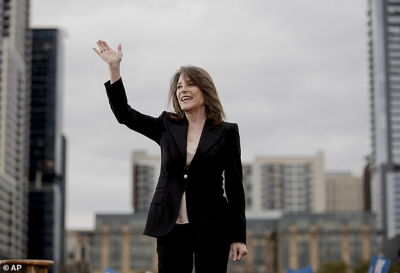
Former 2020 Democratic presidential candidate, Marianne Williamson is a bestselling author, political activist and spiritual thought leader.
For more than three decades Marianne has been a leader in spiritual and religiously progressive circles. She is the author of 14 books, four of which have been #1 New York Times best sellers. “Our deepest fear is not that we are inadequate. Our deepest fear is that we are powerful beyond measure…” is considered an anthem for a contemporary generation of seekers.
Williamson founded Project Angel Food, a nonprofit that has delivered more than 13 million meals to ill and dying homebound patients since 1989. The group was created to help people suffering from the ravages of HIV/AIDS. They have since expanded their service to any person battling critical illness.
Marianne has also worked throughout her career on poverty, anti-hunger and racial reconciliation issues. She has advocated for reparations for slavery since the 1990s and was the first candidate in the 2020 presidential primary season to make it a pillar of her campaign.
In 2004, she co-founded The Peace Alliance and supports the creation of a U.S. Department of Peace. In addition, she advocates for a cabinet level Department of Children and Youth to adequately address the chronic trauma of millions of American children.
She is currently the host of The Marianne Williamson Podcast: Conversations That Matter.
Marianne Williamson is an internationally acclaimed spiritual author and lecturer. Six of her ten published books have been New York Times Best Sellers. Four of these have been #1 New York Times Best Sellers. A Return to Love is considered a must-read of The New Spirituality. A paragraph from that book, beginning "Our deepest fear is not that we are inadequate. Our deepest fear is that we are powerful beyond measure..." is considered an anthem for a contemporary generation of seekers.
Marianne's other books include The Age of Miracles, Everyday Grace, A Woman's Worth, Illuminata, Healing the Soul of America, A Course in Weight Loss, and The Gift of Change. Her newest book, THE LAW OF DIVINE COMPENSATION: On Work, Money and Miracles, was published in November 2012 by Harper Collins.
She has been a popular guest on television programs such as Oprah, Larry King Live, Good Morning America and Charlie Rose. Marianne is a native of Houston, Texas. In 1989, she founded Project Angel Food, a meals-on-wheels program that serves homebound people with AIDS in the Los Angeles area. Today, Project Angel Food serves over 1,000 people daily. Marianne also founded the Department of Peace Campaign, a grass roots campaign to establish a United States Department of Peace.
In December 2006, a NEWSWEEK magazine poll named Marianne Williamson one of the fifty most influential baby boomers. According to Time magazine, "Yoga, the Cabala and Marianne Williamson have been taken up by those seeking a relationship with God that is not strictly tethered to Christianity."
Shadow Politics

Shadow Politics is a grass roots talk show giving a voice to the voiceless. For more than 200 years the people of the Nation's Capital have ironically been excluded from the national political conversation. With no voting member of either house of Congress, Washingtonians have lacked the representation they need to be equal and to have their voices heard. Shadow Politics will provide a platform for them, as well as the millions of others nationwide who feel politically disenfranchised and disconnected, to be included in a national dialog.
We need to start a new conversation in America, one that is more inclusive and diverse and one that will lead our great nation forward to meet the challenges of the 21st century. At Shadow Politics, we hope to get this conversation started by bringing Americans together to talk about issues important to them. We look forward to having you be part of the discussion so call in and join the conversation. America is calling and we're listening… Shadow Politics is about America hearing what you have to say. It's your chance to talk to an elected official who has spent more than 30 years in Washington politics. We believe that if we start a dialog and others add their voices, we will create a chorus. Even if those other politicians in Washington don't hear you — Senator Brown will. He's on a mission to listen to what America has to say and use it to start a productive dialog to make our democracy stronger and more inclusive. If we are all part of the solution, we can solve any problem.
Speaker Identification
Speaker 1 - Michael D. Brown, Host
Introduces himself as host Michael D. Brown, United States Senator Emeritus.
Speaker 2 - Marianne Williamson, Guest
Introduced by Michael D. Brown as Marianne Williamson, bestselling author and presidential candidate.
Speaker 3 - Liberty Jones, Co-host
Introduced by Michael D. Brown as co-host Liberty Jones.
[Music: show intro theme]
Speaker 1 - Michael D. Brown, Host:
Good evening and welcome to Shadow Politics, an hour-long grassroots talk show that is on a mission to make America think again. I'm your host, Michael D. Brown, United States Senator Emeritus, and along with my amazing co-host, Liberty Jones, we are interviewing the people who are making it happen. Not always in front of the camera, but always ahead of the curve. We're not going to tell you how to feel or who to vote for. We're just putting the information out there because what goes on in the shadows really makes the world go around. So, come listen, learn, because a vote is a terrible thing to waste.
Speaker 1 - Michael D. Brown, Host:
And now, more than ever, we need everybody listening, learning and engaged if we are going to make America sane again. Got a question? You can call in at 888-627-6008. We're lucky enough to have Marianne Williamson with us. A great author, a New York Times bestselling author, presidential candidate, a brilliant woman and a friend of our show. And we're so happy to have her on. Thanks so much for being with us, Marianne.
Speaker 2 - Marianne Williamson, Guest:
Oh, thank you for having me. Thank you for your kind and generous words, Michael. It's always great to be with you.
Speaker 1 - Michael D. Brown, Host:
Well, they're not the least bit generous. You're an amazing person. And, I hope you run for president again. Let me, let me start there. But, but let me ask you, I've been reading some of your stuff and you're an amazing writer.
Speaker 2 - Marianne Williamson, Guest:
Thank you.
Speaker 1 - Michael D. Brown, Host:
I encourage everybody to read something by Marianne Williamson because you will enjoy it just for the, for the wordcraft. And you will get a lot out of it, believe me. She's a profound speaker. So, let me start with something that I think is really profound, but I don't fully understand, which is that you say, it's our light, not our darkness, that most frightens us. Can you explain that?
Speaker 2 - Marianne Williamson, Guest:
Well, if you have a completely secular worldview, you think of yourself as a body and you think of everything related to your body as the totality of who you are. So, you were born, that was the beginning of your life. Your body dies, that's the end of your life. And you're basically defined by your resume and other people's opinion of you. You've had successes, you've had failures. You've had some peaceful times, you've had chaotic times. And you think of yourself as that's your life. But from a metaphysical and spiritual perspective, that's just a tiny, narrow little slice of your total reality.
Speaker 2 - Marianne Williamson, Guest:
From a spiritual perspective, your physical birth is not a beginning, but a continuation. Your physical death is not an end, but a continuation. And there is an unalterable and eternal reality within you, which is much bigger than this mortal, physical world. Those two filters make all the difference, because if you think of yourself only as that, only as a body, only in terms of material reality, you are living in spiritual darkness. But it's what we're used to. It's a dysfunctional matrix that is our perverse comfort zone. When to open up, to realize about not only ourselves, but each other, that there is this
Speaker 2 - Marianne Williamson, Guest:
deep, essential reality, which is the love within us, and that that is what is our strength and that is our purpose, then we live in the light of a much greater sense of things. I think the state of the world today is all the proof you need that something is very wrong in how we're seeing life on Earth. Something is very wrong with our relationship to each other, something is very wrong with our relationship to the planet, our relationship to animals. And so, from a spiritual perspective, all of this insanity of our relationships to others, from our relationship to the earth, to other species, et cetera, emanates from this false belief we have about who we really are.
Speaker 2 - Marianne Williamson, Guest:
Because when you live in the space of knowing that there's something much grander and more perfect and beautiful within yourself, you begin to realize that that's true of other people as well. And it colors all your decisions, it colors your sense of purpose in the world. And it's the, that itself is the evolutionary imperative that represents what is, at this point, far more than a luxury, but rather the only survivable option for life on Earth over the next hundred years. We're insane. You know, Gandhi said, the problem with the world is that humanity is not in its right mind. And the chaos that's happening in the world, of course, in many ways has to do with a younger generation who simply, when you look at all these protests everywhere, they won't have it anymore.
Speaker 1 - Michael D. Brown, Host:
Yeah, I think that's absolutely true. And, I've always wondered how we get separated from our spirit, you know. You also say that love is what we're born with and fear is what we learn. And, and the thing that I've always noticed as a parent, and you've probably noticed this too as a parent, is that if you take a bunch of four-year-olds that don't know each other and put them in a room, it takes them all about 10 seconds to bond with each other. And, and I wonder how we, I've always wondered how we lose that as we get older. You know, that, that kids just instantly glam on to each other.
Speaker 1 - Michael D. Brown, Host:
They're, you know, there doesn't seem to be the prejudices and other things that we, that interfere with our interactions. And I've always wondered, how does that happen? How, how, what, we reach a certain age when we just become more cautious and was, I don't know,
Speaker 2 - Marianne Williamson, Guest:
We're conditioned.
Speaker 1 - Michael D. Brown, Host:
less resilient. I don't know, or we don't connect with people anymore.
Speaker 2 - Marianne Williamson, Guest:
Well, it's pretty obvious, standing in front of us, the ways in which we're taught separation. You know, when I was, I had a little girl, and Arianna Huffington lived not far from me. And she had a little girl who was born in May of 1989. I had a little girl born in May of 1990, and she also, Arianna also had a daughter born in 1991. The girls were playing a board game, and Arianna's littlest, now a grown woman, named Isabella. Isabella lost something in this game to my daughter.
Speaker 2 - Marianne Williamson, Guest:
And I took the little pieces, whatever it was, and I said, "Oh, Isabella, you won." And I was taking the pieces from India, my daughter, from her little side of the board and giving them over to Isabella. And Isabella was traumatized. "No, no." And she kept pushing them back, because she was too young to even be able to conceive that it was a good thing that she was taking from someone else. So, a sense of unity is what we're born with. And then we are taught, we are trained by the thinking of the world, to think that other people are separate from us, that there is danger outside us, that we, we get at the others at the expense of other people losing and that that's okay, or that if other people win, we lose.
Speaker 2 - Marianne Williamson, Guest:
It's just a false perception of ultimate reality, because when you realize ultimate reality, you realize there's really only one of us here. That there's no place where one of us stops and another starts. So, what you give to others, you are giving to yourself. And what you take away from others, you take away from yourself. You know, it's, you can call it cause and effect. You can call it karma. But I think the United States right now is actually being forced to see the ways a very careless and irresponsible way of not only organizing our own society, but treating other countries as well, is coming back at us in some very painful ways.
Speaker 1 - Michael D. Brown, Host:
Yes, it is. Well, let me let me bring on my hope for the future, Liberty Jones. What do you have to say about all this?
Speaker 3 - Liberty Jones, Co-host:
Hi. This is a very interesting conversation. I agree that we're in a very pivotal moment where things, the outlook we have on the world needs to change. I think it's very interesting because you know, you talk about life as a continuation, right? And if we look, if we assess Eastern cultures, they celebrate death as a rebirth. And I think that's a big reason why we're struggling in the United States. I think the capitalist structure that is built in this country creates environments like that. I mean, if we celebrate death, we won't want to overconsume in our day-to-day life.
Speaker 3 - Liberty Jones, Co-host:
I think there's a lot of layers to that that is repressing us, that is dividing us even more. And it's it's really unfortunate because if we were all able to see our own power, we would be united, but we would also not be submissive anymore. So, it's I think it's really hard to navigate away from that. And my question to you is, you know, understanding that we are all born innocent, that we are conditioned like animals, we are a breed and unfortunately our training is through capitalism, right? Understanding that greed, obviously, is is a great cause of division, but do you think this competitive nature, do you think that is innate to us?
Speaker 3 - Liberty Jones, Co-host:
Are we flawed from the beginning or do we stray around that because of the systems in place? Do you think there is a, I mean, Aristotle said we live in a perfect world because we need the ugly to see the pretty, right? But do you think that we're flawed at first or do you think that it's actually our conditioning that creates all of this division that we're seeing today?
Speaker 2 - Marianne Williamson, Guest:
Well, you put a lot of the blame on capitalism. I think it's important to remember that Adam Smith, the primary articulator of free-market capitalism, said that it could not exist outside an ethical context. You know, people like Peter Thiel and Elon Musk love to celebrate Milton Friedman. But Milton Friedman himself, in certainly an articulator of free-market capitalism, said, "But remember, guys, none of this is going to work unless you have UBI." So, this is not just capitalism itself. It is a particularly ruthless crony capitalism that has taken hold over the last 60, 70 years that has no moral has has no moral center or ethical center whatsoever.
Speaker 2 - Marianne Williamson, Guest:
So, I don't care whether you have a socialist system or a capitalist system, if people are not ethically purified in the sense of how they see their relationship to other human beings, then you're going to fall back into that same place. So, you know, I saw so, I do think there's such a thing as some healthy competition, you know. And I think that it's been actually unhealthy raising a generation to think that, you know, you get the prize just for running the race, rather than realizing that there's something about achievement and accomplishment that is important too. I have two friends who are in Bhutan right now, and they sent me something so interesting. They were hiking in Bhutan and at one of the temples, there was a a piece of paper on the wall.
Speaker 2 - Marianne Williamson, Guest:
They sent it to me, and this is what it says, which I think is so amazing. It says that if you have a jar with black ants and red ants, that the ants all get along fine, but that if you shake the jar, the red ants start thinking of the black ants as enemies and start trying to kill them, and the black ants start thinking of the red ants as enemies and start killing them. So, so it said on the bottom, it said, what we need to ask is who's is who is shaking the jar. And I think that that's the point, in a way, that you're making. We have a natural tendency to to relate in ways that do create a win-win universe.
Speaker 2 - Marianne Williamson, Guest:
And a particular form of capitalism, among other things, has created this false sense of mutual endangerment. This idea that I win at someone else's expense, and that that's okay, that other people's winning would be at my expense, that that's okay. And that economic imprint has defined our social relationships in ways that obviously are deeply deleterious to us as human beings emotionally, psychologically, economically and materially.
Speaker 1 - Michael D. Brown, Host:
Well, I'll tell you that the thing that scares me, I'm a fan of Adam Smith, and so so also Milton Friedman, but, but Karl Marx says this is inevitable in capitalism. Is it inevitable? He says that a democratic capitalist country needs to come to this because when we all represent our own self-interest only, we can never promote the general interest. And is that where our sense of morality has to come in, promoting the general interest?
Speaker 2 - Marianne Williamson, Guest:
Well, first of all, I want to point out that before he wrote Das Kapital, he was a humanitarian philosopher. And I think Karl Marx's general sense that our work should be our sense of purpose in the world is very, very beautiful. When he talks about late-stage capitalism, obviously that is what's happening now. But let's also remember and recognize that that communism, the way, you know, his sort of romantic mythology around communism, as it came about in the world, became a pretty evil force as well. Once again, I don't care whether you hand me communism, socialism, capitalism or anything else, the personal purification of heart that's going to be necessary is is in a way separate from what your economic system is.
Speaker 2 - Marianne Williamson, Guest:
No economic system is perfect, but any economic system can have its upside as long as people's hearts are purified and they realize that we are one another. I mean, we can't look at any communist society, you know. And I, and and I certainly think that there were some incredible ideas in class analysis of Marx and so forth. It's part of it's part of, I believe, a deeper understanding of what's happening in our world. But this is not 1918 Bolshevik Revolution. And a lot of people, I think part of the problem we have, Michael and Liberty, is that so many people are looking at the world today ahistorically, without any sense of what actually happened in that revolution, what happen actually has happened in that economic system, what has actually happened in that part of the world.
Speaker 2 - Marianne Williamson, Guest:
And I think it really is limiting and weakening us, because when you do look at the whole of history, you see nuance, you see complexity. You see, well, there's good in that, but then there's also bad in that. There's the light in that, but there's also the shadow in that. And in that thing, I think Americans are particularly simplistic in our views this way. We see situations as binary, which simply are not binary. And I don't know, I just think that a real read of history, Marx being a perfect example, there's his philosophy, but then there's also what happened in Russia, you know, like hello. And I think it's not right or wrong, it's just let's have a deeper understanding of what's really happened and what's going on now.
Speaker 2 - Marianne Williamson, Guest:
We're losing Michael now.
Speaker 3 - Liberty Jones, Co-host:
Yes, we cannot hear you.
Speaker 1 - Michael D. Brown, Host:
I'm sorry. I, I, I've been a, I've been a big fan of Marx. I feel the same way. I feel like he was a great philosopher. I always thought communism and socialism were what he came up with because he needed something. You know, he he did such a great critical analysis, but then at the end, they said, "Well, what do you do then? What, what, what do you replace capitalism with then?" And he came up with communism, not a good system. It leads to totalitarianism, I'm sorry. But you have to look at his work and you have to consider what he said about capitalism because he did a great critique.
Speaker 2 - Marianne Williamson, Guest:
Yeah.
Speaker 1 - Michael D. Brown, Host:
So, how do we inject this into our philosophy? How do we get people to get beyond that binary thinking, the, the 10-second clip that we show to advertise campaigns, you know? How do we get them beyond that?
Speaker 2 - Marianne Williamson, Guest:
It used to be called real, it used to be called real education and respectful debate. It used to be a a society in which we were far more educated people. And then before social media, people actually had conversations. You know, I'll give you an example. This is the kind of house I grew up in, okay? My uncles would say to us, "Kids, don't listen to your father, you'll never make any money." And then my father would say, "Kids, don't listen to your uncles, they will not survive the revolution." Because they were right-wingers and he was a left-winger. And then my mother would come in and say, "Okay, who wants whitefish and who wants roast beef?"
Speaker 2 - Marianne Williamson, Guest:
We talked, we fought it out, we laughed, we loved each other. Now, both on the right and the left, you know, I've been saying recently, Stalin to the left of me, Hitler to the right, here I am. There's this neo-fascism on both sides of the political spectrum right now. And I've seen it with the mendacity, the incredible mendacity on the right, but the incredible naivete on the left. And it is kind of Stalinist, the way so many times on the far-left now, this is the way we see it, you have to see it the way I see it, you have to say it the way I say it, you have to use the words I want you to use. And if you don't, you are not worthy of conversation, you are not to be listened to and you are to be canceled.
Speaker 2 - Marianne Williamson, Guest:
That's no different than the fascism on the right. And I do think, and it's funny, you talk about capitalism, because it is this competitive brand model of politics and it's we have to retrieve the public sphere for meaningful, in-depth conversation in which we hold the juxtaposition of many otherwise competing realities, and that's called the human condition.
Speaker 1 - Michael D. Brown, Host:
Well, and I think what you said
Speaker 1 - Michael D. Brown, Host:
I'm sorry, go ahead.
Speaker 2 - Marianne Williamson, Guest:
No, that was all. It was just that, you know, it's it's not who's wrong and who's right. It's it's the pain, sometimes, the pain, the the the internal pain of realizing there are these juxtapositional realities. And sometimes there is no easy answer, but the answer with a capital A is that we continue to have the conversation and always seek to do what's best for everyone. But when you have people arguing from either the left or the right that this group should win, to hell with the other group, I don't care whether you're on the right or the left, whether you're an Israeli or Palestinian, you're that's not the answer.
Speaker 2 - Marianne Williamson, Guest:
The answer is, how do we do this in a way that that reduces human suffering for everyone, that prevents harm to everyone, and that increases justice and good for everyone? This "we like them, we hate them" stuff, I don't care what side of the political spectrum you're speaking from, will do us in. It will not lift us up.
Speaker 1 - Michael D. Brown, Host:
Yeah, I absolutely agree. And I don't think as liberals we understand that. We think the other side are the bad people, you know, and
Speaker 2 - Marianne Williamson, Guest:
Yeah, oh, the so many so-called liberals have become very illiberal in this country today. The left has become very illiberal.
Speaker 1 - Michael D. Brown, Host:
Yes, they have. And, and and I think it's terrible that we don't realize it. Liberty Jones, what do you have to say?
Speaker 3 - Liberty Jones, Co-host:
I think there is an overall lack of compassion. I think when people are not able to see into other's realities, you know, you talked about juxtapositions in our realities. We all we've always had different perspectives. But I think the more we give ourselves in autonomy at our fingertips, the more we disempower each other. And that's a problem. I think that comes from a lack of compassion. What you were talking about before, you know, how if we all were able to share laughter and love when we're having these conversations, I think a lot of things would change. How do we reintegrate that into political conversations?
Speaker 3 - Liberty Jones, Co-host:
How do we incentivize people to get off their high horse to be able to move with compassion? Because everywhere in the world, the kids are protesting, people are unhappy, they're suffering because they're disillusioning each other. We are humans who need to be connected to survive. We need each other, especially in the society we've built. So, how can we reintegrate compassion to create a world where we're no longer suffering?
Speaker 2 - Marianne Williamson, Guest:
You know, Liberty, I want to tell you what I saw when I ran for president. And this to me is the tragedy. There are two distinctly different universes. One is a machine, a political and media machine. And it thrives on sensationalism, it thrives on either/or, it thrives on obeisance to a kind of establishment viewpoint and punishment of anyone who does not support that, and it thrives on, as you would say, a capitalist model. That's one universe. And within that universe, the the storyteller, the magician, the healer and the genuine critical thinker is considered an enemy.
Speaker 2 - Marianne Williamson, Guest:
Someone who puts compassion and love and laughter before their shenanigans is considered an enemy, okay. That's that universe. And then there's another universe, and that's when you just go out into this country, or any country, and talk to people. Now, what you said was, "How do we do that?" I found that's not difficult to do at all when you're actually out there talking to Americans. We are a decent people. There's a line in A Course in Miracles where it says, people hear you on the level that you speak to them from. And my experience all over this country was that when you have, when you're just talking to a group of people, I don't care if it's 10 people, 100 people or 1,000 people,
Speaker 2 - Marianne Williamson, Guest:
when you are just talking to people about the same kind of deeper truth that you and I are talking about now, people are as noble, I mean, let's let's not forget, guys. This country elected Abraham Lincoln, even elected him a second time when he was basically asking them, even though you don't have slaves, I want your children to die in order to end slavery. That this country did elect Al Gore. Liberty, you don't remember the trauma of that, but Michael and I certainly do. This country, so this country, the people, what I learned from my experiences is that the people are not the problem.
Speaker 2 - Marianne Williamson, Guest:
So, when you say that, "How do we do it?" I think that's a very important piece of it. It's not that hard to do, but the enemy is the institutional realities that are that are supposed to be facilitating that deep democracy and are actually invested in resisting and obstructing it. And that's a real conundrum. And I I have begun to believe, I don't I I don't this isn't my final whatever, but I'm in a place in my own analysis, I'm not sure we can do it as long as these two political parties are dominating the way they are now. I certainly think it's it's a question.
Speaker 1 - Michael D. Brown, Host:
And let me just add that my wife and I have moved to a 55-plus community on an island in Chesapeake Bay. And the Trumpers and the liberals and everybody else gets along with each other because we're in the same place. And I mean, it's like being in college again. Everybody's friendly, everybody wants to help, everybody wants a hug. And I'm still trying to figure out why that is.
Speaker 2 - Marianne Williamson, Guest:
Because we're human beings. Because, like Liberty was saying, because we're we're hard-wired for compassion. We are. And this system has trained us to go against our own natural impulses because it's convinced us that that we're in danger if we if we do otherwise. And we need a politics of the real. We need a politics of of love. We need a politics of compassion, which once again, the people are hungry for. And I have experienced in in my own life, in big, big ways, the institutional forces that resist that in order to retain its own power.
Speaker 1 - Michael D. Brown, Host:
Yeah, I would say you're you're an expert after running for president. I remember the things you said
Speaker 1 - Michael D. Brown, Host:
early in the CNN debate, and I thought you were so good,
Speaker 2 - Marianne Williamson, Guest:
Thank you.
Speaker 1 - Michael D. Brown, Host:
and they make fun of things like love and compassion. And they use it to write people off, right? They go, "Oh, look at this woman. She wants to sing Kumbaya and hug everybody." And it's crazy.
Speaker 1 - Michael D. Brown, Host:
So, yeah, that really disappointed me, Marianne, that you got so much bad press after doing such a good job and obviously being accepted. That's how you got on the debates to begin with.
Speaker 2 - Marianne Williamson, Guest:
Well, you know, it's interesting, isn't it? Because in '24 CNN wouldn't even let me have a town hall.
Speaker 1 - Michael D. Brown, Host:
I know.
Speaker 2 - Marianne Williamson, Guest:
They would have people who were polling less than me, whether it was Nikki Haley or Chris Christie or whomever, which really showed you how resistant they were. I think that they were so invested in suppressing my voice in '24, not because They were invested in you thinking I was silly because they know I'm not.
Speaker 1 - Michael D. Brown, Host:
Right.
Speaker 2 - Marianne Williamson, Guest:
Right? This is Not only not a silly conversation, it's the only survivable option for the human race.
Speaker 1 - Michael D. Brown, Host:
It really is. Is and I don't know why you can talk about love and everybody thinks that it's frivolous. I just don't understand.
Speaker 2 - Marianne Williamson, Guest:
A white man can do it. So, Talarico can do it. God bless him, I hope he wins. The new that Democratic pastor who is running for governor of of Iowa can do it, God bless him. But there is a little bit of question certainly in my mind, and why is it that for me it was woo woo, but for them it's this profound new thing? But I think everybody has their own spot, you know? You open up a conversation. In business, it's said, it is said the second one in makes the money.
Speaker 2 - Marianne Williamson, Guest:
And I think in politics, too, the second one in—not that I'm paying myself as the first one in, but certainly there was an opening of a conversation there. After, you know, in I read a really interesting book a few years ago about Lincoln, and it was talking about how there's the provocateur, then there's the activist, and then there's the politician. And that those are the three phases of political change.
Speaker 2 - Marianne Williamson, Guest:
When the provocateur, John Brown, let's say, about abolition, the provocateur says it, and everybody thinks it's radical and outrageous. And is usually punished for it. But they create the space. Then the activists run in and it can become a real political force. And then the politician is usually the last one to get it, but the politician can then ram it home in terms of political change.
Speaker 1 - Michael D. Brown, Host:
So let me ask you. Since since you bring up the other two candidates, are we so misogynist that we can't elect an a woman? Are we're the only industrialized country I can think of that hasn't had a woman leader? France, England, Germany, India, you can go on and on and on. But why can't we elect a woman? Are we that misogynist, or we just put up bad candidates?
Speaker 2 - Marianne Williamson, Guest:
Well, once again, let's talk about who "we" is. Do I think the American people would be willing and able to elect a woman? Absolutely, I do. But look at what the what the press does. I know in my case, the misogyny things would be said and, "She's kooky. She's" Things that they Stories that would never be said about men or or certain filters, which I never had felt in my career before. But in politics, the misogyny is unbelievable.
Speaker 2 - Marianne Williamson, Guest:
Now, the misogyny also shows up in the way Democratic political consultants convinced Hillary Clinton, convinced convinced Kamala Harris, and right now are convincing Annie Andrews, I'm afraid, "Don't be too much yourself."
Speaker 1 - Michael D. Brown, Host:
Right.
Speaker 2 - Marianne Williamson, Guest:
You know, it it's so painful to watch how Republicans are more willing to let their women be badass than we are.
Speaker 1 - Michael D. Brown, Host:
Yes.
Speaker 2 - Marianne Williamson, Guest:
There's a wild, savage, feminine thing that Democratic women are told to tone down because these Democratic consultants, who really had their own misogyny going on, think that if a woman is too much herself, that it'll be too much and people won't like it. And when what that turns into is a deep authenticity that people can read. And I think that that's what happened with Hillary. I think that's what happened with Kamala, although, obviously, there were other issues involved as well. So when when women can just go out there and be themselves and we can be ourselves, I know in my own life, I saw that.
Speaker 2 - Marianne Williamson, Guest:
You know, when you when people actually know you without the filter of the BS, the doppelgänger that is created by the political-media-industrial complex, I think this country likes, yeah, women are Yes, I think the people, once again, I don't think the people are the problem. I think the filters that the political-media-industrial complex put in front of people's eyes so that they don't really see the woman, and I think the way women too often allow themselves to be vulnerable to those kinds of manipulations, is what creates this image of women that is so easy to reject.
Speaker 1 - Michael D. Brown, Host:
Well, Liberty Jones, say something, because you're none of that. And you This is what gives me great hope for the future. I don't know about your daughters, Marianne, but my daughter, Liberty, some of the other young women I know, their image is really different. They really see themselves much differently, I think, than women from our generation.
Speaker 2 - Marianne Williamson, Guest:
Well, every Oh, I'm sorry. Every woman stands on the shoulders of the of the generation of women that went before them. We had to claw through doors that now Liberty and her generation get to just walk through. But that's just how how evolution happens. Every generation faces the challenges and and and achieves a win in the struggles that then the next generation, which will have its own struggles, of course, and its own wisdom. But some doors are easier to walk through because your mothers and your grandmothers already did.
Speaker 1 - Michael D. Brown, Host:
And I think that's a good thing.
Speaker 1 - Michael D. Brown, Host:
Yeah. I get it.
Speaker 3 - Liberty Jones, Co-host:
And I think that there's
Speaker 1 - Michael D. Brown, Host:
Okay, Liberty, walk through the door.
Speaker 3 - Liberty Jones, Co-host:
There's something very optimistic about thinking in this way, as well. Because, you know, if we if we go to our conversation about how compassion, these values are very human of us, and we're conditioned to move around that, so is this divine, strong, creator vision of a woman. And the more that we are conditioned to move around that, again, the more we are submissive and help create a system that is silencing and dividing us to conquer us, right? And so how do we continue,
Speaker 3 - Liberty Jones, Co-host:
and with the utmost gratitude to the generations that came before me who did help open those doors, and I hope that we continue inspiring the future in that sense, but how in our day-to-day lives do we shape, do we shape these limitations and reshape these constraints that are we are continuing to break? How do we create that environment in every room that we step in basic day-to-day lives? Yes, having more conversations that are empowering so we can understand that we are one, right? We are all connected. But how how do we continue shaping this reality when it seems like this media vision has been just taking over more and more, especially with social media and all of this?
Speaker 2 - Marianne Williamson, Guest:
Well, I know for myself, when I talk about having run for president and having experienced the terrible, really horrible, vicious shenanigans of that system, I don't feel that in my everyday life, Liberty. And in my everyday life, when you don't have that kind of a thing sitting on top of you, there's always more ways we can open our hearts to one another.
Speaker 3 - Liberty Jones, Co-host:
Mhm.
Speaker 2 - Marianne Williamson, Guest:
I also think when it comes to women, that as devastating as some of the, you know, crony capitalist, you know, immoral, rudderless capitalist forces have been, I think one of the most pernicious forces affecting women over the last few years has been our traditional psychotherapeutic paradigm, which has gone so far to convince women that we are weak, that there's something wrong about us, that we're damaged in some way. And so women have been taught to shrink and have been trained to shrink.
Speaker 2 - Marianne Williamson, Guest:
And I think that we have to get out of the habit of over almost fetishizing our traumas, "Are you okay?" And we need to replace that with, "What incredible thing are you doing, and how can I help?" I think sisterhood is everything. I think that the feminism of the 1970s that I was brought up in, it was understood that none of us were going to get there unless all of us get there. It means me caring what you're doing, and if you email me and saying, "Marianne, it's Liberty, and I'm doing this or that. Can you help?" That I write you right back and ask what I can do to help.
Speaker 2 - Marianne Williamson, Guest:
We've got to be there for one another. And we, you know, spiritually, every single moment, our hearts can be more open or our hearts can be more closed. So it is not only those small conversations, but it's really every single encounter and every single conversation and circumstance we're in. I know for myself, you know, "You could have done better, Marianne, you know, be a little more open, a little more gracious next time."
Speaker 3 - Liberty Jones, Co-host:
Mhm.
Speaker 1 - Michael D. Brown, Host:
Well, you know, I I wonder how much of that we do by making women compete against each other. You know, brotherhood is a big thing. When when you kid, you're playing baseball and football and you're taught teamwork, and you're taught, you know, and I guess today, young women are taught that, as well, playing soccer and other sports that they play. But when we were raising our generation, right, they they pitted women against each other. And they made and they made brothers out of the boys.
Speaker 1 - Michael D. Brown, Host:
So I I can see that. But and I see it evolving. Lots of women doctors, lots of women lawyers that were unheard of when I was a kid. Women in Sports Illustrated swimsuit models that are really sports people, you know, really football players and baseball players and and and and soccer players, when they used to be just underwear models, you know? So the image is changing, but I guess it changes through the system quicker than it changes in our minds, unfortu- fortunately.
Speaker 3 - Liberty Jones, Co-host:
Yes.
Speaker 1 - Michael D. Brown, Host:
Let me ask you about the Democratic Party, because I got problems with the Democratic Party, and I think you got problems with them, too. Lots of what I read about you and work you've done is spiritual. I worked for Jimmy Carter, very spiritual guy, did a lot in the world. In fact, Liberty and I just went to his funeral. He was over 100 years old. How did we lose God in the Democratic Party? How did we give God up to the Republicans? I don't understand that.
Speaker 2 - Marianne Williamson, Guest:
It's such a strange thing, isn't it? Because Martin Luther King said it was time to inject a new dimension of love into the veins of human civilization. Bobby Kennedy was the first one who said that what was happening in Vietnam was a struggle for the soul of America. The best I can come up with to explain to myself how it happened, how the Democratic Party became so managerial, so lacking in poetry, so lacking so over secularized, so lacking in in any sense of soulfulness, is that when our heroes were shot and killed in front of our eyes,
Speaker 2 - Marianne Williamson, Guest:
I think that it's like, you know, when I was in college, and I assumed that this was true of you, too, Michael, we read Ram Dass and the I Ching in the morning and went to Vietnam anti-war protests in the afternoon. There was no division. The countercultural was sexual, spiritual, musical. It was everything. There wasn't any Nobody was told to stay in your lane because there were no lanes and there shouldn't be lanes, because we're human beings and human beings are multidimensional.
Speaker 1 - Michael D. Brown, Host:
Sure.
Speaker 2 - Marianne Williamson, Guest:
But after the trauma, what we now realize was an entire generation in PTSD, after those assassinations and the inherent threat that they that they carried, which is, "There will be no further protest, or we might kill you, too." That was really the underlying message. Everybody, it's like the the the river parted. And the East Coast, I always joke and say the East Coast took traditional politics, the West Coast took the spiritual enlightenment journey. And there was a lot of mutual derision.
Speaker 2 - Marianne Williamson, Guest:
Now, the Democratic Party went with that strong managerial, and the enlightenment journey, they were at Esalen saying, "Politics isn't the way." So too many of the more spiritual types gave up on politics. Too many of the political types gave up on any kind of personal journey. I think that that is changing. Liberty can would know better than I, but my experience of your of the younger generations is, you know, it's important to remember, the younger generations are not 20th-century people.
Speaker 2 - Marianne Williamson, Guest:
Most of them weren't even born there. And they are not laboring under the falsity of a rational overly rationalistic, technocratic worldview. Today, it's far more holistic and integrative. I speak at colleges, and somebody asked me a question about about antidepressants, and then the next question is about Syria. There's no They don't see anything weird about that. So I think that the 21st-century paradigm is bringing the two back together in in meaningful ways. And I do have hope for that.
Speaker 2 - Marianne Williamson, Guest:
I don't know if the Democratic Party will I mean, Talarico's a Democrat. Who What will happen whether the Democratic Party will absorb that or not, it is definitely what's happening in the culture.
Speaker 1 - Michael D. Brown, Host:
Well, you know, I I feel that the Democrats and the Republicans are basically the same. We have a different agenda. But I see the same people on both sides. I see people that are thoughtful and considerate, and I see people that are horrible and and self-absorbed on both sides, especially in politics.
Speaker 2 - Marianne Williamson, Guest:
That's my experience, as well.
Speaker 1 - Michael D. Brown, Host:
Yeah. Well, let me ask you. Now that you're in London, how does America look from there? With with the people that you deal with in in England? What is their impression of America today?
Speaker 2 - Marianne Williamson, Guest:
Disgust.
Speaker 1 - Michael D. Brown, Host:
Mhm.
Speaker 2 - Marianne Williamson, Guest:
I you know, a Danish journalist said to me, "It used to be that we were like, 'Yeah, they gave us Vietnam, but they also gave us Bob Dylan.' Yeah, they gave us the Iraq War, but they also gave us Steve Jobs." And is it now it's it's going to take a long time to earn back the real admiration, I think, of the rest of the world. We have, with this president, so abandoned any sense of genuine alliance with with the rest of the West, much less the rest of the planet.
Speaker 1 - Michael D. Brown, Host:
Mhm.
Speaker 2 - Marianne Williamson, Guest:
And it's going to take us a while to rebuild that trust. We all know that. That's not saying anything new. But at the same time, people understand that the basic struggle between democracy and authoritarianism is global. And it's not good for anybody for America to go down. Even our the people who are the most cynical about us realize life won't be better if America goes down. And so even if you were a jerk yesterday, they want to love you today if you'll do the right thing today.
Speaker 2 - Marianne Williamson, Guest:
So I think it will be good for America's reputation in the world if Tuesday goes well for the Democrats. At the same time, nobody anywhere in the world is under the illusion that even if we do have a win, even if we do get certified, even if the president doesn't pull off something monstrous around that, that there's still going to be a lot more work to do righting our own ship before anybody is going to be willing to trust us the way they once did.
Speaker 1 - Michael D. Brown, Host:
That's the scary part for me. Not November 3rd, but November 4th, 5th, and 6th, what happens then.
Speaker 2 - Marianne Williamson, Guest:
Absolutely.
Speaker 1 - Michael D. Brown, Host:
Yeah. Liberty, how do you feel? Are you feeling encouraged as a young person?
Speaker 3 - Liberty Jones, Co-host:
You know, I'm feeling encouraged as a young person. I'm feeling a little disappointed, as well, because the United States is so incredibly influential to the rest of the world, and we can see that other countries are We're all a little bit lost, and I think that's why Trump is in office to begin. And I hope we can find each other with ourselves, right?
Speaker 2 - Marianne Williamson, Guest:
That's where it all comes from, a new field of possibility.
Speaker 3 - Liberty Jones, Co-host:
Yes. My question to you is a little creative, but if you could change, if you could reset and you have the paintbrush, and you could create what we access on our phones, what we have everyday, what the youth are using, what we're viewing social media, what is something that you would implement? I mean, this is something that everywhere around the world people are going to have access to. This is It can be something like a value. What what would you implement into our phones that you think is something that we're losing sight of?
Speaker 2 - Marianne Williamson, Guest:
A more sophisticated understanding of how addiction works. We're all addicted.
Speaker 3 - Liberty Jones, Co-host:
Yes.
Speaker 2 - Marianne Williamson, Guest:
And there's no technological answer for that. There's It's what any addiction is: Put the fucking phone down. That's your child trying to talk to you. That's your wife. That's your husband. You're going to ruin your marriage, you're going to not have communication with your children. Put it down. We're a nation of addicts. And I think that that's It's a It's a personal thing for us to really, you know We've all been Not only have we seen it in others, but too often we've been there ourselves. A young man, a young woman, two men, two women, whatever it is, they're on a date, but they're on their phones?
Speaker 1 - Michael D. Brown, Host:
Mhm.
Speaker 3 - Liberty Jones, Co-host:
Mhm.
Speaker 1 - Michael D. Brown, Host:
Yeah.
Speaker 3 - Liberty Jones, Co-host:
Yes.
Speaker 2 - Marianne Williamson, Guest:
People aren't even talking to each other. And and that goes more even than the phones. I know, Michael, I'm sure you agree with me on this. I used to love flying on airplanes because I always felt like you learn so much talking to people who you wouldn't necessarily talk to in any other situation. They don't know you, they don't have any preconceptions. Now, so many people, they put in their earphones, they close the they close the shades so that this incredible view of clouds is not available, and all they want to do is turn on a Grade B movie.
Speaker 2 - Marianne Williamson, Guest:
We we are not encountering one another. There's no holy encounter. There's no namaste consciousness. And the screens, unfortunately, in the little children is cultivating that, the action on the screen rather than the action as human interaction. So I don't think there's a technological answer, Liberty. We all have to face what we know. We're addicted to those things. And that's why, you know, it used to be you'd go on vacations and they would advertise that they have Wi-Fi. Now you go to these resorts where they advertise that they don't have Wi-Fi.
Speaker 3 - Liberty Jones, Co-host:
Yeah.
Speaker 3 - Liberty Jones, Co-host:
Mhm.
Speaker 2 - Marianne Williamson, Guest:
You know? People are getting it, but we have to practice it, because we've all watched the movies, we all know the truth, and we all see ourselves sometimes. We see ourselves I see myself doing it. I I was in a meeting the other day and it was a not a great thing. And I didn't handle it perfectly. And I always say to people, before you go into a meeting, blast the room with love. Blast the room with love. Before you go into the meeting, say do a namaste consciousness thing for everyone who's going to be there.
Speaker 2 - Marianne Williamson, Guest:
Whether it's Jesus or light or God, whatever your images is from your own subconscious, prepare yourself inwardly so as a vessel of love. I say it all the time. And my life works well when I practice what I preach. So what happened at this meeting the other day? I went in I had done my meditation in the morning. I was in a generally positive place. But I knew that there was something funky. I knew someone was going to be there. Why would they be there? Why were we doing it there? I should have deeply prepared myself.
Speaker 2 - Marianne Williamson, Guest:
So I really had to think about what what happened there, because you had a long car ride. You know what happened? I was on my freaking phone.
Speaker 1 - Michael D. Brown, Host:
Yeah. We see it all the time. I took my cousin to the brand-new invented uh uh air and space museum. There's all this amazing stuff in there, and I'm looking at a 13-year-old boy sitting on the floor with his iPad, as his parents go around and look at all the expositions. I just couldn't believe it. He was just sitting there, couldn't give a damn.
Speaker 3 - Liberty Jones, Co-host:
Yes.
Speaker 1 - Michael D. Brown, Host:
Just on his his iPad. It's terrible. And, you know, my wife is a teacher, and she's fought to get cell phones out of the classroom, and they finally have. Let me ask you a last question here, because we're almost out of time. What do you want to say, Marianne, that we haven't asked you, that we haven't talked about? What's important to you that you want to get out there?
Speaker 2 - Marianne Williamson, Guest:
For people who believe in the power of prayer, really pray about Tuesday.
Speaker 1 - Michael D. Brown, Host:
Mhm.
Speaker 2 - Marianne Williamson, Guest:
For those who meditate, really meditate. There are vectors of possibility that are violent. There are vectors of possibility that are chaotic. My concern is we had Alex Pretti This is going to be on People are listening on Sunday night, correct, Michael? Tonight?
Speaker 1 - Michael D. Brown, Host:
Yep. Yeah. Yes, this will be on tonight.
Speaker 2 - Marianne Williamson, Guest:
My My biggest concern, we had the Alex Pretti and uh Renee Good situation in Minneapolis, right?
Speaker 1 - Michael D. Brown, Host:
Yes.
Speaker 2 - Marianne Williamson, Guest:
Tuesday will be everywhere, not just one city, everywhere. They're sending the ICE agents. Alex Pretti was carrying a gun, yes, but it was legal carry.
Speaker 1 - Michael D. Brown, Host:
Yeah, and they disarmed him.
Speaker 2 - Marianne Williamson, Guest:
Some people will be It's There are so many possibilities of one thing happening, and it gets on the Internet, people all over the country, God knows what he's going to do, he could bring in So I think everyone being on the high watch about Tuesday and really for those of us who pray, praying may it be peaceful, may no weapons formed against our democracy stand. I think we are all called to be extremely brave, courageous, adult, mature, loving citizens. And like you said, Michael, this is not just about Tuesday. It's every day thereafter.
Speaker 2 - Marianne Williamson, Guest:
Let's rise to the challenge. That's what I think we share with each other.
Speaker 1 - Michael D. Brown, Host:
Well, I think Well, I think that's a perfect place to end. And because it's you, Marianne, we will probably put the show out several times this week.
Speaker 2 - Marianne Williamson, Guest:
Oh, honey.
Speaker 1 - Michael D. Brown, Host:
Hopefully, it'll people will listen to it, and they'll do exactly what you've said. They'll make sure that they go to the polls, they make sure they vote, and they they make sure they're courageous and and and receptive to other peop- each other. So this is we're going to end. Thank you for listening. Thank you, Marianne.
Speaker 2 - Marianne Williamson, Guest:
Thank you both. Wonderful to see you, Liberty, as well.
Speaker 3 - Liberty Jones, Co-host:
Oh, thank you.
Speaker 1 - Michael D. Brown, Host:
Yeah. You know what? We usually do a song dedicated to the person that was on the show. Tonight, we're going to make an exception. I'm sure it's okay with with Marianne, but this goes out to Dolores Huerta, who's 96, labor activist, feminist, passed away this week. May she rest in peace. She lived a good life, the same kind of life that Marianne talks about.
Speaker 2 - Marianne Williamson, Guest:
Ah.
Speaker 1 - Michael D. Brown, Host:
So thank you for listening. Here's one from Sarah McLachlan, "In the Arms of an Angel."
Speaker 2 - Marianne Williamson, Guest:
Mhm.
Speaker 1 - Michael D. Brown, Host:
Thanks so much, folks.
Speaker 2 - Marianne Williamson, Guest:
Thank you, everyone.
Speaker 3 - Liberty Jones, Co-host:
Thank you.
[Music: show outro theme]