
Popp Talk, October 10, 2026


Popp Talk with Mary Jane Popp
Starseeds, Walk-In Souls, and Compassionate Dog Training with Sheila Seppi and Kathleen Troy
Mary Jane Popp talks with multidimensional life coach Sheila Seppi about walk-in souls, starseeds, and the soul's journey across dimensions, then welcomes dog trainer and author Kathleen Troy to share compassionate training methods inspired by her cocker spaniel, Dylan.
A Tease For Dimensions And Dogs
Mary Jane Popp opens Popp Talk promising practical tools for a better life, previewing two very different conversations: training dogs with compassion rather than yelling, and exploring whether other dimensions hold other versions of people living different lives. She tells listeners that in this dimension she is Mary Jane Popp hosting Popp Talk, but wonders aloud whether another dimension holds a completely different version of herself. She frames the episode as a search for new possibilities and answers to life's biggest "whys," reminding her audience that she always tries to give them something they can use, not just interesting ideas. After a short run of advertisements for hearing aids and a walk-in bathtub, Popp returns to introduce her first guest, promising a deep dive into multidimensional existence before circling back later to dogs, training, and the lessons animals can teach about respect and patience.
Sheila Seppi On Souls And Starseeds
Popp introduces Sheila Seppi, describing her as a multidimensional life coach, holographic alchemist, light language linguist, regression therapist, and shamanic practitioner, and the author of Cosmic Convergence: Journeys of Walk-ins, Starseeds, and Hybrids. Seppi explains that while people know themselves as a mother, daughter, or friend in ordinary life, their souls are eternal and take many forms across lifetimes to fulfill a given purpose. She tells Popp that a starseed is a soul that originates from another planet or star system, and that everyone ultimately traces back to one divine source energy, called by many different names. When Popp asks whether people are discovering who they are or who they were, Seppi insists it is a present-tense discovery, since most people assume they are only the person reflected in the mirror without realizing their soul has lived many times, in many realms, as many kinds of beings.
A Walk-In Soul's Sudden Transformation
Seppi describes herself as a walk-in soul and recounts the night that changed her life. At 38, she was a mother of three in a difficult marriage, walking with a cane and diagnosed with bone cancer, brain tumors, fibromyalgia, and chronic fatigue. On September 23, 1999, she went to bed desperately ill; the next morning she felt pulled upright as if by the hair, experienced a jolt like lightning, and found herself in white space before her vision slowly returned. She says every symptom vanished instantly, though doctors only credited her medications. Seppi explains she later understood this as a soul augmentation, in which her original soul moved on in its own spiritual journey while a new soul, carrying fresh universal information and heightened intuition, entered her body. She tells Popp she initially feared a psychotic break before a psychologist helped her make sense of what she now calls the ensoulment process.
Soul Plans, Densities, And Dimensions
Seppi walks Popp through her framework of over-souls, soul groups, and the shantius khan, the web of information she says holds everything a soul needs for a given lifetime, including the soul plan it chooses before incarnating. She explains that souls often pick difficult families on purpose, to learn lessons like worthiness of love through adversity rather than ease, and that even an infant who dies shortly after birth may have volunteered for a brief, meaningful experience. Popp, admittedly confused, asks for clarification as Seppi distinguishes dimensions, which she calls perceptions of conscious reality, from densities, the vibrational weight those dimensions create, describing humanity's slow shift from harmonic universe one toward higher collective consciousness. Seppi closes by explaining her work helping clients recognize ancestral and behavioral distortions in their energy fields, directs listeners to her website, sheilaseppi.com, and to her book Cosmic Convergence, and Popp thanks her warmly before promising a segment on dogs.
Kathleen Troy And Dylan's Rescue Story
After a musical break, Popp introduces dog trainer and author Kathleen Troy, noting her more than twenty years of training with compassion, consistency, and respect, and her belief that there are no bad dogs. Troy explains how she came to own her American Cocker Spaniel, Dylan, who was purchased on a whim by a friend in South Korea and never trained; Dylan chewed through furniture, electrical cords, a car interior, and finally his owner's wedding photographs, prompting the newlyweds to send him, at eighteen months old, to live with Troy. Popp shares her own stories about her two Samoyeds, one a laid-back grand champion rescue and the other the pack's confident leader, and Troy stresses that owners need to understand what breeds were originally bred to do, whether herding, hunting vermin, or sled-pulling, so they can meet each dog's real needs rather than fighting its instincts.
Counting, Languages, And Quiet Mealtimes
Troy explains how she taught Dylan to recognize objects and numbers using tennis balls and repetition rather than food rewards, eventually building toward counting to ten and a roughly 500-word vocabulary, and recounts Dylan greeting a Korean visitor with a canine smile after hearing a hello he recognized. She tells Popp training works at any age, recommends short leashes for young puppies to build natural following behavior, and insists owners should never yell or say a dog's name as a reprimand, relying instead on a calm voice and a disapproving look. For Popp's barking dogs, Troy suggests timing tiny treats to moments of quiet during excited mealtimes, comparing it to teaching patience through gentle bribery. Popp thanks Troy, who directs listeners to kathleentroy.com and her book Dear Dylan's Dog Squad, before Popp closes the show with a quote from Benjamin Franklin and her signature reminder to live simply, laugh often, and love deeply.
Popp Talk

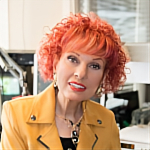
POPP TALK! A fast-paced Magazine-style Show dedicated to keeping you on the cutting edge of today's hot button issues. The show is high energy, upbeat and entertaining. It gives you the tools to feel better, reach for that brass ring, and live longer and happier. It's Fun! It's Fascinating! It has guests from politics to health, to the stars from La La Land. It's Radio with sizzle!
Speaker Identification
Speaker 1 - Show Announcer, Announcer
Introduces the show and host Mary Jane Popp in the show intro.
Speaker 2 - Mary Jane Popp, Host
Introduced by the announcer and identifies herself as the host of Popp Talk.
Speaker 3 - Sheila Seppi, Guest
Introduced as author and multidimensional life coach, discusses her book Cosmic Convergence.
Speaker 4 - Kathleen Troy, Guest
Introduced by Mary Jane Popp as author and dog trainer Kathleen Troy.
[Music: show intro theme]
Speaker 1 - Show Announcer, Announcer:
Are you ready for new dimensions and countless possibilities today and for the future? It's an exciting new time, and the answers are out there. So join Mary Jane Popp as she explores the unique and unusual for a better life on Popp Talk in search of the truth. And here she is, Mary Jane Popp.
Speaker 2 - Mary Jane Popp, Host:
And you know I love to bring you all kinds of great stuff, and all positive stuff. Not positive in that we're not in a positive world right now, but that's not what I'm talking about. I want to give you tools so that, that's why we go in search of tools that could make it a little bit better. So that's what we're going to do a little later on. It's going to be one of my favorite subjects, talking about dogs. But we always worry about, "Well, can we train them correctly and everything?" But what we need to do, and this is reason I've got a special lady on today.
Speaker 2 - Mary Jane Popp, Host:
She says you can train with compassion, and that's what I always look for. I don't want yelling and screaming because that doesn't help. It doesn't help humans and it doesn't help any kind of animal either, animal companions. So that's a little later on. But before we do that, are we in a world that is on different dimensions? You know, we've talked about this on the air before, that in this dimension, I'm Mary Jane Popp and I'm doing the Popp Talk radio show. Another dimension might be, I don't know, they might be might be a Mary Jane, but she's completely different and maybe another dimension.
Speaker 2 - Mary Jane Popp, Host:
Well, we're going to be talking a little bit about that and opening up some possibilities. And you know me, that's what we try to do with Popp Talk. We go in search of new dimensions, we go in search of ways and answering the whys. Hang in there with us because we got more to come.
[Advertisement: Audien Hearing Aids]
[Advertisement: Safe Step Walk-In Tub]
Speaker 2 - Mary Jane Popp, Host:
It's Popp Talk, and you know we do talk.
[Music: transition theme]
Speaker 2 - Mary Jane Popp, Host:
Well, folks, she is a multidimensional life coach, holographic alchemist, light language linguist, regression therapist, shamanic practitioner and spiritual teacher. Wow, what a list, isn't it? What we're going to find out about Sheila Seppi, she uses her higher dimensional frequencies to empower others to embrace their higher selves. Now, she founded the Conscious Awakening Network, I want to get it right, and Spirit Way Wellness, and she's authored quite a few books like Starseeds, Hybrids, and in 2019, she published Walk-Ins: Cosmology of the Soul.
Speaker 2 - Mary Jane Popp, Host:
And her goal basically is to help all of us spiritually remember who we truly are. Sheila, nice to have you with us, but I thought I knew who I was. What do you mean I have got to find out who I am? Don't I know who I am?
Speaker 3 - Sheila Seppi, Guest:
Well, thank you so much for having me here. And of course, now we're embarking on a subject that I absolutely love, because, yeah, we all know who we are in this third dimensional reality. We're a mom, we're a daughter, we're a wife, we're a friend, et cetera. But when we start to look at our soul, we can look at things just a little bit differently, because my experience has shown me that, you know, we are, and I think most of us know this, that we are eternal beings. Our soul never dies.
Speaker 3 - Sheila Seppi, Guest:
And for me, the soul is a continuous like a divine source consciousness unit that takes one form after the other to fulfill a given purpose. And how we do that may differ from lifetime to lifetime and person to person. So when I talk about people, I like to talk about the broad aspects of who we are as far as a multidimensional being.
Speaker 2 - Mary Jane Popp, Host:
Okay. Now, you say you are a multidimensional life coach. What does that mean?
Speaker 3 - Sheila Seppi, Guest:
Well, what I do is help people to understand who they are at the essence of their soul. And in the most recent book that I wrote, Cosmic Convergence: Journeys of Walk-ins, Starseeds, and Hybrids, I really began to talk with people, as I do in my sessions with people, about the powerful exploration of the multidimensional aspects of our souls because we cross time, space, and reality. Not only are we here in human form, we may also have had an angelic lifetime. We may ourselves be a source seed. We also could be a walk-in, a starseed, a hybrid.
Speaker 3 - Sheila Seppi, Guest:
And I really helped people to understand.
Speaker 2 - Mary Jane Popp, Host:
Whoa, whoa, whoa. What What do you mean by a starseed?
Speaker 3 - Sheila Seppi, Guest:
Okay. So a starseed is when a soul enters into this lifetime, a starseed is a soul that comes from another planet or another star system. And sometimes people, when they come to me, they want to discover where they came from. What's the origin of their souls? And of course, if we go back to the very, very, very, very beginning, of course, we are all part of the god energy, the divine source. Some people call it grandmother, grandfather, great spirit, divine source. There's a hundred thousand different names that we could call it.
Speaker 3 - Sheila Seppi, Guest:
But we all, in my opinion, are individuated aspects of that divine source energy having an incarnation experience truly for the opportunity of experiencing and discovering who we are at the soul essence.
Speaker 2 - Mary Jane Popp, Host:
Is it are we discovering who we are or who we were?
Speaker 3 - Sheila Seppi, Guest:
No, it's actually discovering who we are. Excuse me. Because when we come into life, a lot of times people just, they think they're the person that they look at in the mirror. They don't realize that it's very possible that they have been on this planet many, many times, which makes their soul a kaleidoscope of experiences. They may have been from other planets. They may have been from other realms. They could have been like an ultradimensional being, which of course an ultradimensional being is a soul that actually will inhabit in between the dimensions.
Speaker 3 - Sheila Seppi, Guest:
And well, that's an interdimensional being, in between the dimensions. And the ultradimensionals are way beyond the system that we have right now or what we would call our universe.
Speaker 2 - Mary Jane Popp, Host:
Huh. Yeah, it it almost sounds too complicated, way too complicated for us to understand.
Speaker 3 - Sheila Seppi, Guest:
Well, one of the things that I have come to understand, and I'll share very, very quickly, because I'm considered a walk-in soul. Now, I'll be honest with you, if this experience had not happened to me, I don't even think I would believe that it was possible.
Speaker 2 - Mary Jane Popp, Host:
You're a walk a walk-in soul? Is that
Speaker 3 - Sheila Seppi, Guest:
A walk-in soul.
Speaker 2 - Mary Jane Popp, Host:
Okay. What does that mean?
Speaker 3 - Sheila Seppi, Guest:
What happened? Well, what happened was I was 38 years old. I was a mother of three children, had a very dysfunctional marriage. I walked with a cane. I had been diagnosed with bone cancer, brain tumors, fibromyalgia, chronic fatigue. I had all kinds of symptoms that really had put my body, my mind and even my spirit into a downward spiral. And there were some days I didn't even care if I got out of bed. And so it was September the 23rd, 1999. I went to bed a very sick person.
Speaker 3 - Sheila Seppi, Guest:
And about 7:00 the next morning, it felt like someone reached down, grabbed me by the hair of my head, and pulled me bolt right up in bed. And then it was like lightning ran through my body. And then I was in white space, and I don't know how long I was in this white space. But when I came back to myself, my peripheral vision came in, and then my frontal vision came in. And everything was the same, but everything was different. I did not know that in that moment, I had had a soul augmentation, meaning that the old soul had left and a new soul had come in.
Speaker 3 - Sheila Seppi, Guest:
And when that occurred, I was instantaneously healed. Every symptom that I had totally went away. And when I went back to the doctors, they basically patted me on the head and sent me on my way, and just said, "Well, I guess our medications have worked." Nobody really dove any deeper than that. And in that moment that that happened, I began to think maybe I was having a psychotic break, because all of a sudden, you know, my intuition was very, very high and I started remembering things that I didn't know when I went to bed the night before.
Speaker 2 - Mary Jane Popp, Host:
Now, I I do have to I'm going to interrupt simply because you said the soul that was you know, your broken body, went away and another soul came in. So what happened to that soul that went away?
Speaker 3 - Sheila Seppi, Guest:
Well, that soul that went away just continued on its journey. I don't believe that that well, let me back up. When we incarnate into these bodies, we have what's called a soul plan. And a soul plan then is responsible for allowing us to have the unfoldment of experience that helps us discover who we truly are on a soul basis. And so when we have these types of experiences, they're written into the soul plan. So the soul of this body left, continued on its own spiritual expansion journey, and I was the aspect that came in.
Speaker 3 - Sheila Seppi, Guest:
And when I came in, I brought all kinds of universal information. Now, I have to tell you, before this time, I'd never even read a metaphysical book. I had read something about angels, and that was the extent of it. I didn't know, nor did I believe in past lives. All of this was brand new to me. And I only discovered who I was when I sought a psychologist because I had my background with psychology, and I had assured myself I was having a psychotic break, because things like this just do not happen to normal people, okay? It just doesn't happen.
Speaker 2 - Mary Jane Popp, Host:
Yeah.
Speaker 3 - Sheila Seppi, Guest:
But some of those memories, excuse me, that I have, um, I call the ensoulment process, that begins to really explain who we are on a soul level. And it all begins with source or God, and it comes down through templates of creations, the unfoldment of our higher selves, and I think most of us are familiar with the higher self. Within that monad of template of creation is something what's called the over-soul. Within the over-soul are soul groups, which I think most of us have heard about soul groups, we've heard about soul families. And soul families are made up of individual over-souls.
Speaker 3 - Sheila Seppi, Guest:
So if you were to double up your fist and just stick it in the air, just imagine that is your over-soul. It's an extension. That arm is extended all the way back up to the source energy. But if you were to open your fingers, all of those fingers extending from your over-soul are what's called the shantius khan. Now, the shantius khan holds all the information that we need that's necessary for this particular lifetime. It has our higher self stream, our spiritual energetic body, our soul, all of the human form that we need, all the genetic, everything.
Speaker 2 - Mary Jane Popp, Host:
Do we But do we choose Do we choose what's going to be in that soul?
Speaker 3 - Sheila Seppi, Guest:
Yes, we do. Actually, we do. That's part of the soul plan that I mentioned. And so let's say someone comes in to a lifetime and their entire soul group says, "Hey, group, for the next 1,000 years, we're all going to work on feeling worthy of love." Everybody's like, "Yay, that sounds great." Okay, so that's your overall theme. You come into a lifetime and you're trying to learn about worthiness of love. So what's going to happen? You probably incarnate into a family that makes you feel shame, blame, guilt, the "Shut up, sit down, you're to be seen, not heard, you're not supported in your intuitional beliefs."
Speaker 2 - Mary Jane Popp, Host:
How the heck am I going to learn about love in a family like that?
Speaker 3 - Sheila Seppi, Guest:
That's right, because as you get older, the love that you learn about is through forgiveness and compassion, and understanding that really this family is part of your soul group. They have come in, incarnated to help you learn, to experience worthiness of love by providing an opportunity for you to overcome. So in a way, instead of these people triggering us, we can start to drop into gratitude.
Speaker 2 - Mary Jane Popp, Host:
Now, what about what about a baby that is born and dies within a few hours? What They didn't have any time to learn anything, did they?
Speaker 3 - Sheila Seppi, Guest:
Well, actually, you know, some souls actually come in and they're only here for the birth process. Because imagine, if you want to understand the majesty, the power of the creative force of the source energy, where better to learn it than in the womb? When you are experiencing that mitosis, when you come in and all of a sudden there's that cell division, can you imagine if you could remember what that was like? That energy, that power, that source energy power? And a baby, you know, a baby's soul does not solidify, does not fully connect with that silver cord until they take their first breath.
Speaker 3 - Sheila Seppi, Guest:
And that may be all the experience that that infant needed.
Speaker 2 - Mary Jane Popp, Host:
Huh.
Speaker 3 - Sheila Seppi, Guest:
Also, that infant could have volunteered to say, "Hey, I'll come in to my parents," who possibly is part of their soul group, "because I want them to learn a particular lesson through this experience, and I volunteer to help them do that." You know, after having the experience that I've had and learning more and more information and remembering, uncovering, you know, memories that I have, you know, I've learned that this is such a beautiful, beautiful existence and opportunity that we have to be here on Earth. And when I say that, a lot of people say, "Well, wait a minute, you know, what's happening right now?"
Speaker 3 - Sheila Seppi, Guest:
There's nothing but war, there's nothing but sadness, there's nothing, you know, people are dropping into fear. There's hate, there's grief.
Speaker 2 - Mary Jane Popp, Host:
Hate. Yeah.
Speaker 3 - Sheila Seppi, Guest:
And I always tell people, what happens when you walk into a room and the electricity is out? You're going to grab a flashlight, right? When you turn that flashlight on, it's going to begin to illuminate those things that was in the darkness. And my personal belief is more and more people are spiritually awakening. They are beginning to look around at this world and they're like, "Uh-uh, that's not acceptable anymore." And the more people who raise their vibrational frequency, the more we begin to see what's in the darkness.
Speaker 2 - Mary Jane Popp, Host:
Now, you said that your first soul experience was in the angelic realm. That sounds very nice, but not the stuff that you're telling me that a person can go through doesn't sound that nice.
Speaker 3 - Sheila Seppi, Guest:
Well, you know, it's not so much about nice, it's about the experience. Because we are here to gather experience. When you're on the other side, and I have memories of being on the other side, it's not like, "Was everything nice? Was everything all roses?" If you had a life like that, you've learned very little, because you don't have the opposition to overcome. Life, in my opinion, is all about the experience: the good, the bad, the ugly, and how we choose to move through it. And in the book, I really talk about that and I talk about, you know, some of the new types of souls that have come onto the planet, which are the starseeds, the walk-ins and the hybrids.
Speaker 3 - Sheila Seppi, Guest:
But I also talk about this ensoulment process.
Speaker 2 - Mary Jane Popp, Host:
When you say starseeds or walk-ins, are we talking aliens?
Speaker 3 - Sheila Seppi, Guest:
Well, we're talking galactic family. Now, some people call them aliens, but you have to remember, how big is God? Does God go through the universe and only make one template to incarnate into? I don't think so. You know, look at all the dogs on the planet. We have a variety, and you're going to talk about them a little later. So we've got a variety of dogs. Why would you not have a variety of species so that you could experiment through and experience through? So for me, what people are calling aliens, alien is actually anything considered alien is anything considered outside the norm.
Speaker 3 - Sheila Seppi, Guest:
If we have a galactic being, that's outside the norm, that's outside our collective systems here on the planet. So we consider that alien. But in fact
Speaker 2 - Mary Jane Popp, Host:
But each person each person sees norm as something different.
Speaker 3 - Sheila Seppi, Guest:
That is correct. That is the beautiful thing about the human experience. We all get to come to experience right where we are on our own wheel of knowledge.
Speaker 2 - Mary Jane Popp, Host:
Okay. So what's the ultimate goal, just learning, knowledge?
Speaker 3 - Sheila Seppi, Guest:
Well, the ultimate goal in the end is the reunification with that source energy. And we go through processes after processes. In the book, I talk about how we move through the dimensions, how we move through the densities. And of course, a density and a dimension is very different. A density refers to the vibrational state of like conscious matter, whereas a dimension is the perception of a conscious reality. And within the dimensions, it takes three dimensions to make what's called a harmonic universe. And I always look at these harmonic universes
Speaker 3 - Sheila Seppi, Guest:
if you have a cup, that the dimensions are the the dimensions are the liquid that's on the inside of the cup, and you get enough dimensions in there, it starts to get heavy, that becomes the density. So you're like, in harmonic universe 1, we have dimension 1, 2, and 3, harmonic universe 2, we have 4, 5, and 6, and we progress all the way up to harmonic universe 5. And the important thing, so many people now are talking about this spiritual awakening that's going across the entire planet.
Speaker 3 - Sheila Seppi, Guest:
And the beautiful thing about that is right now we're in harmonic universe 1, which is dimension 1, 2, and 3, but we are in density state 3. And what will happen is when enough people are holding 4th, 5th, and 6th dimensional consciousness, then we shift into the harmonic universe 2, and then we are in density 4. Now, those, I mean, there's so much information.
Speaker 2 - Mary Jane Popp, Host:
Now, I got to be honest with you. I'm already confused. I need a program.
Speaker 3 - Sheila Seppi, Guest:
Yeah, there's a lot of information about densities and dimensions, but the reality of it is, what I'm talking about is the progression of our conscious reality.
Speaker 2 - Mary Jane Popp, Host:
Dimension of our Say that again.
Speaker 3 - Sheila Seppi, Guest:
I said what I'm talking about is the perception that we have of our conscious reality.
Speaker 2 - Mary Jane Popp, Host:
Okay.
Speaker 3 - Sheila Seppi, Guest:
Because my reality, I would dare say, is a little different than yours.
Speaker 2 - Mary Jane Popp, Host:
Okay. What is What is your reality?
Speaker 3 - Sheila Seppi, Guest:
Well, like right now in my reality, I work every day with my guides. I receive all of this information from what's called my collective. When I work with people, I am able to work in their holographic field. So I'm able to see that with my eyes. I'm able to go in and to look at the distortions that are in their field and help them to understand where these distortions have come from, because sometimes they're ancestral patterns, sometimes they're life imprintations, sometimes they're behavioral patterns that have been passed down or that we have learned.
Speaker 3 - Sheila Seppi, Guest:
The other thing is if we If everyone goes to a movie and you're coming out and you're talking about the movie, yeah, you had the shared experience of going to a movie, but most of the time people pick up something a little differently and you're like, "Oh, yeah, I didn't really I didn't realize that, or I didn't see that." That's what I'm talking about as our reality, our perception of reality.
Speaker 2 - Mary Jane Popp, Host:
Got it. So what is Sheila Seppi's ultimate goal in this reality?
Speaker 3 - Sheila Seppi, Guest:
Basically, as a walk-in, I have come in to help people to understand who they are at a soul level, to provide tools to them, to help them to overcome, because a lot of people that come to me suffer from like the shame, blame, the guilt. They have illnesses. I work with them. You know, we provide different tools to them so that their bodies, their minds, even their spirits can begin to heal. So my job is to serve as a way shower, to help people to understand the depth of who they are on a soul level.
Speaker 2 - Mary Jane Popp, Host:
Amazing. Do you have a website?
Speaker 3 - Sheila Seppi, Guest:
I do. It's sheilaseppi.com.
Speaker 2 - Mary Jane Popp, Host:
Okay. Spell the name because they might spell it wrong, okay?
Speaker 3 - Sheila Seppi, Guest:
Okay, S-H-E-I-L-A, S-E-P as in Paul, P as in Paul, I .com.
Speaker 2 - Mary Jane Popp, Host:
And Cosmic Convergence, which is your latest book, is available every place, yes?
Speaker 3 - Sheila Seppi, Guest:
It is. It's available on The best place to go is always to go to Amazon. But it's Cosmic Convergence: Journeys of Walk-ins, Starseeds, and Hybrids.
Speaker 2 - Mary Jane Popp, Host:
Fantastic. Well, I'm going to have to come to you and say, "Okay, where am I?" you know. "Who am I? Why am I?" you know.
Speaker 3 - Sheila Seppi, Guest:
Right. I would love to talk to you about that.
Speaker 2 - Mary Jane Popp, Host:
You're the best. Thank you so much, Sheila, for taking the time to be with us, and keep up the good work, because, boy, we need
Speaker 3 - Sheila Seppi, Guest:
Well, thank you. Many blessings.
Speaker 2 - Mary Jane Popp, Host:
And to you, too. We need a lot of help.
Speaker 3 - Sheila Seppi, Guest:
Thank you. All right. Thanks so much.
Speaker 2 - Mary Jane Popp, Host:
You bet. That's Sheila Seppi, and again, you can go to sheilaseppi.com. Her latest book is Cosmic Convergence. Boy, I tell you, we need all the help we can get seriously, folks. But you know what? I'm going to talk about something that makes me happy all the time, and that's about our animal companions. They always make me happy. Hang in there with us because we got more to come.
[Advertisement: Sell My House Fast]
[Advertisement: US MED - Continuous Glucose Monitors]
[Advertisement: Diabetes Management Line]
Speaker 1 - Show Announcer, Announcer:
And here she is: Mary Jane Popp.
Speaker 2 - Mary Jane Popp, Host:
Here we go.
[Music performance - "What a Good Dog" by song lyrics]
Speaker 2 - Mary Jane Popp, Host:
Oh, they're always good dogs. Once in a while, they can be a stinker or two, but, yeah, that's okay, you know. We love them, they love us, and it makes our lives so much better. It really does. But are you a dog lover, folks? Like, who can't be? I know I am. Well, Kathleen Troy sure is a dog a dog lover to the max. She's been involved with dog training over 20 years, but it's based on training methods with compassion, consistency, and, I think this is important, respect.
Speaker 2 - Mary Jane Popp, Host:
We'll find out what all of that means. And here's the kicker: Kathleen says there are no bad dogs. Well, I'll keep that in mind the next time I hear a growl and a snap. But let's find out how she trained her own dog Dylan. Did you know Dylan can count to 10 and he understands multiple languages and hand commands? Oh, and Kathleen authored the book Dylan's Dog Squad. I love the name of the book. Hi, Kathleen, how are you?
Speaker 4 - Kathleen Troy, Guest:
I am well. Thank you for having me today.
Speaker 2 - Mary Jane Popp, Host:
Now what breed is this amazing pooch?
Speaker 4 - Kathleen Troy, Guest:
Dylan is an American Cocker Spaniel. And fluffy dog, looks like he belongs on a little girl bed, but he is amazing.
Speaker 2 - Mary Jane Popp, Host:
So how long have you had him?
Speaker 4 - Kathleen Troy, Guest:
Well, I got him when he was actually 18 months old. There's a there's a story there. So, my friend was a American professor in Daejeon, South Korea, and he was lonely, and so he decided to get a dog, and so he bought Dylan at Walmart. We never told Dylan this. And I said, "You need to train him." And he goes, "No, no, no, no, no. I want a Bohemian dog with no restrictions." And I said, "Well, good luck with that."
Speaker 2 - Mary Jane Popp, Host:
Yeah, no kidding.
Speaker 4 - Kathleen Troy, Guest:
Yeah, so all was well until my friend got married and Dylan ate all the furniture in their apartment. He ate all the coverings off their electrical wiring, you know, like computer cords. He ate the inside of their BMW, and here's the part I liked, when he ate their wedding pictures and the negatives, she said the dog's going to Kathleen. And so, he became my dog. He was 18 months old, didn't know his own name, and wasn't potty-trained.
Speaker 2 - Mary Jane Popp, Host:
Aww.
Speaker 4 - Kathleen Troy, Guest:
And I know. There's a word for that: lazy.
Speaker 2 - Mary Jane Popp, Host:
Yeah.
Speaker 4 - Kathleen Troy, Guest:
Yeah. But we started, and he just caught on. And that's that's the beauty of a dog. They love to please and they have to be the most optimistic creatures on Earth. They really are.
Speaker 2 - Mary Jane Popp, Host:
Yeah, that's true. But you know what, not all breeds are bright, just like not all people are bright.
Speaker 4 - Kathleen Troy, Guest:
They have other priorities. But you know you brought up a good point because people have to recognize what that dog was originally bred to do, such as to herd cattle, well, they're going to herd sheep in you know in the old days, and so if you have kids in the house, they're going to want to run after them that way. If they were used to hunt vermin, they're going to dig in your yard, so you have to recognize that.
Speaker 2 - Mary Jane Popp, Host:
Yeah, I I understand what you're saying because I've got two Sammies, and Samoyeds are fairly size big not huge, but they're 65 lb, so that's that's a lot of dog there with two of them. The girl our girl, she's smart, very smart. She's the leader of the pack, whether you like it or not, she's in charge. The boy, he was in the line for white, not bright, but he was he's adorable. He learned a lot. He be He was a a rescue dog that actually became a grand champion because the the I I didn't want to do dog shows, I'm not a dog show person, neither was my husband, but the the breeder was saying, "Oh, it's my legacy. It's Yukon dogs. Please, can I show him?" Yada yada yada. So we said, "Oh, okay. You know, you can show him." Well, he became a grand champion, which I I thought, "Whoa, okay. I don't know what that means, but because I don't know." And and she would always say, "Well, they've got to look this way and that way." And I'm going, "I please, I don't know anything about I just love my dog. My dog is a huggy, and I hug my dogs, and that's it." But they're well-trained. I mean, they they know commands. One of my neighbors came over one time when I was feeding them, and yes, they bark like crazy, and I'm going to ask you about that. How do I stop? Breakfast and dinner: bark, bark, bark, bark, bark, bark, bark. And I the one good thing though that my husband taught them is that they will not look at each other's dish, and they will sit there even though the dish is is full of food in front of them, and they will not do anything until I give them the word okay. Then they eat. And and everybody was amazed at that. I said, "Well, no, you know, it's something because we didn't want them all of a sudden attacking everything, you know. It's just not it." But anyway, so how do we begin? I mean, I respect my dogs. They were bred Samoyeds were bred in Siberia to herd reindeer and be sled dogs and then to sleep with their people in the huts to keep them warm. Cause they're if folks, if you don't know what a Samoyed looks like, it's a big white fluff, you know. They're double-coated. So how do I, you know, do what I'm supposed to do with them because of what they were bred to do? I mean, they sleep with me. That's okay, but you know I can't have I'm not I don't have sleds, so I can't do sled dogs. And we don't have reindeer, so I can't have them herd reindeer. So what would I do to keep them happy because of their breed?
Speaker 4 - Kathleen Troy, Guest:
Well, basically they're unemployed now. But you know they they love to work. Here's something that you can try. I understand that you're in the Sacramento area, so you do have weather and things like that. You might consider getting a treadmill that you put in your garage and, I know they're big dogs, 65 lb, but originally, start with them by putting them on the treadmill part and you be on it as well. You know your legs your feet can be on either side of them, and just start it on low and have them walk along.
Speaker 4 - Kathleen Troy, Guest:
And you can increase the speed a little bit. The idea isn't to run them off their paws, but just to give them some exercise and things like that, but also something they can do when it's maybe too early in the morning to go out, or the weather's bad, or something. But they will get addicted to it, and they'll actually hop on it on their own and they'll want to walk on it. Of course, never leave them unattended. All right. And the other thing is to wear them out. So, long walks, a fast game of catch, things like that, are are really good because it will help settle them down.
Speaker 2 - Mary Jane Popp, Host:
Well, my girl is a couch potato. You know, she she's not she doesn't have any interest in that stuff. Him, on the other hand, he's like on uh uh springs. You know, he can jump up on the bed sideways. I mean, this is, this boy's got a lot of energy. They're only a year and a half apart. She is his aunt. Now, she's been spayed, he has not, because in order to show him, which I retired him at grand champion, I said, "That's it, no more," cuz people constantly think that dog show, you make a lot of money. Well, you don't get money. I got a big box of ribbons, you know, but that's about it. And it can be a very expensive thing. And I don't know, I'm not knocking people who want to be dog show people, I'm not, but they're a different breed, if you know what I mean. All it's like they're catty. They can be very catty. It's like, "Oh, that judge didn't know this, or oh, that person didn't do that." It's a dog show. Have fun, you know. Show your dog is fun. And it it reminds me of, you know, moms and dads who push their little girls to be in a pageant or something. If they enjoy it, that's okay, but if they don't enjoy it Like our girl, when we we had her since she was like 12 weeks old, and the breeder wanted to show her, and I said, "Okay." Well, she hated it. I mean, her little ears went back, her tail went down, she was so unhappy. I said, "That's it, no more." If she doesn't like it. However, he actually being a rescue dog, he was neglected and not abused, but neglected as a puppy in the back just put outside and ignored. So when he went into the ring and got the attention, he loved it. You know, he would he would blow up like a like a puff fish, you know, and just love the attention. So that's why we
Speaker 4 - Kathleen Troy, Guest:
A star was born.
Speaker 2 - Mary Jane Popp, Host:
Yeah, exactly. So we we didn't mind showing him for that reason, but, you know, you get to a point where it's like, yeah, I don't want to get into the upper echelon, if you know what I mean, because it wasn't fun anymore. But anyway, so do we need One of the things, shouldn't people know about the breed of dog that they have even if it's a mix? They still need to know the breed, right?
Speaker 4 - Kathleen Troy, Guest:
They should, because, again, it's just knowledge. It's just like, listening to you, I was thinking how lucky you are to know about your dog's past. You know that one was a rescue dog and one wasn't, and one likes to be on the couch and another one doesn't. And all that is going to make you a better pup owner and bond with your pup better, because you're going to be able to give them what they need and what they want. And they've got two different interests, and it sounds like that's fine with you, and that that's good. I think it's important to always be stimulating your dogs in some capacity. You know, everyday think of something that's mentally stimulating for them to do, whether if it's just walking outside or going to a new park, or you're trying a new game, things like that, something that is mentally stimulating to them. And it gives them success, and they like that. You know, they like winning, just like you.
Speaker 2 - Mary Jane Popp, Host:
They like to go for rides, so lately, I've been just saying, "Okay, let's go for--" As soon as I say the word, you know, it's like boom right to the garage door, they're waiting. And, you know, I can go 2 mi and come back again and they're just as happy as could be. They got a ride. I don't have to go for a long distance, they don't they don't care, you know, they just got a ride, and that was it.
Speaker 4 - Kathleen Troy, Guest:
Well, you know, even if your house is very large, it becomes very small when you're there all the time. And think about how you get cabin fever perhaps, and it just feels good to get out, and it releases all those good endorphins, and you meet people, and you have conversations, and you know, you recognize the breeze is blowing, and it smells like fall or or something like that. All that's wonderful. And to a dog, that is just about as good as it gets. It's really great.
Speaker 2 - Mary Jane Popp, Host:
Uh well said. Okay, that that it makes good sense what you're talking about. And it it's fun because they they are loving dogs. Uh they're people dogs cuz that's what they were raised to do: to sleep with the people. Did I tell you a real cute story? I don't know if this is absolutely true, but I've been told it it is. You You remember I don't know how old you are, but do you remember the rock group group called Three Dog Night?
Speaker 4 - Kathleen Troy, Guest:
Oh, of course. Yes.
Speaker 2 - Mary Jane Popp, Host:
It seems that, and I don't know how they found out, I don't know if they went to Siberia or whatever, because the it was the Samoyede people, but in in in this country, they call them Samoyeds instead of Samoyede. And they would sleep with three dogs. Each Each person would have three dogs around them because they had, you know, multiple dogs. And this group, when they were forming, found out about that and that's how they got called they called themselves Three Dog Night.
Speaker 4 - Kathleen Troy, Guest:
Interesting. Interesting. I like that.
Speaker 2 - Mary Jane Popp, Host:
So it's fun, and it's also fun for people to know more about their dogs and, you know, what they do, and how they were bred, and and they they are meant to be very special to us, you know, and they they keep us They have respect for us, so we need to have respect for them. I like that word.
Speaker 4 - Kathleen Troy, Guest:
I do too. And I think it's true, you know. You think about maybe your friend who has a different point of view, but that's your friend and you respect their point of view. And it's the same with a dog. You know, they've got preferences, the things they like to do or they don't like to do, and you can respect that. Frankly, they'd be really boring if they were exactly like you. You like their personality, that's why you got them. You got them for company, something to share, and they're sharing the things they like with you and you can share the things that you like with them. So that's why we're pack animals, they're pack animals, and we're so suited for each other.
Speaker 2 - Mary Jane Popp, Host:
Yeah. Hang in there with us, cuz we got more to come.
[Advertisement: Consolidated Credit]
[Advertisement: Private Healthcare]
Speaker 2 - Mary Jane Popp, Host:
If you want to hear the latest and how to be healthier, happier with a new-age twist, then join me, Mary Jane Popp, as we go in search of truth on Popp Talk. You'll hear the best and brightest in lifestyle and perhaps a step into the other side to make your life better on this side on Popp Talk. Popp Talk is a must for your life on BBS Radio.
Speaker 1 - Show Announcer, Announcer:
And here she is: Mary Jane Popp.
Speaker 2 - Mary Jane Popp, Host:
Here we go. What drives me crazy is, I don't know, maybe I'm being too picky about this, but I cannot stand when I know someone has a dog that stays outside all the time. They are pack animals. They want to be with their pack. We're their pack.
Speaker 4 - Kathleen Troy, Guest:
Exactly. And people say, "Well, I have a dog for protection." Well, then that really doesn't make sense, because let's say that you do have an intruder in the yard. Well, once they get into the house, the dog's job is done. They're going to go back to sleep. So it doesn't make sense. It's like anything else in life, you need to be a responsible person too, and if you can't take care of this dog, then don't get it in the first place. There is someone with a loving home that would welcome a dog and its company. So you need to bring the dog in. If you do not give to the dog, the dog will not give to you, and the only way that's going to happen is if you stay in each other's company.
Speaker 4 - Kathleen Troy, Guest:
And that's how you bond. And that's why things such as just dog training, even if it's a simple obedience class, it will help you bond with your dog and you'll have something special that you just don't have with anyone else.
Speaker 2 - Mary Jane Popp, Host:
Do you take a lot of time because Dylan can actually count to 10? That's a lot How long did it take you to train that?
Speaker 4 - Kathleen Troy, Guest:
Okay. So, I got to tell you that one's hard. In fact, a lot of dogs never get it, and so I I know a lot of trainers and, you know, let's be frank, you know, if you ask 20 trainers the same question, you'll get 20 different answers. But and I hear a lot of them say that they use food to train, and I don't I think yummy treats, but not food to train them to count. The reason is this: dogs love food, they're good little eaters, and when they see food, that's really what they want. So all they're thinking about is, "Am I going to get the food or not?" So instead, what I did when I trained Dylan was I started with the basic recognition of objects such as a book, you know, a door, and a ball. So, what could you get a lot of? So tennis balls. Okay. So after he knew that it was a ball, then I would put it out and then I'd say, "One." And then I'd put out two, and I'd say, "Two." And I worked on this again and again and again. And then I would say things such as "Bring me two balls."
Speaker 4 - Kathleen Troy, Guest:
And if he got it right, "Yay yay yay," and he got a treat. If he didn't get it right, it was, "Yay yay yay," and we tried it again. So we would work on it that way, and it just took a while, a a a gradual process for him to recognize that the word "ball" was an object and "two" was a number. I do have to say Dylan had a 500 word and phrase vocabulary. So I talked to him just like I talked to people. My theory is if they can understand one word, they can understand two or three and put them together. You don't want it too complicated, but, you know, redundancy, repetition, things like that, is all very helpful in training.
Speaker 2 - Mary Jane Popp, Host:
I I know people like that. You don't do, you know, long sentences, you know, you've just got to do, you know, very short, two or three words and be done with it.
Speaker 4 - Kathleen Troy, Guest:
Right. You know, well, I'm sure you know people that if you send them two questions in a text, they will answer one, maybe. If you're lucky. So, you know, going back to the counting, that one is a tough one. That does take time, but, again, do it in stages: they recognize the object, again, a tennis ball, because I was aiming to getting him to count to 10, so I needed 10 tennis balls. You know, they had to look the same, and and that was kind of the trick too. That is a hard one, yeah.
Speaker 2 - Mary Jane Popp, Host:
What about multiple languages, seriously?
Speaker 4 - Kathleen Troy, Guest:
Well, why not? You know, why not? He was from South Korea, and so of course they spoke Korean, and my friend was an American, he spoke English, but yet Dylan would be out and about in the world, and it was kind of interesting because he was with me one day I live in Orange County and we were meeting with people who wanted our city to be like a sister city to them in Korea, and they were, you know, petting Dylan and they were talking in Korean, and Dylan was paying attention, and the one man said, "Oh, he understands." And he was kind of laughing. And I said, "Well, yes, he does." And he said, "Annyeonghaseyo." And Dylan perked up and gave him a big canine smile, because that is hello in Korean.
Speaker 2 - Mary Jane Popp, Host:
Oh, my gosh.
Speaker 4 - Kathleen Troy, Guest:
So, again, you know, I mean, if they can learn one, they can learn two, and just be consistent. Be patient. And you know, that's another thing too: if you're training your dog and it's not a good day for you, then don't do it, because he's going to pick up on your vibe. Or do it later. And, again, do it in short spurts. The idea isn't to wear him out, it's to keep him interested and make it fun. Make it a game.
Speaker 2 - Mary Jane Popp, Host:
Is it ever too late to begin training?
Speaker 4 - Kathleen Troy, Guest:
No. I don't think so. There's some things that are more advantageous than others at an earlier time. So, for example, let's say that you're lucky enough to get your dog as a pup, I would train him to be a Velcro dog, one that's going to pay attention to you and look at you, you know, and again pay attention to you, because later on when he's older, that's going to be very comforting to him. Again, the vocabulary, and and and things like that, but no, you can always teach a dog. Age Age just doesn't really matter. You know, it's inclination of the dog. Do they have an attention span? Again, are they used to focusing on you? Let me go back for a little bit.
Speaker 4 - Kathleen Troy, Guest:
If you were to get a pup, this is a great way to build: start with putting them on a 4-foot leash and, seriously, if you walk across the room, your dog goes with you. If you go in the refrigerator, the dog goes with you. You don't want longer than a 4-foot leash because you'll trip over it. After a couple weeks, just leave it on the ground. If you get up and walk to the door, see if your dog follows you. If he does, great. Okay? Letting drag the leash around a little bit kind of like Marley's Ghost in the chains. Again, that's why it's a 4-foot leash. And then after a while, take it off.
Speaker 4 - Kathleen Troy, Guest:
And he will just automatically look to you always. You will have naturally become the alpha dog. And so later on when they're older and maybe they're losing their hearing, they're losing their eye sight a little bit, they're going to rely on you more, and look to you. And so it's a very easy way to segue into an older age.
Speaker 2 - Mary Jane Popp, Host:
I It breaks my heart when I hear people yelling at their their dogs. It's just
Speaker 4 - Kathleen Troy, Guest:
Never yell. Never yell. Never yell. And never say their name in a negative command. Never. Here's here's a trick. So, I if you're a mom or if you remember being a child, and let's say that you're a child and you did something that wasn't your brightest moment, and mom would give you the look.
Speaker 2 - Mary Jane Popp, Host:
Yeah. Oh, yeah.
Speaker 4 - Kathleen Troy, Guest:
So you can use that with your dog. I would do that with Dylan. When he was maybe starting to get antsy, I would give him the look and then a slight shake of my head, and he would just calm down. And people say, "What? What? What was that?" And I'd say, "Dylan knows. Dylan knows." So you don't have to yell at them. And in fact, people think, going back to training, that they got to use this big, strong voice. No, they don't. Use your voice. Be clear. Be concise. If you use a different voice, the dog's not listening to you. They're thinking, "Wow, that's a strange voice. I wonder what that's all about." You've already You've already lost them. So just go with your natural voice and don't baby talk. That's annoying to you. It's annoying to the dog, and it's annoying to everybody around you.
Speaker 2 - Mary Jane Popp, Host:
Yeah. No kidding, that's true.
Speaker 4 - Kathleen Troy, Guest:
Yeah, so just be kind. It costs you nothing to be kind, and you get so much back in rewards.
Speaker 2 - Mary Jane Popp, Host:
So how do I get them to stop I mean, I know they're excited about getting their breakfast. They're excited They know the word breakfast after they're outside in the air and I go, "Breakfast!" you know, and they're like, "Woohoo!" You know, they know what's coming, but then they get in and they they they are smart, really. They know where their drawer is that I pick out things for them, or the cabinet where I get the food out, and all that. And as soon as I do, well, boy, you know, they start barking, and I know they're excited about getting their food, but I I would like to because it it could be annoying after a while. They won't stop.
Speaker 4 - Kathleen Troy, Guest:
I'm sure it's deafening, okay? I mean
Speaker 2 - Mary Jane Popp, Host:
Yeah, two of them at one time, you know, and big dogs with big mouths. They're also I mean, I love it when they're really good about letting me know if anybody's coming to the door or anything. This is a good thing, you know. I don't I don't stop them from doing that. But, you know, breakfast and dinner, come on, guys, quiet down a little bit. What do I do?
Speaker 4 - Kathleen Troy, Guest:
Okay. Well, here's an effective compromise. Okay, so I would love to tell you that every problem can be solved with good, great training. Yes, it's helpful, but, you know, the bottom-line answer is yummy, nutritious treat. Okay. So, you want to have a treat, even though you've got big dogs, you want to have a treat that's no bigger than your smallest fingernail, like size of your pinky fingernail. You want them to have a treat that they gulp, that they don't chew, because if they're chewing, they're thinking, "This is yummy and I want more." So what you're going to do is, and you already know some sign language, when they start to bark, put your finger to your lips, because it's sign language for quiet, and at some point, they're going to run out of steam.
Speaker 4 - Kathleen Troy, Guest:
And then, give them the treat, and then try it with another bark, and try it with another bark. And so, eventually, hopefully you're not deaf by then, but when they start to bark, put your finger to your lips, and you know, if you want to do shh with it as well, but put the finger to the lips, and when they stop, give them the little treat. So, the way to keep your treats handy, it's not very attractive, but if you wear like a little fanny pack, you can put them in a Ziploc, and that way your hands are always free. But, yes, it comes down to bribery.
Speaker 2 - Mary Jane Popp, Host:
Yes, and I have no problem with that. That's okay.
Speaker 4 - Kathleen Troy, Guest:
You know, it is what is effective and as long as it doesn't hurt them, and of which keep in mind that treats should not be any more than 10% of their caloric intake. So, again, very, very small, make them nutritious, and certainly something yummy, not something that looks like it came on the bottom of a parrot cage.
Speaker 2 - Mary Jane Popp, Host:
Got it. Yeah. Now do you have a website?
Speaker 4 - Kathleen Troy, Guest:
I do, absolutely.
Speaker 2 - Mary Jane Popp, Host:
And it is?
Speaker 4 - Kathleen Troy, Guest:
www.kathleentroy.com.
Speaker 2 - Mary Jane Popp, Host:
Okay. That's easy enough. And your book I I love the name of the book, Dylan's Dog Squad, available where?
Speaker 4 - Kathleen Troy, Guest:
Wherever books are sold. It's on Amazon. But actually, it is Dear Dylan's Dog Squad.
Speaker 2 - Mary Jane Popp, Host:
Oh, Dear Dylan's Squad. Oh.
Speaker 4 - Kathleen Troy, Guest:
Yes. And it it was actually born also out of what we talked about today, but also I write a middle grade series called Dylan's Dog Squad and it's about two boys and Dylan, based on the true story, my dog Dylan, and they do search and rescue and they solve mysteries all over the map. So yes, Dear Dylan's Dog Squad and then the Dylan's Dog Squad series.
Speaker 2 - Mary Jane Popp, Host:
Oh, that's beautiful. I love it. Thanks so much for being with us, and I'm sure we're going to have you back again.
Speaker 4 - Kathleen Troy, Guest:
My pleasure anytime. Thank you so much, Mary Jane. Bye-bye.
Speaker 2 - Mary Jane Popp, Host:
Okay, take good care. Once again, folks, thank you so much for joining me on Popp Talk. And let me leave you with this: "Tell me and I forget. Teach me and I remember. Involve me and I learn." That came from Benjamin Franklin. In the meantime, live simply, laugh often, love deeply, and above all else you dare to dream. Talk to you next time right here on Popp Talk.