
LaGrave Live, August 16, 2026
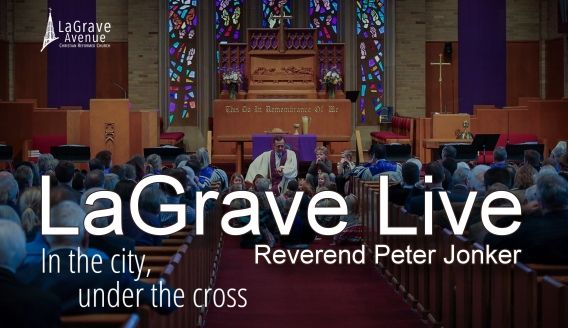


LaGrave Live
LIVE Evening Worship Service 08-16-2026
Breakfast with Jesus
About The Service:
We welcome Grant Mensonides to our pulpit. Grant grew up at LaGrave and he currently serves a church in Illinois.
Order of Worship:
https://lagrave.org/wp-content/uploads/2026-8-16-PM-Order-of-Worship.pdf
About Us:
We are a traditional CRC church in the middle of Downtown Grand Rapids, MI, worshipping at 8:40am, 11:00am, and 6:00pm. (10:00am and 6:00pm during the summer months)
We'd love to hear from you:
Connection: https://www.lagrave.org/contact
Let us pray for you:
Prayer: https://www.lagrave.org/prayerrequest/
Giving: https://www.elexiogiving.com/App/Giving/lagr107178
The August special offering is for Covenant House. Covenant House Michigan (CHMI) provides shelter and hope to young people aged 18-24 who are experiencing homelessness or victims of trafficking in Grand Rapids and Detroit. Their mission is to serve all youth who come to their doors with unconditional love, absolute respect, and relentless support.
Listen on the go:
Amazon Music: https://bit.ly/LGPodAmazonMusic
Apple Podcast: https://apple.co/3tuOdwQ
Google Podcast: https://bit.ly/LGPodGoogle
Soundcloud: / lagravecrc https://soundcloud.com/lagravecrc
Spotify: https://spoti.fi/3yXDFaT
Follow us!
Facebook: / lagravecrc https://www.facebook.com/lagravecrc
Instagram: / lagravecrc https://www.instagram.com/lagravecrc
Website: https://www.lagrave.org
#LaGrave #LaGraveCRC
Empty Nets, Full Table: Christ's Provision and Restoration
Summary
Bread for Hungry People
The service begins with Jesus’ declaration in John 6 that He is the bread of life, establishing the theme of God’s provision for both body and soul. Peter welcomes the congregation and connects the evening’s sermon to Psalm 23, especially the image of God preparing a table in the midst of trouble. The Heidelberg Catechism’s explanation of “Give us this day our daily bread” reinforces the call to depend on God rather than placing ultimate trust in human effort or created things. The pastoral prayer returns repeatedly to the language of living bread. Across the opening liturgy, physical food becomes an image of God’s sustaining presence, grace, and care. This theme prepares the congregation for the sermon’s picture of Jesus feeding weary disciples beside the sea.
Bible Translation and the Meaning of Covenant
Josh and Virginia Hamm describe their work with Wycliffe Bible Translators after many years based in Africa, most recently in Cameroon. Josh explains his linguistic work of studying language structures and helping create writing systems that make translated Scripture easier to read. Virginia describes training translation teams, checking translated texts for accuracy, and mentoring others who can continue that work. She explains that translation can be a seed-planting ministry in which the workers may not personally see the eventual fruit. Her example of the term “minkala,” used by one language community to express covenant as a deep family-forming bond, illustrates how translation can also deepen the translators’ own understanding of Scripture. The couple plans to continue supporting translation teams remotely while making periodic return trips to Cameroon.
Prayer for Daily Bread in Every Circumstance
The pastoral prayer expands the bread-of-life theme into the daily needs of the congregation and the wider church. Peter prays for widows and widowers, teachers and students, social workers, missionaries, businesspeople, lonely people, those struggling with doubt or temptation, people who have been abused, and those fighting addiction. He also prays specifically for Josh and Virginia as they transition into a new season of ministry. The prayer remembers an infant in the NICU and several congregation members recovering from falls, surgeries, serious illness, or approaching the end of life. The repeated request is that Christ would give living bread where human strength is insufficient. The prayer presents dependence on God as a need shared by people in very different circumstances.
Restlessness and Empty Nets
Grant’s sermon centers on John 21 and develops the passage through three movements: restlessness, recognition, and restoration. He compares the disciples’ failure to recognize Jesus with workers who fail to recognize the architect who understands a structure better than they do. After the resurrection, the disciples return to Galilee, where Peter responds to uncertainty by going back to fishing. Grant connects Peter’s instinct to ordinary human behavior: when people do not know what God is doing, they often fill the waiting with activity, planning, checking, working, and striving. The disciples work through the night and catch nothing, creating an image of restless labor that ends in emptiness. Jesus’ question about whether they have caught any fish gently brings their need into the open.
Recognition Through Christ’s Provision
The sermon’s second movement begins when Jesus tells the disciples to cast the net on the other side of the boat, and an overwhelming catch follows. Grant connects the scene with the earlier miraculous catch in Luke 5, arguing that John recognizes Jesus because the moment recalls the beginning of their discipleship. The repeated miracle shows that Jesus can provide what the fishermen’s own skill and labor could not produce. Grant emphasizes that Christ meets exhausted people not merely with criticism, but with provision and grace. The full net exposes both the disciples’ limitations and Jesus’ authority. Recognition comes when they see that the Lord standing on the shore possesses the power and provision they lack.
Breakfast as Restoration
The final movement focuses on the breakfast Jesus has already prepared when the disciples reach shore. Grant stresses that Jesus already possesses the fish and bread they were unsuccessfully trying to obtain, making the meal an image of provision before their contribution. He then explains the relational significance of shared meals, arguing that an invitation to eat communicated acceptance, peace, belonging, and restored relationship. For disciples who had abandoned Jesus, and especially for Peter after his denial, “Come and have breakfast” becomes more than an invitation to eat; it communicates restoration. Grant concludes that people cannot manufacture the forgiveness, righteousness, relationship, life, or peace with God that they most deeply need. Christ provides what human striving cannot, and the sermon closes by inviting weary people to receive the daily bread, forgiveness, and restored fellowship that Christ gives.
LaGrave Live

If you’re looking for a warm church that commits to an intensely pertinent Gospel in the Reformed tradition of the Christian faith, we invite you to worship with us. Our 1,800 members come from across West Michigan and gather weekly in our sanctuary for relevant Biblical preaching, beautiful music, and inspiring worship. We expand our worship through intentional outreach in our community and world, attentive care for our members, and plenty of spiritual enrichment and social opportunities for everyone.
We focus on a living Savior who provides genuine solutions to the deep needs of a hurting world. We are committed to need-meeting ministry in His name, and we are committed to being real people who enjoy real life and who cry real tears. Because we are a fairly large and diverse group in terms of age, occupation, marital status, lifestyle, and physical ability; our members create many accessible opportunities for community service, Bible study, and small social groups.
We worship God, the Almighty Creator of heaven and earth, and we enjoy expressing our vision of His holiness through traditional music and formal liturgy.
Music plays an integral part of our weekly worship gatherings. Congregational singing—of both traditional hymns and newer ones—is typically supported by our pipe organ. Vocal choirs, handbell choirs, small ensembles, instrumentalists, and vocal soloists provide additional music offerings.
Led by the Holy Spirit, we seek to worship and serve God in all of life, transforming His world and being transformed to reflect the character of Christ.
Founded by 36 Dutch immigrants on February 24, 1887, LaGrave Avenue Christian Reformed Church has always been deeply committed to both this local community and worldwide missions. God has seen fit to guide and bless these commitments with sustained growth, spiritual gifting, and a continual stream of new work for our members.
Speaker Identification
Speaker 1 - Peter, Worship Leader / Service Leader
The guest preacher later thanks “Peter” for the welcome, making Peter the most likely identity of the primary worship leader who gives the call to worship, welcomes guests, introduces the missionaries and preacher, leads the Heidelberg Catechism reading, and offers the pastoral prayer. Only the first name is supported by the transcript.
Speaker 2 - Congregation
The congregation participates in responsive readings, sung prayer responses, and brief liturgical responses. Individual congregants are not identifiable from the transcript.
Speaker 3 - Josh Hamm, Wycliffe Missionary / Linguist
He explicitly introduces himself as “Josh Hamm” and describes his role as a linguist with Wycliffe Bible Translators.
Speaker 4 - Virginia Hamm, Wycliffe Missionary / Translation Consultant
She introduces herself as Virginia and describes her work as a translation consultant. The transcript introduces the couple as Josh and Virginia Hamm.
Speaker 5 - Grant, Guest Preacher / Candidate for Ministry
The worship leader introduces a guest named Grant as a son of the church and a candidate for Christian Reformed ministry, and Grant later begins the sermon by thanking Peter. Grant’s surname is badly garbled in the automated transcript and cannot be confidently reconstructed from the source alone.
Speaker 1 - Peter: Our call to worship this evening comes from these words in John chapter 6. Jesus has just fed the five thousand, and the disciples come and ask Him some questions about eternal food.
The disciples say, “Our ancestors ate the manna in the wilderness; as it is written: ‘He gave them bread from heaven to eat.’”
Jesus said to them, “Very truly I tell you, it is not Moses who has given you the bread from heaven, but it is My Father who gives you the true bread from heaven. For the bread of God is the bread that comes down from heaven and gives life to the world.”
“Sir,” they said, “always give us this bread.”
Then Jesus declared, “I am the bread of life. Whoever comes to Me will never go hungry, and whoever believes in Me will never be thirsty.”
Thanks be to God.
[Congregational music / singing. The automated transcript repeats “Jesus said, I am the bread of life” many times and contains several unintelligible fragments. The duplicated STT output has been removed.]
Speaker 1 - Peter: He will feed us with His bread. And He greets us, saying, grace, mercy, and peace to you from God the Father, from Christ His Son, through the mighty and powerful work of His Holy Spirit. Amen.
Welcome, one and all, to our vesper service here at LaGrave Avenue Christian Reformed Church. Welcome to all of you who are guests here with us today, and all members as well. We are glad that we are here together in this place, ready to praise the Lord and to hear from Him, to hear from His Word.
Welcome to a couple of special guests this evening. Grant, I don’t know if you’re a guest. I guess you are a guest; you’ve been away long enough. He’s a son of this church, a son of Mark and Pam. Grant is a candidate for Christian Reformed ministry who was approved by Synod this summer. He is currently working at Bethel in Lansing, Illinois. We’re glad to have you back preaching for us again tonight, Grant.
Also, welcome to Josh and Virginia Hamm, who are here as a couple of our Henry Beets missionaries. They’re going to be talking after the service about their work for Wycliffe in Cameroon, their translation work. They’ll come up during the service and give us a little update, but afterward there will be a free meal in the MPR, and you’ll be able to hear more about what they are doing.
Tonight Grant is preaching on John 21 and the story of Jesus meeting His disciples on the beach. This is right after the resurrection, when the disciples aren’t quite sure what’s going on yet and are a little stressed out. That reminded me of Psalm 23, because Psalm 23 talks about a meal that God gives to us in the middle of our troubles and in the middle of our enemies.
Listen: “The Lord is my shepherd; I lack nothing. He makes me lie down in green pastures. He leads me beside quiet waters. He refreshes my soul. He guides me along right paths for His name’s sake. Even though I walk through the darkest valley, I will fear no evil, for You are with me; Your rod and Your staff, they comfort me. You prepare a table before me in the presence of my enemies. You anoint my head with oil; my cup overflows. Surely Your goodness and mercy will follow me all the days of my life, and I will dwell in the house of the Lord forever.”
Thanks be to God.
[Instrumental or congregational music. Exact selection requires verification.]
Speaker 1 - Peter: Question and Answer 125 of the Heidelberg Catechism reflects on God’s provision of bread by reflecting on the fourth request of the Lord’s Prayer. It reminds us that God feeds us every day and that we should put our trust wholly in Him.
Let’s rise together and say these words after I read the question.
Congregation, what does the fourth petition of the Lord’s Prayer mean?
Speaker 2 - Congregation: “Give us this day our daily bread” means: Do take care of all our physical needs so that we come to know that You are the only source of everything good, and that neither our work and worry nor Your gifts can do us any good without Your blessing. And so help us to give up our trust in creatures and trust in You alone.
Speaker 1 - Peter: At this time, I’d like to invite Josh and Virginia to come forward and share a little bit about their work for Wycliffe. Thank you.
Speaker 3 - Josh Hamm: Thanks for having us this evening. I’m Josh Hamm.
Speaker 4 - Virginia Hamm: And I’m Virginia, and we work with Wycliffe Bible Translators, whose vision is that people from every language will understand the Bible and be transformed.
Speaker 3 - Josh Hamm: My role in Wycliffe is as a linguist. We’ve been in the Francophone part of Africa, in several countries, since 2002. Most recently, we spent ten years in Cameroon on the west side of Africa.
As a linguist, my job is to research languages to understand them better. As we understand the structures, we make writing systems that are easier to read so that those who are reading the Bible translations will understand them.
Speaker 4 - Virginia Hamm: And I’m a translation consultant, which primarily means three things. One is training and equipping Cameroonian translation teams as they translate the Scriptures into their own languages. The second is checking those translations to make sure that they’re accurate. And third is mentoring new people to do the same job that I do.
Right now, I’m the translation consultant for a group of three language projects, three Bible translation projects in the central region of Cameroon.
As you can imagine, our ministry is sort of a seed-planting ministry, the sort where we don’t necessarily see fruit right away. It may be years before any fruit comes, and we may never personally see any fruit at all. If I’ve helped with the translation of a passage of Scripture into some Cameroonian language, I probably will never get out to that language area to see those Scriptures read in church. I certainly won’t go to someone’s home and watch them use those Scriptures in their daily devotions.
But sometimes, during checking sessions, I get to see members of the translation teams light up as a passage of Scripture comes into focus for the first time, when they understand it really clearly in the language that speaks to their heart the best. Then I’m edified too, as I start seeing God’s Word through the perspective, through the lens, of different languages and cultures.
Just as an example, you can imagine it’s pretty hard to find one single word or expression to translate the word “covenant.” A covenant is more than just a simple promise or an agreement. It goes a lot deeper than that.
In one of the languages that I’m working with, the translators were consistently using the word “minkala” to translate “covenant.” In their culture, minkala is a pact of friendship that goes very deep. It creates a sort of family bond between two people. When two people swear minkala to each other, they’re not technically family members, but their children can’t get married anymore because that would be an inappropriate relationship. That’s how deep the minkala bond goes.
So I get the joy of seeing God’s Word through these new perspectives, these new lenses that I get to wear while looking into God’s Word. When He makes a covenant with us, it’s not just a contract that we sign on the bottom line. He’s creating a new family, a new family where He’s adopting us as His true sons and daughters.
After almost twenty-five years based in Africa, we’re going to be based now in the States for a season as we support our parents and our kids. I’m planning to continue my work as a translation consultant, still responsible for those three teams in central Cameroon.
I’ll be able to do a lot of my work remotely, checking their texts as they enter them into a computer and they get uploaded through the magic of the internet. I’m also hoping and planning to make about three trips a year, three weeks each, back to Cameroon, so I’ll spend nine or ten weeks each year in Cameroon as well, face to face with my three language teams.
We want to thank you and those who serve in the Henry Beets Mission Society. I believe we’ve been supported by you since 2017. It’s really been a blessing to be partners in this work together. Thank you.
Speaker 1 - Peter: Thank you, Virginia and Josh.
Let’s turn to the Lord in prayer in our pastoral prayer, where we’ll lift up Virginia and Josh and many other causes too. Our prayer will have three sections. At the end of each section I will say, “Lord, hear our prayers,” and if you would sing the refrain that is printed in your bulletins from Lift Up Your Hearts 815.
Let’s bring our hearts before the Lord in prayer.
Father, we are hungry people. So tonight again we come to You and we pray, give us this day our daily bread. Give us Your food, Lord. We need it for our bodies, and we need it for our souls.
We’ve prayed that prayer our whole lives in one way or another, and You have always faithfully answered that prayer, Father. You sent Your Son Jesus to be the bread of life for us. When He saw five thousand hungry and lost people, He took bread, broke it, and fed them. And Your Son, the day before He died a painful death, found strength and grace to break bread and offer it and say to His disciples, “This is My body, given for you, for your forgiveness,” and He did it for them even though He knew that they would abandon Him.
Truly, Lord, You are the source of our living bread. We praise You for the ways that You always feed us. We turn to You tonight again in prayer, still hungry and still needy. Lord, hear our prayers.
Speaker 2 - Congregation: Lord, hear our prayers.
Speaker 1 - Peter: Lord Jesus, living bread of life, we ask that You would feed the souls and lives of the people in Your church family.
We pray that You would give Your bread to widows and widowers who are still learning to live with the pain of loss and with the weight of living on their own.
We pray that You would be the bread of life for teachers and students who will soon go back to school this week and who are preparing for the new school year. Be the bread of life for social workers who go into some of the most broken places in this world and try to provide hope and healing.
Lord Jesus, give Your bread to all missionaries working to lift Your name high in places where You are not known. Tonight we pray especially for Josh and Virginia Hamm as they do their work that has benefited people in Africa, their work of linguistics and translation. Lord, support them and give them energy in their work, especially during this time of transition.
Give Your living bread to business people running businesses in difficult times and worrying because so many people depend on their efforts. Give Your living bread to the person who is lonely here. Give it to those who struggle with doubt. Give it to those who struggle with strong temptation. Give Your bread to the abused. Give Your bread to those fighting addiction. Give all of us Your bread so that we can walk in Your faithfulness and Your strength.
Lord, hear our prayers.
Speaker 2 - Congregation: Lord, hear our prayers.
Speaker 1 - Peter: And finally, Lord, give Your living bread to some people in our family who are most critically in need of it.
We lift up [first name unclear] Davies. Please get him out of the NICU and bring him home to his mom and dad. He’s been there for so long.
I pray for Carol Hoffman, Dave Vanderach, Norma Tenholt, Grace Sheer, and Ron Schumaker, all recovering after falls or surgeries and trying to get back to a place where they can function and serve You.
We pray for our brother Jerry Vanderhardt in hospice. We pray for others walking that hard road: Joanna Arnois, Sylvia Hugen, [name or names unclear], and George Zant. Please give living bread to all these brothers and sisters who are at the end of their journey. Lord, help them to know it’s the end of a journey in this life, but with You their journey goes on forever.
Father, we need Your food. Our strength is not enough. We need Your food. So, Lord, hear our prayers.
Speaker 2 - Congregation: Lord, hear our prayers.
Speaker 1 - Peter: These are our prayers tonight, Lord. Hear them in Jesus’ name we pray. Amen.
Speaker 5 - Grant: Well, good evening. You know, there is something to being a candidate for ministry. Peter, thank you for your kind welcome. There’s some fame that I was not expecting to have.
I was at church this morning, and one of the members of our congregation came up and, with a twinkle in his eye, asked me for my autograph. He said, “Oh, I saw your face in the banner.” And it got me thinking.
There’s a joke that I have said multiple times from this pulpit every time I come here. It’s old and tired, but I still think it’s appropriate. There is something to be said about a pastor or preacher being welcome in his hometown. I think there is Scripture, in fact, in which Jesus says that no prophet is welcome in his hometown.
That has not been my experience here. I am so grateful to be home for a while, to laugh together, and to have gotten to talk to a couple of you before the service. I hope to talk to some of you afterward as well.
But would you pray for me? Pray with me. Pray for me too, please. Pray with me for a moment before we read the Scripture.
Father, Son, and Holy Spirit, Lord, You are the God who gives good gifts. All good things come from You, the Father of heavenly lights, with whom there is no shifting due to change. Serve us Your Word. Serve us Your Spirit. Empower us with it to love and serve You with our lives. Amen.
People of God, hear the Word of God from John 21.
“Afterward Jesus appeared again to His disciples by the Sea of Galilee. It happened this way: Simon Peter, Thomas, Nathanael from Cana in Galilee, the sons of Zebedee, and two other disciples were together.
“‘I’m going out to fish,’ Simon Peter told them, and they said, ‘We’ll go with you.’ So they went out and got into the boat, but that night they caught nothing.
“Early in the morning, Jesus stood on the shore, but the disciples did not realize that it was Jesus. He called out to them, ‘Friends, haven’t you any fish?’
“‘No,’ they answered.
“He said, ‘Throw your net on the right side of the boat and you will find some.’ When they did, they were unable to haul the net in because of the large number of fish.
“Then the disciple whom Jesus loved said to Peter, ‘It is the Lord!’ As soon as Simon Peter heard him say, ‘It is the Lord,’ he wrapped his outer garment around him, for he had taken it off, and jumped into the water.
“The other disciples followed in the boat, towing the net full of fish, for they were not far from shore, about a hundred yards.
“When they landed, they saw a fire of burning coals there with fish on it, and some bread.
“Jesus said to them, ‘Bring some of the fish you have just caught.’ So Simon Peter climbed back into the boat and dragged the net ashore. It was full of large fish, 153, but even with so many the net was not torn.
“Jesus said to them, ‘Come and have breakfast.’ None of the disciples dared ask Him, ‘Who are You?’ They knew it was the Lord.
“Jesus came, took the bread and gave it to them, and did the same with the fish. This was now the third time Jesus appeared to His disciples after He was raised from the dead.”
The Word of the Lord for the people of God.
You’ll have to forgive me. I prepared this sermon from the ESV, and there are a couple of things that I think might be interesting for us to note as we go. But come with me on this journey together.
There’s a story often told about a project designed by the famous architect Frank Lloyd Wright. I’m living in the Chicagoland area right now. Frank Lloyd Wright is somewhat of a legend in that area of the world. Maybe some of you know of him.
Wright’s buildings were known for being innovative, sometimes pushing beyond what builders were used to doing and the materials they were used to using. At one job site in particular, a crew of experienced tradesmen were struggling to get part of the structure to come together in the way the plans had indicated.
They weren’t amateurs. They were skilled men. Something wasn’t working. Measurements were checked again. Levels were verified. Pieces were adjusted. As the hours passed, nothing fit the way it should, and pressure began to grow.
At some point, a man who had been quietly observing the work off to the side of the site suggested a small adjustment, a change in the order in which two elements were being aligned. This was not a revolutionary suggestion. In fact, it was met with laughter. But because nothing else was working, the crew tried it anyway.
Suddenly everything fit. The pieces aligned. The tension released. The structure came together the way it was supposed to. Only later did the workers realize that the man offering the suggestion was Frank Lloyd Wright himself, the architect who had designed the building in the first place and knew every piece of it and how it was supposed to come together, the man who had the entirety under control from the beginning.
The one who understood the structure best had been present all along. But under the pressure of trying to make things work, the tradesmen, the workers, had not recognized who was standing among them.
The disciples experienced something very similar in our passage for this evening. Here’s the thought that I want to develop with you and leave you with: When our labor leaves us empty, when our restless labor proves fruitless, Jesus provides what our efforts cannot.
I’ve split our text into three movements this evening. The first is restlessness, the second is recognition, and the third is restoration. Three movements.
Here’s the first: restlessness.
If you examine the chronological resurrection story across all four of the Gospels, you will find that Jesus had, as Peter mentioned, shortly after His resurrection given instructions for the disciples to travel to Galilee. He had promised to meet them there. In Matthew 28:10, the newly resurrected Jesus says this to the women at the tomb: “Do not be afraid. Go and tell My brothers to go to Galilee; there they will see Me.”
And after this, Jesus appeared again to His disciples by the Sea of Galilee. Now, in other translations they use a different name for it, and this is important for us later: “After this Jesus revealed Himself again to the disciples by the Sea of Tiberias, and He revealed Himself in this way.”
The Sea of Galilee has had a number of names over the course of history. In A.D. 20, Herod the Great, the same Herod the Great that we know of from Scripture, was appointed governor over the area, and he built a city on the southwestern bank of the Sea of Galilee. He named it Tiberias and renamed the sea with it. This different name will be important later. The city is, in fact, still there. It goes by the same name, if you’re interested to know.
But the point that I want to bring out here is that the disciples are back home, where Jesus had originally called them, shortly after the resurrection, waiting on Jesus to appear to them as He had promised.
Here’s what John tells us in verses 2 and 3: “Simon Peter, Thomas, Nathanael from Cana in Galilee, the sons of Zebedee and two other disciples were together. ‘I am going out to fish,’ Simon Peter told them, and they said, ‘We’ll go with you.’ So they went out and got into the boat, but that night they caught nothing.”
They arrive in Galilee as they were instructed, but rather than wait for Jesus to appear as He had instructed, Peter, the man of action that he is, decides to make himself busy to pass the time. He picks up his old job. He goes fishing.
We know this instinct well as human people. When life feels uncertain, we reach for activity. When we don’t know what God is doing in our lives, we often try to do something ourselves. Doing something almost always feels better than doing nothing.
We update the resume. We refresh the inbox. We revisit the conversation. We plan the next step. We fill the waiting with motion. Oftentimes, we would rather exhaust ourselves trying to secure the future than sit quietly and admit how little control we actually have.
Speaking of how little control we actually have, let’s turn back to Scripture here for a moment and examine where Peter’s restlessness got him. They went out in the boat, and that night they caught nothing.
I haven’t been around LaGrave for a few years, but I did grow up here, and I know there are a few fishermen in our congregation. I’m one myself. I grew up fishing, salmon fishing in Lake Michigan, and let me assure you of something: there are few more miserable things than sitting in a boat on big water for hours on end, working and catching nothing.
Most of us know what this feels like to some degree: to work hard, to invest energy, to invest time, to invest care, and fail; to come up empty. Sometimes this happens in our work, sometimes in our friendships, in our marriages, sometimes in our plans for the future.
These things, in addition to a fruitless fishing trip, can turn the happiest and most positive person into a tired, grumbling heap of frayed nerves and impatience. That is where the disciples are in this passage. And it is into this situation that Jesus inserts Himself, ready, as always, to teach His disciples a valuable lesson.
Let’s read verse 4 together: “Early in the morning,” or “just as day was breaking” in other translations, “Jesus stood on the shore, but the disciples did not know that it was Jesus.”
Here’s what we can say. The disciples had been working all night. They were tired. They were discouraged, likely still processing everything that had happened in recent weeks: the crucifixion, the reports of the resurrection, their uncertainty about the future.
The man on the shore is not in their minds because they are focused on what is in front of them, the fruits of their restless labor. The disciples did not recognize Jesus. Do not be confused about this. The disciples did not recognize Jesus because they were too focused on what was in front of them, on their fruitless labor.
Jesus said to them, “Children,” or “Friends, do you have any fish?” And they answer Him as grumpy fishermen would: “No.”
Jesus interrupts with a simple question: How is it going?
Make no mistake. When He asks about the fish, Jesus is not asking whether they actually have any. He knows full well. Notice His gentleness and His grace. His point in asking this question is not to embarrass His disciples, though any fisherman would be embarrassed in this situation. His point is to gently expose their emptiness, their need. He does this so that they are ready to receive what comes next.
This is consistent with how Jesus often teaches. He draws people into awareness rather than bluntly correcting them, although He does do that occasionally in Scripture, but not so here. Jesus draws the disciples’ attention to the fact that their labor has left them empty.
So there’s your first movement: restlessness.
Here’s the second: recognition.
Read verse 6 with me: “He said to them, ‘Throw your net on the right side of the boat and you’ll find some.’ When they did, they were unable to haul the net in because of the large number of fish.”
This is a humorous example. We all struggle with our phones, yes, or technology of some kind or form. Maybe it’s your computer for you, but all of us have at some point yelled or exclaimed in some way at our devices when they don’t cooperate.
Imagine that you are in a public place, sitting at a table, trying to make your device work for you and operate like it should. You have been working at this for fifteen minutes, trying to figure out how to make this work, when from behind you somebody completely outside the situation suggests you should try turning it off and back on again.
Done? That is the first thing you try.
My point here is that Jesus suggests the obvious to a group of tired fishermen. Of course they had tried the other side of the boat. It’s basic fishing logic. If this patch of water isn’t working, you try somewhere else. But out of desperation, out of their need, the disciples obey, and their results are tremendous.
Immediately John recognizes his Lord, and the disciples follow suit. “That disciple whom Jesus loved therefore said to Peter, ‘It is the Lord!’ When Simon Peter heard that it was the Lord, he put on his outer garment, for he was stripped for work, and he threw himself into the sea. The other disciples came in the boat, dragging this net full of fish, for they were not far from land, only about a hundred yards off.”
Take a moment and pick this apart, because there are a number of interesting things going on. John recognizes Jesus immediately. Why?
This man had just had a moment of déjà vu. Do you know what I’m talking about, this experience where you feel like you’ve been somewhere before or heard something before?
Let’s read Luke 5 together. I’ll read it to you. This story is from the very beginning of Jesus’ ministry.
“On one occasion, while the crowd was pressing in on Him to hear the Word of God, Jesus was standing by the Lake of Gennesaret,” another name for the Sea of Galilee, “and He saw two boats by the lake, but the fishermen had gone out of them and were washing their nets.
“Getting into one of the boats, which was Simon’s, He asked him to put out a little from the land. And He sat down and taught the people from the boat.
“And when He had finished speaking, He said to Simon, ‘Put out into the deep and let your nets down for a catch.’
“And Simon answered, ‘Master, we toiled all night and took nothing.’”
Same situation.
“‘But at Your word I will let down the nets.’ And when they had done this, they enclosed a large number of fish, and their nets were breaking. They signaled to their partners in the other boat to come and help them. And they came and filled both the boats, so that they began to sink.
“But when Simon Peter saw it, he fell down at Jesus’ knees, saying, ‘Depart from me, O Lord, for I am a sinful man.’ For he and all who were with him were astonished at the catch of fish that they had taken, and so also were James and John, the sons of Zebedee, who appear in our text, who were partners with Simon.
“And Jesus said to Simon, ‘Do not be afraid. From now on you’ll be catching men.’”
Jesus duplicates the miracle He performed the day they met: in the same place, at the same time of day, in the morning, with the same men. Of course John would recognize that it’s the Lord.
Jesus reveals Himself to the disciples by providing what their efforts could not. And in this moment Jesus highlights the disciples’ weakness, their need, their emptiness, their inability to provide for themselves.
Jesus demonstrates His complete power and authority over creation. He demonstrates His desire to provide for His restless, exhausted people. And He will continue to do this for the remainder of our encounter.
So let’s keep reading.
Here’s the third movement: restoration.
“When they landed, they saw a fire of burning coals there with fish on it and some bread.”
There are many times that we should not be fooled by simple verses in Scripture. This is not one of them. Do not be fooled. Look closer with me. Jesus is making a very clear point.
When the disciples get to land, they discover that Jesus already has fish. He had just asked them a few minutes before if they had any, as though He were looking for some. But when they arrived with a massive abundance behind them, He already has what they were looking for.
Before they contributed anything, before they spoke, Jesus had what they were seeking. Jesus had what they were failing to find themselves.
Jesus said to them, “Come. Have breakfast.” None of the disciples dared ask Him, “Who are You?” for they knew it was the Lord.
Notice something here with me. Interestingly, the text tells us that John and the disciples recognized Jesus beforehand. John even said, “It’s the Lord,” but somehow they apparently didn’t truly believe it was Jesus until He invited them to come and have breakfast.
This is an important thing that is happening here, and we need to understand two things.
The first is that meals in the ancient world did not function in the same way that they do today. Sharing a meal in Jesus’ world signaled relationship and acceptance. In the first-century Mediterranean world, you did not just eat with anyone. You did not just go grab your Chipotle down the street with a friend.
Eating together signaled trust. It signaled peace between parties. It signaled shared identity. It signaled mutual acceptance. It signaled relational closeness. To share a meal publicly was to say there is peace between us.
Enemies did not eat together. People with unresolved conflict did not sit at the same tables. Meals created and reinforced social bonds in Jesus’ day, and this is why table fellowship shows up so much as a major issue in the Gospels.
Pharisees criticized Jesus for eating with sinners in Mark 2. Peter struggles over eating with Gentiles in Galatians 2, and Jewish people, oftentimes, as we know, avoided eating with those considered unclean because they did not want to be associated with them. Who you ate with communicated who you accepted.
The second thing that we need to understand, going on in the background of this text or of this particular verse, is that ancient Mediterranean culture was strongly shaped by honor-and-shame dynamics. To be invited to a meal communicated honor. To be excluded communicated rejection of relationship. Hosts carefully chose guests because guest lists reflected your identity and your loyalties.
Jesus’ habit of eating with tax collectors and sinners was shocking precisely because meals were not casual social events. They were statements about belonging.
So when Jesus invites the disciples to breakfast in this passage, He is affirming that they still belong together. Right now the sacrament of communion should be ringing in the back of your head. This is why communion carries such symbolic weight for us today. We miss this sometimes in our Western understanding of Scripture and culture.
This would have been especially meaningful to the disciples after they had abandoned Jesus before He was crucified. After Peter had denied Jesus three times, this would have been especially meaningful to them when they were not sure what their future was like, what their relationship was like with their Savior.
The invitation itself communicates restoration.
So verse 12 here brings our passage to its climax. Jesus has already revealed Himself by providing what their efforts could not. He had provided them abundance. But now He provides them something even more significant. He provides them forgiveness and restored relationship with Himself.
In both a physical and spiritual sense, Jesus provides what the disciples’ efforts cannot. And He is still the same Lord. He is still the same Lord.
If this passage shows us anything, it shows us that our greatest problem is not that we are tired, not that we are anxious, not that we are restless, not that we are unsure of what to do next. In fact, we often work diligently.
This text shows us that our deepest problem is that we instinctively believe that our lives depend on what we can produce. If this text shows us anything, it shows us that no amount of striving can produce the thing we most deeply need, which is peace with God.
Relationship with Christ is not something we achieve. It is something that Christ provides. The disciples could not manufacture a catch. They could not prepare breakfast for themselves. And they certainly could not repair the relationship that had been strained by abandoning Jesus in His time of need.
But Jesus provides what their efforts cannot. He fills their nets. He prepares their meal. And He invites them back into fellowship with Himself. He restores them.
People of God, hear the gospel from John 21: When our labor leaves us empty and proves fruitless, when we are weak, Jesus provides what our efforts cannot.
The same Lord who prepared breakfast for weary fishermen continues to sustain His people today. If weary, restless, tired, exhausted, and fruitless are adjectives that can describe you or your life this evening, let me point you to the man on the shore of your storm-tossed, empty-netted life.
He has what you need if you can lift your eyes long enough to see Him and recognize Him. He provides forgiveness that we cannot achieve. He provides righteousness that we cannot produce. He provides relationship that we cannot restore. He provides life we cannot secure. And He provides our daily bread.
God is calling us this evening: Come.
We may not have breakfast. Maybe we’ll have dinner. Come. Eat. Be filled.
Come and receive what you cannot manufacture. Come and receive what you cannot earn. Come and receive what only Christ can give.
Jesus provides the righteousness we lack. He provides the forgiveness we need. He provides Himself.
It can be hard to believe. So we ask for faith when ours dwindles. We continue trusting that He will provide.
People of God, come to the table and receive restoration. Receive your Lord. Receive your daily bread. Amen.
Father, Son, and Holy Spirit, Lord, we ask that You bless this Word unto us. Pour Your Spirit out upon us. Give us our daily bread. Remind us of Your provision, of Your sustaining providential grace in our lives. Give us trust and the discipline to be still when You have told us to wait and look for You. Amen.
[Congregational response / music. The automated transcript repeats “Amen” more than one hundred times; duplicated STT output removed.]
[Closing announcements or liturgical words are largely unintelligible in the automated transcript.]
Speaker 1 - Peter or Unidentified Closing Speaker: [Beginning of blessing unclear] ... shine upon you and be gracious to you. The Lord turn His face toward you, smile upon you, and fill you with His peace, both now and forevermore. Amen.