
Hollywood and Horsepower Show, September 10, 2026


Hollywood and Horsepower Show with Mark Otto
Growing Up in Gotti's Howard Beach, Codes of Loyalty, and 9/11 Memories with Anthony Stabile
Mark Otto sits down with longtime friend Anthony "The Big A" Stabile to talk the new Belmont Park, growing up in John Gotti's Howard Beach, and the codes of loyalty and respect that shaped both of their families, closing on the eve of the 25th anniversary of 9/11.
New Belmont Park and Keeneland Talk
Mark Otto opens the show a few minutes late after some studio trouble and welcomes his frequent guest, Anthony "The Big A" Stabile, promising talk that touches New York, Queens, and horse racing. Stabile reports that Saratoga has just wrapped and that Keeneland's yearling sales begin Monday in Kentucky, though he still calls himself a New York guy at heart. The bigger story, he says, is the reopening of Belmont Park on September 18, almost three years after the old grandstand came down. He has not toured the new facility yet and worries, from photographs alone, that it looks sterile like so many modern tracks. Otto asks whether any of the old history carried forward, and Stabile notes a wrinkle: the nearby UBS Arena was contractually required to match Belmont's old green and brown facade, yet the rebuilt track itself now stands white, so nothing actually matches. He adds that the Racing Association is reportedly weighing a shorter Belmont Stakes even though the new main track was just built at the old mile and a half.
Howard Beach: The Alleged Mafia Capital
Otto turns to a subject he has wanted to explore with Stabile before: growing up in Howard Beach, Queens, in the shadow of John Gotti. Stabile lays out the neighborhood's geography, describing Old Howard Beach, Lindenwood, and his own section, sometimes called New Howard Beach, along Cross Bay Boulevard off the Belt Parkway. He says the area is what many consider the alleged mafia capital of New York, home base of the Gambino family, a reputation he calls unfortunate because of its negative connotation. Otto notes that mentioning Gotti's name to anyone on a Howard Beach sidewalk still produces the same answer: "the best." Stabile explains that the neighborhood existed in what he calls a bubble, insulated from the disorder hitting other parts of New York in the 1980s, and that crime in Howard Beach actually fell while it rose elsewhere in the city, a shift many residents credited directly to Gotti's presence and the message that nothing was allowed to happen there.
Parallel Stories From Detroit's Partnership
Mark Otto responds with his own family history, explaining that his father served as a Detroit vice officer for twenty-seven years and personally knew leaders of the Detroit Partnership. He describes a handshake arrangement between organized crime and police much like the one Stabile outlines from the early twentieth century. Otto recalls being taken as a boy to a poolside birthday party at a Holiday Inn, where his father greeted an older man in sunglasses, a Detroit Partnership figure Otto later identified from photographs, though the transcript is unclear whether the man was Tony Giacalone or Joe Zerilli. The conversation turns to the old numbers racket, which Stabile says was tied to the final digits of the daily racetrack handle at Aqueduct, Belmont, or Saratoga. Otto remembers his father, dying of a heart attack years later, growing furious whenever a state lottery commercial appeared on the hospital television, insisting men had served prison time for the same game the government later legalized.
Fourth of July Parties and Peter Gotti's Gift
Stabile paints a picture of the old Howard Beach, remembering John Gotti's Fourth of July block parties on 103rd Avenue that drew thousands of people for food and a fireworks show he compares favorably to the Grucci family's professional displays. He also recalls a school chocolate-bar fundraiser around 1982, when he finished second in sales as a first-grader with just over six hundred dollars, only to learn that Peter Gotti, John's youngest son, had sold roughly eighteen hundred dollars worth and taken first place. A few days later, Stabile says, Peter approached him at school and handed him twenty-four gold dollar coins, explaining his mother had insisted on it because she played cards with Stabile's grandmother. Stabile contrasts these childhood memories with what he calls today's culture of informants turned podcast personalities, naming Chazz Palminteri as someone he believes has built a career retelling stories about people who are no longer alive to dispute them.
Lessons in Loyalty and Standing Up
Both men trade stories about fathers who demanded loyalty and self-reliance rather than name-dropping family connections. Stabile describes a run-in outside a Howard Beach post office where a younger driver invoked an uncle's name before lunging at him, and recalls his own father praising him afterward for staying quiet about whose nephew he had grabbed. Otto matches it with two memories of his own father, a Detroit police officer: one in which his dad let a traffic ticket stand rather than pull rank, and another in which his father confronted a shop teacher who had shoved Otto against a wall, warning him never to touch his son again. Stabile then describes breaking both cheekbones of a boy who had sexually harassed his sister, expecting serious punishment, only for his father to tell him to hit the boy again if he ever saw him near her. Otto answers with a story of a father who told him to finish any fight someone else started and to protect those who could not protect themselves.
A Racetrack Money Drop and Remembering 9/11
Stabile closes with a story from his years hanging around the third-floor teller windows at Aqueduct, when a friend who thought he had won thirty-two thousand dollars on a Pick 3 discovers, thanks to Stabile's recount, that he actually won sixty-four thousand. The friend responds by staging what he calls a money drop, tossing thousands of dollars in small bills into the air among bettors so strangers could scoop it up before the holidays. Stabile links the story back to his childhood, recalling that John Gotti once handed him a fifty-dollar bill at a plumbing company his father worked for, money he spent that night buying his mother a hot dog at a Mets game. As the show winds down, Stabile marks the date, noting that twenty-five years earlier to the day he had signed up for a bowling league that was set to begin on September 11, 2001. Otto closes by honoring No Fallen Heroes' Matt "Whiz" Buckley and Old Friends Equine.
Hollywood and Horsepower Show

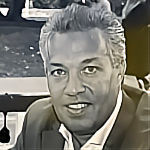
Through the relationships Mark Otto developed in Thoroughbred Horse Racing and Automotive Racing, during his global travels, the thing that most interested him was the story behind the story, with the famous people he was fortunate to meet. What was it that these people liked to do? How did they get into Hollywood or into Racing? These stories are fascinating! This is what encapsulates the “Hollywood and Horsepower Show”.
Bringing you along, we talk to so some of the most interesting people Mark met during his career. Don't be surprised if a few other guests stop by this show. This will be fun! It is where SNL meets The Tonight Show; a perfect mix of talk and comedy.
Speaker Identification
Speaker 1 - Mark Otto, Host
Introduces himself at 01:36 as 'your host, Mark Otto'.
Speaker 2 - Anthony Stabile, Guest
Introduced by Mark Otto at 01:58 as 'The Big A Stabile, Anthony Stabile'.
[Music: show intro theme]
Speaker 1 - Mark Otto, Host:
Welcome to the Hollywood and Horsepower Show. This is your host, Mark Otto. We apologize, we're a little late jumping on today. We had a couple problems in the studio, but we think we got those ironed out. So for anybody that has a computer sitting in front of them, you understand what we go through. We have a very special guest today, somebody that's a regular on this show, "The Big A" Stabile, Anthony Stabile. Anytime Anthony knows joins us, you know we're going to be talking about several things, but either going to be New York, Queens, or horse racing. We'll probably hit all three before we're done. Big A, welcome to the show.
Speaker 2 - Anthony Stabile, Guest:
Mark, how are you?
Speaker 1 - Mark Otto, Host:
I'm doing great. I really appreciate you doing this. We're brought to you today by Tony's Steaks and Seafood: Lexington, Cincinnati, Indianapolis, and Bowling Green, Kentucky. And that's got to be one of our destinations one of these days, Big A. We have to figure out a way to get you down to Kentucky and get there. So, how are you doing? Everything going well?
Speaker 2 - Anthony Stabile, Guest:
Yeah, all good. Saratoga just wrapped up, waiting for the uh Keeneland sales, Keeneland yearling sales start on Monday.
Speaker 2 - Anthony Stabile, Guest:
I'm sorry? Yeah, Keeneland, Keeneland yearling sales start in Kentucky, but I know, I'm a New York guy. Um we're going to have something happen here that we don't see much in horse racing uh anymore. We're going to have a brand-new racetrack opening up. Belmont Park was knocked down uh a little less than three years ago. Um they've been doing a lot of developing on the property. And the brand new Belmont Park comes comes to you next Friday.
Speaker 1 - Mark Otto, Host:
I know.
Speaker 1 - Mark Otto, Host:
Have you gotten a sneak peek? Have you been over there?
Speaker 2 - Anthony Stabile, Guest:
September 18th. I have I have not. I've seen some pictures. Um a lot of the newer racetracks look very sterile and um this looks like it's following in the footsteps. But we'll see. Uh hope for the best, expect the worst. Uh the racing will be great.
Speaker 1 - Mark Otto, Host:
Try to feed it.
Speaker 1 - Mark Otto, Host:
Did they bring some of the history forward? Did they save some of the pieces from the old Belmont, use them in the new?
Speaker 2 - Anthony Stabile, Guest:
Well I don't know, I know one thing. When the UBS Arena uh which is in the old parking lot was built, it was in the contract that the facade had to match beautiful Belmont Park. Uh and that facade was green uh with uh with [snort] brown brick I guess it would be. And Belmont Park is now white. So, uh [laughter] so much for So far
Speaker 1 - Mark Otto, Host:
Okay.
Speaker 1 - Mark Otto, Host:
One of those things that sounded good.
Speaker 2 - Anthony Stabile, Guest:
So far, the buildings don't match. And the rumor this week is the New York Racing Association is contemplating cutting the Belmont Stakes back to a mile and a quarter, having just renovated and built the main track at the new Belmont Park like the old one, at a mile and a half in circumference. So, things are uh things are off to a uh to a passive start here. Yeah, [laughter] you said it, I didn't. Um, yeah, they're off to a little bit of a peculiar peculiar start uh to say the very least.
Speaker 1 - Mark Otto, Host:
Tiptoe start.
Speaker 1 - Mark Otto, Host:
Well, I wanted to spend some time today talking about something that's really interesting to me, and we've talked about this before. You touched on it. So, growing up in Howard Beach, you know, you grew up in an area, for people just joining us, with Anthony "The Big A" Stabile. And you know, you grew up in Howard Beach, Queens. For people that don't know where that is, if you've never had the chance to go to New York, the um the five boroughs of New York, one of, you know, the Italians, for Italians like me and Big A, Queens, you know, and Howard Beach, that's, you know, a lot of people would probably debate this, and no disrespect to anybody's neighborhood, but that that that's the that's that's one of the, I'll say it that way politely, that's one of the big neighborhoods to me.
Speaker 1 - Mark Otto, Host:
And and there's no name that comes on bigger than that than than John Gotti. And the reason I bring up John, John Sr. I'm talking about, and absolute respect for both him and John Jr., you know, you grew up in that neighborhood, so it's, you know, I want to talk to you about what was it like growing up there as a kid and you're seeing some of these people that they have to be seem just larger than life? I mean, even before the headlines.
Speaker 2 - Anthony Stabile, Guest:
Yeah, you know Right. For again, for those of you who don't know, Howard Beach
Speaker 1 - Mark Otto, Host:
And I'm not judging anyone. I don't want to get in the weeds about whether, what what happened, who did what. I'm talking about the person and what life was like in Howard Beach.
Speaker 2 - Anthony Stabile, Guest:
No.
Speaker 2 - Anthony Stabile, Guest:
Howard Beach starts, [clears throat] is the first exit in Queens on the Belt Parkway. Belt Parkway starts down at Exit 1 in Sunset Park, Brooklyn. Um it comes all the way around, then Exit 17 coming from Brooklyn heading west to east, Exit 17 is the Cross Bay Boulevard exit. And Cross Bay Boulevard is the main artery of Howard Beach. Three parts to Howard Beach: uh there is Old Howard Beach, which is on the east side of Cross Bay Boulevard. There is Lindenwood, which is on the northwest side. And then there's us, technically Rockwood Park. But we are what many consider to be Howard Beach proper, or New Howard Beach, uh which again is consists of 10 or 11 blocks of Cross Bay Boulevard, and another 15 from the boulevard south heading to well, west really actually, headed towards Brooklyn.
Speaker 2 - Anthony Stabile, Guest:
And yes, um I think it would be appropriate to say we are the alleged mafia capital uh certainly of Ame- certainly of New York, I would argue America. And you might even be able to go to battle if you brought up the world, because, unfortunately, that is what Howard Beach uh is known for.
Speaker 1 - Mark Otto, Host:
And and you know, it's interesting to me because it, you know, there's there's obviously the commission and the the families, and, you know, the one that were, you know, correct me, you you would know the history better than I do, but like, you know, the Gambino family was the one that was based in Howard Beach, correct?
Speaker 2 - Anthony Stabile, Guest:
Uh yes. And when I say unfortunately, I mean because of the negative connotation.
Speaker 1 - Mark Otto, Host:
The stereotype. No, I mean, we all live we all live with that. I mean, you live with that. If you're Italian, you're automatically And you know, and that's the thing. That was kind of the purpose of today's show. A lot of people have their opinions, they're entitled to their opinions. But my point is, you know, when when I think of John Gotti, you know, I'm Italian, 96% Italian by DNA. You're Italian. You talk to the average guy walking the sidewalk in Howard Beach and mention John Gotti's name, and the thing that I've always heard is you'll immediately they'll be like, "The best. He was the best." You know, best. And you know, if anybody tries to say anything negative, they're like, that "I don't know what you're talking about, he was the best."
Speaker 2 - Anthony Stabile, Guest:
Stereotype that comes with it. Yeah.
Speaker 1 - Mark Otto, Host:
He was uh like a, almost like a Robin Hood. Like, he he threw parties and, you know, his Fourth of July parties were legend.
Speaker 2 - Anthony Stabile, Guest:
Well, I can I can say this, because as you were saying that, you brought me back to a much better time.
Speaker 1 - Mark Otto, Host:
Sure.
Speaker 2 - Anthony Stabile, Guest:
Um that Howard Beach does not exist anymore.
Speaker 1 - Mark Otto, Host:
I know. That's, and I'm talking about the old Yeah. That's, that's
Speaker 2 - Anthony Stabile, Guest:
That Howard That Howard Beach is gone. Um and it's funny, because I turned 50 in March. John passed away uh [laughter] John passed away in June of 20 2002. Uh he was incarcerated for the prior 10 years, for the last 10 years of his life. And I can honestly tell you, half of my life, a third of my life with him in the neighborhood, half my life with him gone, half my life with him here, and this neighborhood has has really fallen off
Speaker 1 - Mark Otto, Host:
Yep.
Speaker 1 - Mark Otto, Host:
Changed, yeah.
Speaker 2 - Anthony Stabile, Guest:
since his presence and his death.
Speaker 1 - Mark Otto, Host:
Well, that was something people don't realize. And that, and to put it even even more in perspective, a lot of people, a lot of our listeners may not remember, or maybe they're not even old enough to have been around, you know, when John was, you know, in the neighborhood, that was, you know, many parts of New York were pretty sketchy. I mean, that was the run to the subway era of New York, you know, the '80s. And that was one thing that that that Howard Beach got a reputation for was the crime actually went down. At a time when crime was going up, and this is pure numbers, people can go look it up. At a time when crime was actually going up in places in the city and it was, you know, sketchy in places, you know, Howard Beach and Queens that crime was actually going down. And a lot of people really credited that to him, that he, you know, took care of his own neighborhood and the message was clear: you don't mess around here. You know, you you you don't do that.
Speaker 2 - Anthony Stabile, Guest:
So a quick history uh lesson: when the mafia first came to America, the turn of the century, the early 1900s, they had an a handshake agreement almost with the cops. There were certain lines you didn't the government, the cop, whatever you want to say. Whatever whatever authoritative uh word you want to use. Um there was a handshake agreement that they didn't cross certain lines, and they took care of things that the cops couldn't, if you will.
Speaker 1 - Mark Otto, Host:
Absolutely.
Speaker 2 - Anthony Stabile, Guest:
And when narcotics came into play, that was a big no-no. Um and I think that's kind of when things started going a little downhill. Um but in my neighborhood in particular, we were in a bubble. Like the other neighborhoods in Brooklyn, the Bensonhurst, Gravesend area, uh Bay Ridge. Yeah. Yep. In Queens, uh Howard Beach, Whitestone. You go to the Bronx, Arthur Avenue. You know, no real Little Italy in Manhattan uh and then you know, bits and pieces. Staten Island doesn't have an identity like the other four boroughs do. It's not really known for their neighborhoods. It's Staten Island. Right? [laughter] But you know, there was a there was an element there, as well.
Speaker 1 - Mark Otto, Host:
Yep, Bay Ridge, Bensonhurst, Gravesend.
Speaker 2 - Anthony Stabile, Guest:
We were in a bubble. And what I mean by that is the things that happened in other neighborhoods didn't happen here.
Speaker 1 - Mark Otto, Host:
No, that that's what I was trying to say. It was, they had their own oasis.
Speaker 2 - Anthony Stabile, Guest:
Yeah, and they just didn't happen here. And a lot of people put that on the shoulders of John Gotti. And it was probably accurate. It was it was I love to smoke cigars. I will not sit outside of my house alone at night anymore.
Speaker 1 - Mark Otto, Host:
Today.
Speaker 2 - Anthony Stabile, Guest:
I want Today. I want friends here, I want so- I want somebody here smoking with me. Now, I'm a little banged up right now, bad hip, on the cane, but still take care of myself. The element here has completely changed. Um
Speaker 1 - Mark Otto, Host:
And that's the sad part, you know, going back. And to your point, so people that don't know, you know, my dad was, you know, we're Italian, but my dad was a Detroit vice cop. He was Detroit vice for 27 years. To your point, I know for a fact he was personal friends with Joe Zerilli and Tony Jack, the people that ran the family in Detroit, the Detroit Partnership. To me, that was Mr. Zerilli. And I remember as a young kid, I didn't know, but I later have deciphered what I think was going on.
Speaker 1 - Mark Otto, Host:
As to your point, kind of a handshake deal, I think he kind of turned a blind eye towards the numbers racket, and in turn, they kind of led him to where probably the narcotics were going. And because they didn't want it, they didn't want it they didn't want it in the organization, it was considered a weakness. And the reason I say that, this is kind of a funny story. So my dad died a year uh two years after John, I'm sorry, 2004. And when he was in the hospital, he had had a heart attack, lasted about three weeks, I was with him every day, sitting next to his bed.
Speaker 1 - Mark Otto, Host:
To the day he died, if the lottery And for people that don't understand, when we talk about the numbers racket, the numbers game was the lottery before the lottery was. You would pick three numbers and different cities had different ways of doing it, so you would buy these tickets at stores,
Speaker 2 - Anthony Stabile, Guest:
How did you [laughter] How'd they do it in Detroit?
Speaker 1 - Mark Otto, Host:
I don't know that. I don't know the answer. I wish I did. I've asked a lot of people that.
Speaker 2 - Anthony Stabile, Guest:
Do you know how they did it Do you know how they did it in in New York?
Speaker 1 - Mark Otto, Host:
The rumor was that I've heard was it was the attendance at Belmont Park. Is that true?
Speaker 2 - Anthony Stabile, Guest:
It was the handle. It was the last three numbers of the handle at whatever track was racing.
Speaker 1 - Mark Otto, Host:
The handle. Okay. Oh, whatever day, any track. It wasn't just It wasn't just Belmont, okay.
Speaker 2 - Anthony Stabile, Guest:
That is the That's that was Aqueduct Well, only Aqueduct, Belmont, and Saratoga each ran different days. And back then, remember, we ran six days a week. Yes.
Speaker 1 - Mark Otto, Host:
Yes.
Speaker 2 - Anthony Stabile, Guest:
So I don't know what they did the seventh day. [laughter] So they bit numbers.
Speaker 1 - Mark Otto, Host:
So they bid numbers.
Speaker 2 - Anthony Stabile, Guest:
I don't know what they did the seventh day, but on those six days, that was allegedly how they uh how they did it, which is great, because I love the fact that uh the gambling and the racetrack went hand in hand.
Speaker 1 - Mark Otto, Host:
Well, it always did go hand in hand. And and you know that was funny about that, to the day my dad died, I remember him sitting in his hospital bed with oxygen, he's on his way out, and the lottery comes on the TV. He would get visibly pissed off, and point at the TV and say, "That's that's bullshit. You know, they shoot There's men doing hard time because of that. And they make it legal, and they call it the lottery?" He said, "They should have let every one of those guys go." It annoyed him to the day he died.
Speaker 1 - Mark Otto, Host:
And and I'll tell you a funny story, and I didn't know who it was at the time, I saw it from pictures later. So one time when I was probably, I was born in '66, and I had to be eight or nine, I was young. Dad got dressed up, he's wearing a suit, got me dressed up, I had a little suit on, and we go, get in the car, you know, Mom did not go with us. My mom and dad were really close. They were like best friends, married 63 years. They She was his best friend, adored. Um, we we go to this party, said we had to go to a birthday party. We go to this Holiday Inn way out. It was outside of Detroit.
Speaker 1 - Mark Otto, Host:
Walked through the hotel, and I don't know why, you know how certain things stick with you as a kid? Two things that stuck with me about that day. I'm walking through the hotel, and I'm thinking, "What a weird place. Why are we here?" And then I remember seeing the cigarette machines. This is when you had cigarette machines in the hotel. It's like, those were kind of weird. And then you go out, and we walk out to the pool. This was the first pool party I had ever been to where everybody's wearing suits. The pool is surrounded by a bunch of guys wearing suits. We go clear to the other end, way off in the corner under an umbrella, here's an an older man with great big sunglasses.
Speaker 1 - Mark Otto, Host:
My dad says hi to him, "Happy birthday." You know, he asked who I am. "That's my son, Mark." "How are you doing, son?" Kind of nods at me. I said, "Hello." No idea who this is. That was Tony Giacalone. And my, it must have been a birthday party for him or something. But I remember that like it was yesterday, and I had no idea who the man was until later on when I saw pictures. It was like Joe Zerilli. I didn't know who. I didn't That was just Mr. Zerilli. And these these guys were the head of the Detroit Partnership. So, it was
Speaker 2 - Anthony Stabile, Guest:
That was the diff- That was the difference around here. Around here you you knew you knew who certain people were and you knew who they weren't. And there was a very protective element. Like I don't know how to say this, but like guys had these reputations, but I never once looked at John Gotti and was like, "I'm afraid of him."
Speaker 1 - Mark Otto, Host:
No, you respected him.
Speaker 2 - Anthony Stabile, Guest:
Like, because he didn't come off he didn't come off that way. You know, and even as a kid, like you couldn't help it. Right? It's on the news, it's everywhere. I'm in the heart of New York City, I'm in the heart of Gangland, whatever you want to call it. So, you're not going to you're not going to I remember the first girl I ever took on a date, my friend, and she we're still friends to this day, Michelle Tortomasi, and took her to Gino's Pizza for a slice of pizza in fifth grade, a date, you know what I mean? And uh she came in one week and she did We had current events and she did a current event story on on on the trial, on a trial. And my I remember my teacher called her mom and stuff, and Michelle was like, uh, "Do you believe I almost got in trouble for that?" I was like, "Yeah, you can't write You can't write about that stuff." You don't know [laughter] John's youngest son, Peter, is a good friend of mine. We went to
Speaker 1 - Mark Otto, Host:
Yep.
Speaker 2 - Anthony Stabile, Guest:
We went to elementary school together. He's a few years older than me. I believe I believe they we were there together two or three years. I think he's four or five years older than me, Peter. Um, but like, you know, you you still in the house 14 blocks from me. So you know, you mention the parties, the the Fourth of July party on 103rd Avenue. Thousands of people! Thousands of people!
Speaker 1 - Mark Otto, Host:
And that's the part. And he would throw that, he he did that for the community.
Speaker 2 - Anthony Stabile, Guest:
Thousands of people! 100%. Didn't I mean, it was like
Speaker 1 - Mark Otto, Host:
Food, fireworks, the whole thing.
Speaker 2 - Anthony Stabile, Guest:
Forget about it. I mean, a firework firework show better than the Gruccis. Like professionally done. And everybody was just out having a good time. And you I remember, I just got done telling you I won't sit outside my house
Speaker 1 - Mark Otto, Host:
Yeah.
Speaker 1 - Mark Otto, Host:
Well, it's interesting because, go ahead.
Speaker 2 - Anthony Stabile, Guest:
and smoke a cigar. There's a church, [clears throat] the school's no longer there, St. Mary Gate of Heaven is on 102nd Street and 101st Avenue in Ozone Park/Richmond Hill. They used to have a bazaar.
Speaker 1 - Mark Otto, Host:
Oh, yeah, yeah, yeah.
Speaker 2 - Anthony Stabile, Guest:
Now Now, that that church was about four blocks from the Bergin Hunt and Fish Club, where the party emanated from on on Fourth of July.
Speaker 1 - Mark Otto, Host:
Yeah. And for people that don't know, that that would have been, correct me if I'm wrong, that was kind of like John
Speaker 2 - Anthony Stabile, Guest:
That church
Speaker 1 - Mark Otto, Host:
his club.
Speaker 2 - Anthony Stabile, Guest:
His his club. That was his club, yeah. It's probably a 2-mile walk. When I was 12, 13, 14 years old, I I skipped a year of school, so I started high school when I was 14, we went to the feast at Gate of Heaven in '91. I just got done telling you, at 50 years old, I don't want to smoke a cigar outside of my house in Howard Beach. I walked from Richmond Hill, through Ozone Park, and into Howard Beach, two miles, and didn't have a care in the world.
Speaker 1 - Mark Otto, Host:
Yeah, his club.
Speaker 1 - Mark Otto, Host:
Yeah.
Speaker 1 - Mark Otto, Host:
Without a care in the world.
Speaker 2 - Anthony Stabile, Guest:
Didn't have a care in the world.
Speaker 1 - Mark Otto, Host:
No, that's what changed. And you know, the other thing that was different, you mentioned it, you know, that like in when you were growing up, you knew who these people were and you knew who they were. And it was was different in Detroit, and I'll I'll explain a little bit why for our listeners. The Detroit Partnership, which the mafia, um it was kind of funny, because they were very, very low-key.
Speaker 1 - Mark Otto, Host:
I mean, you knew names, but you didn't know people. And like, you know, Mr. Zerilli, he lived in a very modest house. Like, you know, it wasn't like some big, flamboyant place. They did most of their business, again, you want to hear connection to horse racing, they did most of their business at Hazel Park Raceway in Hazel Park, Michigan, outside of Detroit. And I believe Mr. Zerilli owned a big portion of that, if not all of it, point. And so, I mean, they were they It was a different
Speaker 1 - Mark Otto, Host:
type of group. You know, New York was always kind of like It's kind of like the Yankees, you know, or the Mets. So, I mean, if you're a Mets fan, which you are, you know, the Mets are the Mets, you know what I mean? It's it's huge, it's everywhere, it's like, "New York!" And then, you know, in other cities across the country, it's a little quieter. You know what I mean? If you're a Detroit Tigers fan, uh, it's not your whole life, you're a Tigers fan.
Speaker 1 - Mark Otto, Host:
But I I think it was the same way, like you know, John, John Sr., was as famous here as he was there. But you didn't even know the people here.
Speaker 2 - Anthony Stabile, Guest:
Well, everything's turned up everything's turned up here. Everything's turned up here.
Speaker 1 - Mark Otto, Host:
Exactly. Everything's turned up. And that's also the place that kind of set the bar, you know, the commissions there. It's like, this is the this is the benchmark. I mean, this is the this is the big one.
Speaker 2 - Anthony Stabile, Guest:
Correct.
Speaker 2 - Anthony Stabile, Guest:
See, people don't realize People don't realize this conversation aside, what when our when and you and I every- most of the people listening, our grandparents, great-grandparents, they almost all exclusively came in through New York City.
Speaker 1 - Mark Otto, Host:
No question. My our family, we, as near as we can tell, came through New York to Pennsylvania and then went to Northern Michigan and then Detroit. And I asked my dad one time, because you know what was funny is growing up, obviously, my last name doesn't sound Italian, it's they changed it. We used to have a long last name, Otto was in the middle of it. And I asked him, I said, "Why didn't you just Why didn't you ever go back to keep your name?" He's like, "Let me explain something to you."
Speaker 2 - Anthony Stabile, Guest:
Of course they did.
Speaker 1 - Mark Otto, Host:
He says, "Growing up in the '20s and '30s, you just kind of wanted to blend in." So there was always that mentality.
Speaker 2 - Anthony Stabile, Guest:
Well, let's call it a spade a spade: we were discriminated against.
Speaker 1 - Mark Otto, Host:
No question. And and you know, in all fairness, every nationality, I don't care who you are, you've had your day in the sun for being discriminated against. People forget that. People forget that. Italians were murdered in the street. You you know this, at one point it wasn't considered a crime to kill an Italian.
Speaker 2 - Anthony Stabile, Guest:
100%.
Speaker 2 - Anthony Stabile, Guest:
100%.
Speaker 2 - Anthony Stabile, Guest:
Well, basically we fought back. [laughter]
Speaker 1 - Mark Otto, Host:
100%. It's the only way you survived.
Speaker 2 - Anthony Stabile, Guest:
There's a There's a reason There's a reason this is structured after the military, or at least it was. There's a reason for that. Militaries, for the most part, are successful. The the theory, and the hierarchy, and the outline of the military is successful. It But a military is only as good as its soldiers, obviously. You can have the plan, but now you got you need the people to execute. But if
Speaker 1 - Mark Otto, Host:
And the other thing that broke off was loyalty. You know, there's another thing about being Italian. As an Italian, and I'm still like this today, and I try to drill this into my kids, loyalty, everything. Everything. You know, if you're not loyal, you got you're not nothing. And that's my I don't want to get too far in the weeds, but that's
Speaker 2 - Anthony Stabile, Guest:
When Right. When you're But when you're bullied you when you're bullied, you stick together.
Speaker 1 - Mark Otto, Host:
You stick together and you stand up for what you believe in. You don't rat out your friends, you don't rat somebody else out just because it was easier. And that was where, to me, it changed. You know, it used to be, you know, John and John Jr. took their lumps. Quite frankly, I think it was unfair. I'm not That's just my opinion. Don't bother sending me emails or letters, folks, because I won't read them. You know, but I'm going to tell you, it's um, you know, the people that that ratted people out, I have no respect for, to this day, none, zero.
Speaker 2 - Anthony Stabile, Guest:
When When When John Sr. died, a very a big portion of it died with him. And
Speaker 1 - Mark Otto, Host:
Yep.
Speaker 1 - Mark Otto, Host:
And a principle died, too. To me
Speaker 2 - Anthony Stabile, Guest:
Yes! Well, that's that's what I'm That's what I'm trying to say, yeah. There was There was a
Speaker 1 - Mark Otto, Host:
he was a loyal guy. He would have never turned on anyone. And that's what's so hard. You know, that's the sad part. That's what I was trying, I didn't want to focus on the negative, but I mean, that's the part that I was talking about. Like what it's like when you were growing up, like you got to see him.
Speaker 2 - Anthony Stabile, Guest:
Yep.
Speaker 2 - Anthony Stabile, Guest:
[sighs] Well, that's the thing, like, But when you talk about this, Mark, you almost have to, because I don't want people to think we're sitting here glorifying the life. We're just we're talking to we're talking facts here right now.
Speaker 1 - Mark Otto, Host:
Yeah.
Speaker 1 - Mark Otto, Host:
Right, here, it's facts. And also, the other thing I think people need to understand is, I am very matter-of-fact. I'm not trying to glorify anything. I'm not trying to glorify that life.
Speaker 2 - Anthony Stabile, Guest:
Well, this is fact. This is fa- This is fact. We're coming in a place from experience and fact.
Speaker 1 - Mark Otto, Host:
Yeah, it's facts. But I'm also with fact, I'm talking about what I know. I don't know what happened. I don't know. I've heard the allegations, but I wasn't there. It's none of my business. And I'm not I'm not going to voice my opinion on any of that.
Speaker 2 - Anthony Stabile, Guest:
Right.
Speaker 2 - Anthony Stabile, Guest:
Well, it's not even Mark, we got to a point, and when you and I talked about what we were going to talk about today and we said try not to be negative, I didn't even say that to you because part of the problem is what we're talking, like you just said, you weren't there, we don't know, it's allegations. None of my business, yeah.
Speaker 1 - Mark Otto, Host:
None of my business, yeah.
Speaker 2 - Anthony Stabile, Guest:
These guys, these rats and these stool pigeons, now are trying to glorify being rats and stool pigeons. These guys have podcasts, they get somewhat legitimate guests on their programs. [laughter] Actors, this I mean, this Chazz Palminteri, this guy, don't even get me started with this guy. He's lived his life off of The Bro- A Bronx Tale story, okay? Every wiseguy, alleged wiseguy, this guy talks about is dead, so nobody could corroborate his stories.
Speaker 1 - Mark Otto, Host:
They're making money.
Speaker 1 - Mark Otto, Host:
Or dispute it.
Speaker 2 - Anthony Stabile, Guest:
He's as it Or dispute it. As it comes out, he doesn't And then he goes on podcasts with rats! Well, if you were this guy's right-hand man and you were doing this for this guy and doing that for this guy, now you're going to go on a podcast for a guy that's literally saying, "I killed all these people. I told the government who I
Speaker 2 - Anthony Stabile, Guest:
allegedly told me to do it, and they let me out. Like, when you sent this when you asked me to do the show today, I had just went on a half a Facebook rant like three mornings ago. I was dealing with some agita lately, and I was up early, and every reel on my social media was a rat podcast.
Speaker 1 - Mark Otto, Host:
Yeah, there's a lot.
Speaker 2 - Anthony Stabile, Guest:
I told I and I write on the thing, I wrote, you guys should start a you guys should start your own station: WRA WRAT.
Speaker 1 - Mark Otto, Host:
No, and that was one of the funniest things. You said that to me years ago cuz I asked you when you a long time ago before we knew each other really well, I asked you one time, I'm like, "What's it like in Howard Beach?" Cuz as soon as I learned where you lived, it was like, "Oh my god, it's like that's like meeting somebody that lived next door to Elvis," for me. So I'm literally like, you know, "What's it What's What was it like? Tell me what it was like. You you saw him. You saw him." You know what I mean? So and you're like, "Look, the radio station in Howard Beach today is WRAT."
Speaker 2 - Anthony Stabile, Guest:
It's unbelievable. It's unbelievable. That was the truth. It's the truth. And there are still a lot of stand-up guys here.
Speaker 1 - Mark Otto, Host:
Oh, absolutely. But those guys don't talk.
Speaker 2 - Anthony Stabile, Guest:
And you know how many guys, Mark, I know guys that went and did time, real time, real time: 10, 12, 15, 25, real time. And these guys get they put three to five in front of guys, and they're singing like Sinatra. Like it just doesn't make I had a really good friend of mine, one of my closest friends. He did a year and a half. He was on a case with 20 other people, 35 other people. Half the case got home. Half the place got the bracelet. The women on the case got you know, house arrest. The women on the case got probation. This kid went and did a year and a half. He did a year and a half because he wouldn't rat. So these guys who they they're talking they're natural born killers, we held up jewelry stores, we got put it They do they do
Speaker 1 - Mark Otto, Host:
It's always a red flag to me when they're talking about what they did because I grew up around that. I grew up around my dad's, people that my dad knew. So it's like it's kind of funny. As a kid, you know, you talk about like you knew who these people were. As a kid, I didn't. I would see these guys with nice Cadillacs and stuff that would pull in the driveway, and this is interesting, they would always stand out in the driveway and talk to Dad. Rarely coming They might come in the house just, "Hello," you know, "Mrs. Otto." They, you know, greet my mom, but then they'd walk outside with Dad, and they'd lean against the fender and talk.
Speaker 1 - Mark Otto, Host:
And they you know, it was always, you know, Mr. So-and-So to me. I mean, they were just a just a friend of my dad's. But so I didn't know them. And then as I got older, I start seeing things and I read things, it's like, oh god, I remember him. That guy used to come and sit and talk with Dad. And it's like I had no idea who he was. But the interesting thing was these people never they didn't talk about it. I remember a really interesting story. My dad told me about a guy, and I'm not going to say his name, but he was a guy that, I guess, three guys set up the a plan to take this supper club.
Speaker 1 - Mark Otto, Host:
So for people who don't know, back in like the '60s, supper clubs were like a place where they'd a really nice restaurant, and they'd have an orchestra and you'd dance, get dressed up, take your wife or your date, and, you know, you'd have dinner and a dance. And they they made a lot of money. You know what I mean? They had a lot of cash on hand. So they hit this place on a Saturday night and something went sideways, and a waiter ended up getting shot. One of the guys got caught, and he did hard time. I think he did like 15, 20 years. Dad said he never said a word about the other two guys, never said a word.
Speaker 2 - Anthony Stabile, Guest:
No.
Speaker 1 - Mark Otto, Host:
And the day that guy got out, Dad said, they picked him up from the prison with a limo and that guy never worked again. He said, but he says it's interesting was he had a small house outside of Detroit, like the edge of Detroit, and he had a small house and he said he never worked, he never talked about it. He said you'd just you'd walk by his house and he's sitting on the porch, he'd wave at you, but he he never said a word till the day he died. That was the old code. That was the way the men were.
Speaker 2 - Anthony Stabile, Guest:
Yeah. We talk about the different people that listen to the to your show, right? And how the ages vary. I I know one thing we all have in common. At one point in our life, if you're 60 years old or younger, you did a fundraiser at school selling the World's Finest Chocolate, dollar chocolate bars. Everybody's done it. Okay?
Speaker 1 - Mark Otto, Host:
Yeah.
Speaker 1 - Mark Otto, Host:
Disgrace to the service.
Speaker 2 - Anthony Stabile, Guest:
So I'm the cutest little 5-year-old 90-lb fat kid you've ever seen in your life. I'm running around Aqueduct selling chocolate bars. I think I make now this is 1982. I get 600 in sales in 1982.
Speaker 1 - Mark Otto, Host:
You couldn't carry the bars.
Speaker 2 - Anthony Stabile, Guest:
So we go We go to assembly. We go to assembly, and we get every You know, they start reading everybody out, and, you know, "And finishing in second place with $632 is Anthony Stabile." And I remember being 5 years old and I was like maybe 6, maybe it was I was in first grade at this point. I think I was in first grade cuz it was the last year Peter was at 207. We went to PS 207. I said, "Second place?"
Speaker 1 - Mark Otto, Host:
I was like, who got first?
Speaker 2 - Anthony Stabile, Guest:
And sure enough, you know, Peter Gotti with 1823. So so it's all over.
Speaker 1 - Mark Otto, Host:
1,800 candy bars.
Speaker 2 - Anthony Stabile, Guest:
So like No, back then, they were $0.50. He sold like 3,600 candy bars. So the next day or the couple of days later, I think it was like 2 days later cuz that was the weekend, Peter comes walking over to me. He goes, "Hey, you're Anthony, right?" I said, "Yeah." He goes, "How you doing? I'm Peter Gotti." I said, "Nice to meet you." He goes, "My mom said I should give you this because she plays cards with your Nana Mary Red and I was definitely going to win, but I I don't need it. You should definitely have it." And it was 24, I'll never these you know how you said you never forget things, it was 24 gold dollars.
Speaker 1 - Mark Otto, Host:
Oh, wow.
Speaker 2 - Anthony Stabile, Guest:
That was the prize. They were like a special mint. And he gave them to me. And I was just like that, you know, I was like, "Thanks." So I went home and I showed him, and then, you know, it made them it it made it like that always stuck with me. And then as I got older, when you when I realized who he was, right, because to me, he was Peter. To me, he was Peter who, when this second grader named John went to pick on me, Peter came over and stopped him. And I remember this. I'm 6 or 7 years old, and I remember Peter coming over to stop him because his mom and my grandma played cards together.
Speaker 1 - Mark Otto, Host:
Sure.
Speaker 1 - Mark Otto, Host:
Was Peter bigger? Was he a bigger guy?
Speaker 2 - Anthony Stabile, Guest:
He was a good good-sized guy. Peter was a great Peter is a a great boxer. Peter's last name, which he wouldn't change for the world, probably cost him a fighting career. Peter was an excellent boxer. He had some professional fights, he was undefeated. Peter was a good boxer.
Speaker 1 - Mark Otto, Host:
Wow.
Speaker 1 - Mark Otto, Host:
Well, didn't, correct me if I'm wrong, didn't John Jr. box also?
Speaker 2 - Anthony Stabile, Guest:
Um, you know.
Speaker 2 - Anthony Stabile, Guest:
I'm not sure. His sons do, but Peter was a Peter was a good fighter. Peter was good with his hands.
Speaker 1 - Mark Otto, Host:
I remember John John Jr., well, he still is, I mean, he's in great shape today, but, I mean, back in the day, jeez, he looked like a professional bodybuilder.
Speaker 2 - Anthony Stabile, Guest:
But I remember that. And, you know, as I got older, and you realize who they are and what and, more importantly, what they did for the neighborhood, you realize that there's also they're just people.
Speaker 1 - Mark Otto, Host:
Sure.
Speaker 2 - Anthony Stabile, Guest:
Like you and me. Like that element of it is is overlooked. And, again, not trying to glorify anything here.
Speaker 1 - Mark Otto, Host:
There was kind of a there was kind of a code, too, that's overlooked. Like they they we I don't know what they did. I'm not even going to allege what they did. You know, they did what they did. They had their life, but that was their business. And but they, you know, they were good-hearted people. You know, they did a lot for the community. They did a lot, you know. Another thing that I heard, and I heard this
Speaker 2 - Anthony Stabile, Guest:
And it wasn't just them, by the way. You know, we keep saying that name because that name is
Speaker 1 - Mark Otto, Host:
No, no, no, a lot of people. Yeah, well, no, no. I'm talking about I'm really talking about anybody that kind of was in that life. And, you know, there was a lot of people, but it was interesting to me and I've heard this from multiple people. I mean, you know, what's funny is even Sinatra, you mentioned Sinatra earlier, singing like Sinatra, it's like even Sinatra was like this. They there's this and this is probably an Italian thing because my dad was like this. If these guys picked up the paper and they read about some family that their house burned or whatever, they were the first ones that would kind of organize and be like, "Okay, we need to get some food together. We need to get some clothes together. We're going to take it over to them."
Speaker 1 - Mark Otto, Host:
And, you know, people took care of people. And I know people does do that everywhere, but what's Italians seemed to go a step further. I remember my dad my mom and dad got involved in a food bank as they got older. I mean, they were It's kind of funny. They were probably in their late 60s when they started doing this. And I remember, you know, there's kind of like guidelines. You know, they would say, "Oh, you only give them this much if it's a family of four or this much for every other kid," or whatever. And I remember my dad saying, "Yeah, that's that's hell." He goes, "You know what?" He goes, "People don't get into this situation overnight, and they don't get out of it overnight. So we're going to load them up."
Speaker 1 - Mark Otto, Host:
And he would give people like three and four times the amount that they were supposed to give. And it was because he felt like, you know, if you're going to help people, you help people. And I can remember him doing stuff like, you know, if a family you know, he'd hear about some family that maybe the something happened to the husband and it's the wife and kids, he he'd make sure that they had stuff for Christmas. He'd make We didn't even celebrate Christmas. He'd he'd make sure they had a TV. He'd make sure that the, you know, if the car broke that him or one of his friends went over there and got the car fixed.
Speaker 1 - Mark Otto, Host:
There was just a sense of you take care of people around you, and that was something that I always heard about from like Howard Beach. It was like if you're in that community, if you're part of that neighborhood, they kind of watched out for everyone.
Speaker 2 - Anthony Stabile, Guest:
And it comes back to the at the end of the day, they're human.
Speaker 1 - Mark Otto, Host:
They're human, but I think it also comes back to values that they brought with them from Italy.
Speaker 2 - Anthony Stabile, Guest:
Yeah. A 100, I mean
Speaker 1 - Mark Otto, Host:
And you can see it in the cooking. You know, they would say, you know, the running joke was in our house, my mom, nothing went to waste. She My dad would say, you know, the only the only part of the cow she doesn't use is the moo. You know what I mean? It was like she nothing went to waste. And I mean we that's the way that was the Italian thing. You know, you cook everybody had a garden, even if it was a small one in the backyard, and everybody was very resourceful. And I think there's a lot of those values to me that I think came with them.
Speaker 2 - Anthony Stabile, Guest:
You I was and I still speak to Vicky's husband, ex-husband. He You would walk into his place of business and you would see the gang. Five or six guys up front, 20 guys working in the back of the junkyard. When you got a call, "Hey, we're going to dinner tonight. Throw on a shirt and a pair of pants. See you at 6:30." "All right, see you at 6:30." The same guys were at dinner.
Speaker 2 - Anthony Stabile, Guest:
It wasn't a you you were part of some you were part of something. Maybe it wasn't as close as family, but your your that's your guy those are your guys. Those are your those are your people. Like there's an element of you know, having 40 people at your house for Christmas, I guarantee you 10 of those people had nowhere else to go.
Speaker 1 - Mark Otto, Host:
Sure.
Speaker 1 - Mark Otto, Host:
100%.
Speaker 2 - Anthony Stabile, Guest:
So they come there. Like, again, human. And now, there's a lack of loyalty, there's a lack of discipline, a lack of No, there's still the old-time guys. There There There's two or three guys that come to the top of my mind that you there's nothing you could do to them to ever get them to open their mouth. No, zero. Absolutely zero.
Speaker 1 - Mark Otto, Host:
No loyalty.
Speaker 1 - Mark Otto, Host:
No, and I I think that that's true. You know what I mean? It's kind Well, you know, it's it's kind of like us, you know what I mean? You and I are like brothers. Buck, he's another one. You know, Michael Blount. You know, there's guys that you just you would be absolutely loyal to. I mean, it's just how it is.
Speaker 2 - Anthony Stabile, Guest:
I got a crew of guys I hang out with on a weekend. We hang out at my friend Andy's house out in Long Island. I know Andy my whole life, since I'm like 9 years old. Andy's older than me. Andy's in his 60s. Matter of fact, most of the guys are in their 50s or 60s. I'm the youngest. I'm the youngest guy there. I've gotten I haven't had the easiest time of it the last 3 years, 4 years. We talked about this, you and I.
Speaker 1 - Mark Otto, Host:
Sure.
Speaker 1 - Mark Otto, Host:
Yeah.
Speaker 2 - Anthony Stabile, Guest:
I'm not ashamed to admit it. People have their highs, people have their lows. I'm climbing back up out of the valley now. And without some of those guys, it I would still be down in that down at the bottom. That's 100%.
Speaker 1 - Mark Otto, Host:
100%, same for me. Things I've gone through, I'm not sure I'd still be here if it wasn't for some of the guys like you and Buck.
Speaker 2 - Anthony Stabile, Guest:
My friend my friend
Speaker 2 - Anthony Stabile, Guest:
Yeah. My friend Andy Berg, my friend Andy Berg, runs Undercurrent Stable, has in and and and and and and many more ways than financial. He's helped financially, but in far different ways. And these are guys that you've been I these are guys I've known peripherally my whole life. That It's just different now. It's I'd take a bullet for Andy. Like
Speaker 1 - Mark Otto, Host:
Yeah, guys don't have that. You know, it's funny you say that cuz you think back to like think about, you know, some of the things that we've been like how we met. The people, and you'll notice this, no matter where I went, I always took my people with me and I always would I would always push work and push push money towards my people because that was just what you do. I mean, my dad was like that. It's like you take you take When you have the chance to help somebody else, you help somebody else.
Speaker 2 - Anthony Stabile, Guest:
100%.
Speaker 2 - Anthony Stabile, Guest:
100%.
Speaker 1 - Mark Otto, Host:
And that's what I've always done. So I and I do, I mean, it's like, you know, there's a sense of loyalty that you're just brought up with. And that's the part that's so confusing to me because that is one thing that I see that is very, very common to me. It doesn't matter if you were from Howard Beach, Detroit, Chicago, or LA, if you were raised in an Italian-American family, these values are kind of there. They There's a sense of that. So then when you see these guys, these rats, I I don't understand where that comes from because you couldn't have been raised
Speaker 1 - Mark Otto, Host:
I mean, you know, your parents couldn't have been like that. So what happened? You Because my dad was loyal. My dad, that was the one thing he always taught me. You you, you know, you just don't you just don't do that.
Speaker 2 - Anthony Stabile, Guest:
Some of these guys got spoiled. Some of these people some of these kids got spoiled. How many times I've heard in my neighborhood, "You know who my father is? You know who my uncle is?" And we were taught, you never say that.
Speaker 1 - Mark Otto, Host:
Absolutely, 100%. Never say it. No.
Speaker 2 - Anthony Stabile, Guest:
You don't you don't say that. You don't say that. And you know how many times as I got older as I and when I mean by older, I mean like when I was out of my teens and in my 20s, I saw some I remember this one time in particular, I was mailing something at the post office. I went into the post office. I had to mail something. And I came out, and some kid in a Pontiac Grand Am missed my door by 3 inches. He pulled over in front of Brothers Ravioli. I was going into Brothers to get something for my mom.
Speaker 2 - Anthony Stabile, Guest:
He pulled over, and he starts screaming at me, calling me an old man. I was 25! He's screaming at me, calling me an old man. I said, "Number one, I'm not an old man." I said, "Number two, more importantly, that's how you were raised?" "Don't worry how I was raised. You know who my uncle is?" I said, "No. And to be completely honest with you, I don't care who your uncle is." I said, "You're not being a man right now. Nothing's even happened yet." "Oh, nothing's happened yet?" And this kid like lunges at me. I grabbed him by
Speaker 2 - Anthony Stabile, Guest:
This is not doing much for my new leaf persona. I grabbed him by the neck, I put him up against his car. And Nicky, the guy who owned Brothers, come running out. "Hey, what are you doing? What are you doing? What are you doing? You know who he is?" I was like, "You're going to start with this too? I got another hand, I can put it around your neck too, Nicky." And I know Nicky my whole life. He said, "Calm down, calm down." So every everything breaks up. It just so happens, one of my quote-unquote friends is walking down the street.
Speaker 2 - Anthony Stabile, Guest:
"That's it, I'm going, bla, bla, bla, bla." Kid gets in the car, whips around the corner. 10 5 minutes later, he comes back with his uncle. My friend's still there. Guy got out of the car, looked, saw my friend. My friend said, "What happened?" "Oh, nothing. Uh my nephew, yeah, he almost took his door off, he lunged at him, and Anthony defended himself." "Well, he said he didn't care who I was." "Yeah, because he probably hears this 400 times a day." And the guy looks at me, he goes, "Why didn't you say anything?" I said, "Because he taught me not to say anything." That's the problem.
Speaker 2 - Anthony Stabile, Guest:
The problem starts with some of these guys bought into the newspaper headlines. Some of them didn't. You know what's unfortunate? The ones that didn't went and did 20 years. But they but they stuck to their word and their code. And it's not just here, it's the whole world.
Speaker 1 - Mark Otto, Host:
Yeah.
Speaker 1 - Mark Otto, Host:
It's true.
Speaker 1 - Mark Otto, Host:
And that's something that isn't In fact, I'll tell you a couple stories to that point. So that was something that I was raised You know, my dad had reputation even though he was a he had a he was tough. And I'll tell you a couple of stories that will kind of point that out. One was my very first traffic ticket. My dad was very well-known in the area. I get pulled over. He was He was the head of Detroit blight. Everybody knew him, all the other police knew him, the the Italian people Everybody respected him. He treated everybody with respect.
Speaker 1 - Mark Otto, Host:
And there was something else he always taught us, says you treat everyone with respect, even the people that don't deserve it. And, you know, to your point, you never I never once did the thing of, "You know who my dad is?" And he, um I get pulled over. He knew I got a ticket before I got home. The undersheriff was at the station, heard my name on the radio, called my dad, and said, "Hey, they got your boy on the side of the road. You want me to let him go?" He says, "No, give him a ticket." I get home. I'm scared to death. I don't even want to tell my dad. So I tell my mom.
Speaker 1 - Mark Otto, Host:
I don't know what I was thinking because if you tell Mom, you're telling Dad. But, you know, at this point, I still thought I could tell Mom and she'd keep a secret. I was naive. I tell Mom, and she says, "Well, you're going to have to tell your dad." So I about the next day, we're in the garage. I said, "Hey, I got a ticket. I'm just waiting for it." And he didn't say a word. He goes, "Really?" He goes, "Well, make sure you pay it on time." That was all he said. And then I found out the story later. My mom told me. She goes, "Yeah, he knew you got it. He just wanted to see if you'd tell him."
Speaker 1 - Mark Otto, Host:
I'll tell you another story. It was kind of funny. So talking about who your dad is and setting people straight, you know, I had a problem one time with the teacher in high school. I was in high school. Teacher got kind of pissed off. I was screwing around. I was I don't want to say I was the class clown. Everybody always says, you know, "You're the class clown," cuz I'm always being sarcastic. Comedy, I love comedy. I was joking around. And I'm like, "No, you're the class clown?" "No, I'm I'm the guy next to the class clown. I'm like you know the guy that streaked naked across the football field during homecoming?"
Speaker 1 - Mark Otto, Host:
"I wasn't him. I was the guy that talked him into doing it. That was my jam." So I was always screwing around doing something. I did something, some practical joke goes sideways, and the teacher in the shop class gets pissed off, shoves me up against the wall, yelling, screaming. I it kind of annoyed me. I didn't say much. I go home that night, didn't say much. I was kind of quiet at dinner. My dad looks at me, he goes, "What's your problem?" I said, "I had a little trouble at school, shoved around by a teacher." "Really? What happened?" And and I tell him, and he gets on me.
Speaker 1 - Mark Otto, Host:
He's like, "Don't be screwing around in class. Pay attention. Don't do nothing like that again. You hear me? I don't want to hear about it. I hear about it, you're going to get it. Got it?" So, I'm thinking, "Great. I get it twice today." The next day, I'm coming out of the class. Like four of my buddies come running up the steps in the school, and they're like, "Oh my god." I'm like They're like, "Your dad just left here." I'm like, "My dad was here?" They're like, "Yeah. He went in the shop class, pinned the teacher behind his desk up against the wall, told him if he ever touched his son again, he'd bury him."
Speaker 1 - Mark Otto, Host:
"And then he left." And when I get to class, the teacher tells me, he goes, "Um, you know, I I apologize for yesterday, and um, you know, I'd really appreciate it if you'd tell your dad that I apologized." There was something about growing up with a dad like that. But you to your point, I knew who he was and what he was, but I never once said, "Do you know who my dad is?"
Speaker 2 - Anthony Stabile, Guest:
Yeah. I mean, that is so it's so ridiculous, and you didn't hear that when you you know, I heard that when I was in my teens and everything. Like you knew, you didn't start, right? You maybe only a quarter of your audience knows this, but statte zitto. Like just keep your mouth shut, be quiet.
Speaker 1 - Mark Otto, Host:
Yeah.
Speaker 1 - Mark Otto, Host:
Well, there was an old story. So a really good friend of mine, he and I used to share an office. His dad was a traveling salesman in Chicago, sold stuff to dry cleaners and things like that. He is getting gas, this is like in the '60s, and he says he's getting gas. The attendants standing there, they're making small talk. This is kind of one of the, you know, a little bit rougher neighborhoods. He says a car pulls up, two guys jump out, grab a guy on the sidewalk, and toss him in the car and take off. And he looks at he goes, "Oh my god." He goes, and he looks at the gas station attendant, he goes, "Did you see that?"
Speaker 1 - Mark Otto, Host:
He goes, "I didn't see nothing. If you got an ounce of brains, you didn't either."
Speaker 1 - Mark Otto, Host:
And that was the end of it.
Speaker 2 - Anthony Stabile, Guest:
You know, it's like you I feel very fortunate to have grown up the way I did because you learned a different set of respect.
Speaker 1 - Mark Otto, Host:
Values, respect, absolutely.
Speaker 2 - Anthony Stabile, Guest:
Values, respect. And we're saying we're saying this about people who allegedly did heinous things, right? Well, that's what So so there was one time in particular, we're at the track, and my friend hit made a score. He hit a Pick 3. For like he thinks 32,000. So I go cash the tickets. I come back, and we're sitting in my Mets hoodie. And I just looked at him, I was like, "You're serious right now, huh?" It was like 5, 10 minutes later. He's like, "What?" I was like, "You count your money?"
Speaker 1 - Mark Otto, Host:
Loyalty.
Speaker 1 - Mark Otto, Host:
And kindness.
Speaker 2 - Anthony Stabile, Guest:
He's like, "Yeah, it's all there. What, you want more?" I said, "No." I said, "You really don't know that you won 64,000, huh?" And his eyes got real bright. He's like, "What?" I was like, "Yeah, you won 64,000. You didn't win 32, you miscalculated. You had it for double what you thought you had it for." So I go into my hoodie, and, by the way, I'm looking at the hoodie as we speak. I go into the hoodie It doesn't fit, for all you wiseasses out there. No, it doesn't still fit. But I'm looking at the hoodie right now.
Speaker 2 - Anthony Stabile, Guest:
So I hand him the other money, and he gives me I I think he gave me like 5,000. He's like, "You know that wasn't a test, right?" I was like, "Yeah, I would hope to think that after all this time, you're not testing me for two reasons: one, you trust me; two, you know I'm not that stupid." So he laughed. He's like, "Go to Pete, Whitehead Pete, may he rest in peace, who was the teller on the third floor where we hung out at Aqueduct." It's sad, like I think of all these stories now. Most of the people are gone or moved away or are dead.
Speaker 2 - Anthony Stabile, Guest:
Aqueduct is not even Aqueduct anymore. The casino took over on Tuesday. Like it's just it's all like it's great to remember, but it's sad at the same time. So
Speaker 1 - Mark Otto, Host:
It is sad. You know what's the most sad is that people You know, I feel sad that like my kids don't get to experience that. You know, you talked about something really brought something to my memory, you know, the bazaar at the church. I remember there was a church at the end of our street, and when I was a kid in Detroit, lived in Detroit, and you'd they would have bazaars, great food, you know, carnival games, desserts. Everybody would show up, bring your chair, sit around, and, you know, they don't nobody does stuff like that anymore.
Speaker 2 - Anthony Stabile, Guest:
Yeah.
Speaker 1 - Mark Otto, Host:
You know, and that was a that was a I think that was a real Italian thing, but it was also, you know, every nationality I'm not trying to single us out. I know I talk about what I know, but I know that like Polish people have what they do, you know, I have a lot of friends that are Jewish and they have a lot of their
Speaker 2 - Anthony Stabile, Guest:
I'm part I'm part German, and, you know, they have their Oktoberfest and
Speaker 1 - Mark Otto, Host:
Absolutely. Yeah, so everybody had it, but what I'm getting at is is like I don't think anybody has those kind of things as much as they used to. I mean, there's still some of them. You still have your Oktoberfest. You still have your Columbus Day parties like in Bensonhurst and Gravesend, but it's not the same. It's not like it was. And, you know, it's it's unfortunate that especially for our younger listeners and like my kids and, you know, that that they're not going to they don't get to experience that. And you know what the funny thing is, too? You didn't um
Speaker 2 - Anthony Stabile, Guest:
No, it's not the same.
Speaker 1 - Mark Otto, Host:
People didn't don't now they don't seem to have the pride like they did. I mean
Speaker 2 - Anthony Stabile, Guest:
They don't have the money either.
Speaker 1 - Mark Otto, Host:
Don't have the money, but you also Well, you know what, though? I remember I remember a time, though, like in the '70s, there wasn't a lot of money. You know, I remember times when
Speaker 2 - Anthony Stabile, Guest:
No, but everything's crazy now, Mark.
Speaker 1 - Mark Otto, Host:
You know what I mean? But everything's crazy. But I also say is like just the pride. Like it didn't matter if a guy drove a garbage truck in the neighborhood or he had just was a janitor, he still, you know, he did a job, he he lived a nice life, he had um he was proud to be Italian. He was
Speaker 1 - Mark Otto, Host:
proud to be whatever he was. And the thing was they were, there was a certain community to that. And that was the thing that I think, that's what I wanted people to try and see is that there's, you know, people have seen the headlines, they've heard the stories, they've seen the movies, but there was another side to these people. There's a side to these people that was like very community-based. They're, you know.
Speaker 1 - Mark Otto, Host:
Well, I'll tell you what. It says a lot to me what the story that you told about Peter bringing you the $24 gold dollars, that tells you that he was raised right.
Speaker 2 - Anthony Stabile, Guest:
So to finish the racetrack story. So, by the time he's done counting and giving me what he gave me and giving, you know, he had, we had like another five or six guys around, everybody got a little boost, everybody got duped. He had $53,000 left. So, he says to me, he goes, "Give Pete 500, and tell Pete" he hands me 3,000. He says, "Give Pete 500 and tell him I need the rest in twenties and tens." I said, "Twenties and tens?" "Yeah, just just do it." I said, "Okay." "He'll know." So, I go to the window, I give Pete five, say, $500 bills. I said, "He said twenties and tens, you'll know." And he just smiled. He goes, "You been up here for this?" I said, "No." So, I walked over to him. He was outside smoking a cigar. I walk over, I said, "Here you go." He goes, "Come inside." So, everybody goes inside, but the whole crew's all excited, we go inside. He goes, "You ever see this?" I said, "No, I don't know." I said, "I don't know, I don't know what you're about to do." He goes and stands by the three giant box TVs floor-level right in front of where we watch the races inside.
Speaker 1 - Mark Otto, Host:
Yeah, yeah, I remember that.
Speaker 2 - Anthony Stabile, Guest:
So, he says, "Ladies and gentlemen," and this was like the week before Thanksgiving. "Ladies and gentlemen, Christmas comes early. Money drop in 3, 2, 1." And he takes 2,500s in twenties and tens and just throws them straight up in the air.
Speaker 2 - Anthony Stabile, Guest:
Straight up in the air.
Speaker 1 - Mark Otto, Host:
That's wild. Crowd goes wild.
Speaker 2 - Anthony Stabile, Guest:
Everybody starts fighting for the money and everything. So, we go back outside. I said, "Why'd you do that?" He goes, "There's guys in there betting their last deuces and fives that are gonna have to hear about not having money for a turkey, not having this, not having that." And he waited till it was the end of the day. He goes, "They can't lose any more money today. Hopefully they go home and they give their wife or their girlfriend the money and they go buy a turkey next week." So, could he have just handed everybody $25? Yeah, but it was a lot more fun. It was a lot more fun watching everybody go at it for the money, you know what I mean?
Speaker 1 - Mark Otto, Host:
Make a game out of it. Yeah, and and he does, he can do it in a weird way, a little more anonymously. He hands it out, leaves.
Speaker 2 - Anthony Stabile, Guest:
Correct. And it was funny cause half the guys knew it was coming, cuz everybody gathered round. I was like, what the hell is going on here? And it was great. And it was funny because I remember the next semester at St. John's, I had a, I had a writing class. And the first assignment, I had the professor once or twice already. And the first assignment was, what would you do if you hit the lotto? So, I wrote my, I said that I would take out an ad in the News, the Post, and the Times.
Speaker 2 - Anthony Stabile, Guest:
I would tell them that there's going to be a money drop at such-and-such location tomorrow at 9:00 AM. I would go stand at the top of the building, I looked into all of it, it was a $2,500 fine for inciting a riot. I said, I looked at, and I wrote like a three-page paper on on doing this. I got an A on the paper, the guy love, the guy said, he goes, "You're really sick." I was like, "Like I said in the paper, I can't take credit for this, I watched this happen in November." But I decided that I would definitely do this. If I ever hit a Mega Millions, like now, if I ever hit a Mega Millions or something, I'm going deep in the heart of Manhattan, I'm dropping like a half a million dollars from the top of the building. I thought it was a, it was one of the greatest things. You gotta remember, I'm 19 years old.
Speaker 1 - Mark Otto, Host:
Sure.
Speaker 2 - Anthony Stabile, Guest:
Right, I had seen a lot, but I hadn't really seen a lot. I'm halfway through St. John's, I'm with this guy a lot, I'm learning the ropes, I'm getting my street education, I'm getting my, I'm getting my college education. Now, I I think back now as I tell that story, we're coming up on 30 years of that story. And if I went back, if I had a if I had a Doc Brown DeLorean and went back and was sitting outside when that guy handed me the 5,000, and I said to him, "You're not gonna believe this, but in 30 years this is how it's gonna be." Nobody would have believed me.
Speaker 1 - Mark Otto, Host:
No. No, because here's the thing people don't realize. This had, this is kind of a life that had gone on for decades in these areas where there was kind of a code that you took care of people, you watched out for people, loyalty, that just kind of, I don't know. And you know what's interesting to me? I was reading about this the other day. This area, the area you grew up in and surrounding it, it's inspired so many, I mean so many movies, TV shows, reality shows, and I'm not
Speaker 2 - Anthony Stabile, Guest:
Well, I don't know if it inspired, there was, you know, I mean, a good pieces, good chunks of Goodfellas happened within four or five miles of Howard Beach in Ozone Park and in City Line and right right over in East New York, Brooklyn, like
Speaker 1 - Mark Otto, Host:
Well, still today, they're still doing series like Gravesend and those that are, they still film in the area.
Speaker 2 - Anthony Stabile, Guest:
Yeah, Gravesend sucks, but yeah, I mean, yes, they do. They do. Yeah, they do. You know, like I and what people don't realize is like the reputation, cuz there was a there was what people labeled a bias crime here in 19, in the in the mid '80s. And then the reputation got even stronger, but the reputation was so strong that in in 2020, in 2020, in the midst of COVID and the Black Lives Matter riots, I don't even call them protests because they all they almost, I should say almost all turned into riots.
Speaker 1 - Mark Otto, Host:
Yeah.
Speaker 2 - Anthony Stabile, Guest:
Amazingly, the riot, the the the the protests they were gonna have in Howard Beach never happened. It happened in every other area,
Speaker 1 - Mark Otto, Host:
Everywhere else. I remember that.
Speaker 2 - Anthony Stabile, Guest:
but it didn't it didn't happen here, there wasn't one in Bensonhurst, they didn't make it to Whitestone, so you know, the reputation sometimes precedes itself. If I, you know, I joke around, I was like if they only knew, if they only knew what the what it's become, but there is still some guys here that try to that try to hold the hold the fort down. But
Speaker 1 - Mark Otto, Host:
Well, you know the other reason part of that didn't, you know, didn't happen back then was and I remember this growing up as a kid, when we lived in Detroit before we moved out after my dad retired, but you didn't screw around in the neighborhood. We never had problems in our neighborhood. And part of the reason was, you know, they didn't call the police, they'd call your dad. And that was worse.
Speaker 2 - Anthony Stabile, Guest:
Yeah.
Speaker 1 - Mark Otto, Host:
I mean, I'd be like, couldn't you just call the cops? They'll just take me away, but my dad gets a hold of me, he's gonna, I don't know what's gonna happen. You know, it's like, so that was part of the, the message was sent. It was like, you know, you don't screw around, you don't do these things. You show respect. I remember there was a something, I don't know what we did, nothing intentional, it was more like kids screwing around, but there was a lady that she would, we did it just to get a reaction. You know how you'd walk down the sidewalk and you kind of walk on the lawn just cuz she'd come out and yell at you. And she must have called my dad and I'm not kidding you, when I got back to the house, literally 10-12 houses down the street, he's standing in the driveway. I knew I was toast, and my friend was with me, he was toast. And we ended up working in that lady's yard every day after school for several weeks.
Speaker 2 - Anthony Stabile, Guest:
Yeah.
Speaker 1 - Mark Otto, Host:
You know, it was there was a level of respect and ways you treated people. In today, they would probably yell at the lady and tell her to quit bothering her kid. Back then, it was very clear that you don't do stuff like that. What's the matter with you?
Speaker 2 - Anthony Stabile, Guest:
Correct. But there was another side to that, too, Mark. There was another side to that, too, like again, if you grew up in a neighborhood in a family like that, you know, like like if you grew up in an Italian household, for the lack of a better term, like I remember one time my sister was getting sexually harassed to the point where like my parents behind my back went and filed at the local precinct on the kid. And about a year and a half later, my sister was still in the junior high school and I was in high school, and about a year and a half later, my sister was in high school with me, and this kid came to the, Chris Lopez, kid came to the high school with her. And I mean he was sexually harassing her, he was doing things that nowadays would have, there would have been no, he would have been in jail. And I
Speaker 1 - Mark Otto, Host:
Sent a message.
Speaker 2 - Anthony Stabile, Guest:
I broke both his cheekbone, I did it did it myself, broke both his cheekbones, gave him some temporary kidney damage, and my first thought wasn't, I'm going to juvie. My first thought wasn't I'm getting expelled. My first thought, my parents never laid a hand on me. My first thought was what uh what is, what is the outcome of this going to be? Like what did I, you know? And they got my dad on the phone. My mom, my dad was at work, he was a jockey agent at Belmont. They got my, it was Memorial Day weekend, it was the Friday. They got my mom on the phone, my mom and grandpa were coming to get me. And I remember saying to my father, "Can I still go to Christy Patty's sweet 16 tonight, or am I in trouble?" He said, "Trouble? If the kid walks in the room, hit him again."
Speaker 2 - Anthony Stabile, Guest:
And it was just like
Speaker 1 - Mark Otto, Host:
Yeah, there was there, you know, that was the thing. There was kind of a code, you know. I remember, you know, I was a smaller kid. I didn't get, I'm not small today, but I mean my
Speaker 2 - Anthony Stabile, Guest:
I was not. I was not.
Speaker 1 - Mark Otto, Host:
I'm sure you weren't. But I learned really early, I'll never forget this, and you'll appreciate this. I was probably in third grade, and I'd get picked on, get shoved around a little bit. And come home one day
Speaker 2 - Anthony Stabile, Guest:
Part of they wouldn't have if I was there, I can promise you that. That would not have happened to my man Otto. Not happening.
Speaker 1 - Mark Otto, Host:
Well, my dad, I get off the get off the school bus, come walking down the sidewalk, and and my dad's looking at me and I'm I'm pissed off. And he's like, "What's the matter with you?" And I told him, I said, "Ah, this kid's shoving me around." He goes, "Really?" He goes, "Let me explain something to you." He goes, "Tomorrow, when that happens," he goes, "you beat the living crap out of him, or I'm gonna beat the living crap out of you." And I just remember staring at him and I could see it in his eyes. And I thought there's no way I'm letting him hit me. So, that kid got it, he got it bad. I mean, it took three people to pull me off him. And he was bigger than me. But the idea of facing my old man when I got when I got home was way more scary than that kid. And it taught me a lot. And after, when I got home that night, he of course I got in trouble with the school, and my dad said to me, he goes, similar to you, I'm like, "So" And we're just sitting there, and finally the silence is killing me, I'm like, "So, am I in trouble?" He goes, "You're not in trouble with me." But he said, "I want I want you to understand something." He goes, "You never start a fight." But he said, "If somebody else starts it, you finish it."
Speaker 2 - Anthony Stabile, Guest:
Yep.
Speaker 1 - Mark Otto, Host:
And that was always his mantra. It was like you don't And then the other thing he would always say is, you know, there was I I didn't get in a lot of fights. The fights I got into were very select. I got in two in high school, both for someone else. They were picking on a kid that had, today they'd call him special needs. We didn't know that back then, he was just different. But, you know, they're picking on this kid and I, needless to say, sent that kid down two flights of stairs. And when I got home that time, my dad said, "You always watch out for people that can't watch out for themselves."
Speaker 2 - Anthony Stabile, Guest:
100%.
Speaker 1 - Mark Otto, Host:
And that was all he said. He never there was I didn't get in trouble with him. Got in trouble with the school, but I didn't get in trouble with him. And, you know, so there was kind of a And that's I think the thing that people don't understand when we talk about this, we're not trying to glorify it, but at the same token, there was a code. There was a code that, you know, there this is, you know, what you do and sometimes that could be perceived as wrong. Me sending a kid flying down two flights of stairs, today that would get you in a lot of trouble. At that point, my dad looked at it like that's better than somebody pushing around a kid with special needs.
Speaker 2 - Anthony Stabile, Guest:
No.
Speaker 2 - Anthony Stabile, Guest:
That's the moral code though, right? Like that to me, not caring about getting expelled, that's me not worrying about going to juvie, which by the way, if they didn't have the charges against the kid, I could have got myself in a lot of trouble.
Speaker 1 - Mark Otto, Host:
Sure, absolutely.
Speaker 2 - Anthony Stabile, Guest:
They had the kid on temporary dialysis, like I gave this kid a beating. That's my sister, you don't put your hands on my sister. And I remember not even I did not, all I was worried about is what my parents
Speaker 1 - Mark Otto, Host:
100%. I was way more afraid of my dad than I was anything at school.
Speaker 2 - Anthony Stabile, Guest:
And they they cheered they my I remember going to I never made it, without getting into too much detail, I never made it to Christy Patty's sweet 16. I hung out with an 18-year-old young lady that night and did things I had never done before.
Speaker 2 - Anthony Stabile, Guest:
I was 16 and she was 18. And
Speaker 1 - Mark Otto, Host:
More education.
Speaker 2 - Anthony Stabile, Guest:
I remember walking in the house at like 5:30 in the morning all banged, I mean I was banged up. I was I was 16, but, you know, I hung out with kids older than me and my old man was always cool with. He goes, "You walk in this house, you know my name, we're good." I came walking in the house, I was a little banged up. He looked at me, goes, "Something's different." I was like, "Yeah, something's different." He's like, "You look good." He goes, "All right, now get your ass in the Lincoln." I was like, "What do you mean?" He goes, "No, no, no." He goes, "You gotta go take a victory lap at the track with me today." And he dragged me around that barn area, and he showed me off like I was Rocky Balboa because he was proud that I did what we were taught to do. You protect your own. You protect people that can't protect themselves. I lost I lost my career, I lost my job, I lost my job for it. You know, you would think that 47 years old you would know, 46 years old, you'd be able to you know, kind of toe the line a little bit. That's, I don't blame anybody for what I did 3 years ago, but I would do it again because that I did the, I was protecting two people that could not protect themselves, that I loved and cared about. I don't I don't regret that. Yeah.
Speaker 1 - Mark Otto, Host:
No, my dad was the same. You did the right thing. You did the right thing. And you know what? The people that fired you did the wrong thing, and I'll say it.
Speaker 2 - Anthony Stabile, Guest:
Well, yeah, whatever, you know, whatever, whatever, be that as it may.
Speaker 1 - Mark Otto, Host:
Cowards.
Speaker 2 - Anthony Stabile, Guest:
At the end of the day, I know, I know what I did, and I know that there are plenty of people from here to Cleveland to that are proud of me for sticking up and defending somebody that could not defend herself.
Speaker 1 - Mark Otto, Host:
Yeah, cuz that's where, you know, people just people just don't do that, and that's unfortunate. You know, that was something that you were raised with, you know, I mean it's something that I think, you know, I hope you know, this gives people a little bit of a taste of what life used to be like. I mean it was, you know, it wasn't scary. I mean, you know, I still have to ask you the question, though, what I led with, you know, did you ever get the chance to, you know, you knew Peter, did you ever get the chance to meet John Sr., like actually?
Speaker 2 - Anthony Stabile, Guest:
That's just how we're raised.
Speaker 2 - Anthony Stabile, Guest:
That's how we're raised.
Speaker 2 - Anthony Stabile, Guest:
I was I was very young.
Speaker 1 - Mark Otto, Host:
Sure. Yeah, I know you were a kid. Like, would you see him around the neighborhood as a kid like when you were playing? Or was he scarce?
Speaker 2 - Anthony Stabile, Guest:
I was very young.
Speaker 2 - Anthony Stabile, Guest:
No, I'd see him more up, I would see him more up by my father worked for a plumbing company at one point when he was off the racetrack that John was associated with. And I would see him there, and I had plenty of from all those guys, I had plenty of Mets tickets and $20 bills sticking out of my pocket. I remember him handing me a, remember me handing, I remember him handing me a $50 bill one day at the plumbing place. I do remember that. I was probably eight years old.
Speaker 1 - Mark Otto, Host:
Wow. To go to a baseball game or something?
Speaker 2 - Anthony Stabile, Guest:
I was probably eight years old, yeah. They had we had they had great seats, the company had great seats right behind the visitors' dugout. In fact, when they won the when the Mets won the World Series in '86, you could see my mom at game, we were at game seven. The men the men all sat up in the green boxes in the mezzanine in left field, and the orange box was two rows behind, three rows behind the visiting dugout. My mom's in a powder blue jacket eating peanuts when Kevin Mitchell comes to bat in game seven, and you can see her. They have a tape called The Year to Remember. Any true Mets fan over the age of 50, 45 has A Year to Remember. And I remember we had used to have a New Year's Eve party here every year and I was like, "There's Mommy, there's Mommy." And my father was like, "What?" I was like, "Rewind it, rewind it. There's Mommy." Sure enough, you see her eating a peanut.
Speaker 1 - Mark Otto, Host:
That's so funny.
Speaker 2 - Anthony Stabile, Guest:
Behind Kevin Mitchell. So, yeah, I mean that's my one my one memory of him was giving me a $50 bill in the plumbing in the plumbing uh, in the plumbing place and then going to a Mets game that night. I remember buying uh, buying like a helmet and you know, like I I I spent the money. Like, I bought like my mom a hot dog and I thought I was I thought I was a I thought I was a big spender with the half a yard. I had the half a yard, I thought I was a big spender.
Speaker 1 - Mark Otto, Host:
Big night at the ballpark.
Speaker 2 - Anthony Stabile, Guest:
Now now, I could barely buy I couldn't buy a souvenir, and I might be able to buy a buy her a hot dog with $50. We're actually going Monday night, it's Pete Alonso's first game back, she's a big Pete Alonso fan. I am not. Again, loyalty. So, we're going Monday night. We did the tally the other night and I was just like, wow, it is expensive to go to these ball games.
Speaker 1 - Mark Otto, Host:
You know and and I don't know, you know, for our listeners, you know, we're joined by Big Big A Anthony Stabile, talking about life in Howard Beach. So, John Gotti gives you a $50 bill, this is what, probably what, 1980s?
Speaker 2 - Anthony Stabile, Guest:
'85, '86.
Speaker 1 - Mark Otto, Host:
'85. So, I mean, I don't know what inflation inflation-adjusted would be, but gosh, it's got to be like 500 bucks today.
Speaker 2 - Anthony Stabile, Guest:
Yeah, so I'm sure it's close.
Speaker 1 - Mark Otto, Host:
You know, that that was a lot of money. That was a that was a big deal.
Speaker 2 - Anthony Stabile, Guest:
I'm sure it's close.
Speaker 1 - Mark Otto, Host:
You know, and
Speaker 2 - Anthony Stabile, Guest:
I'm sure it's close.
Speaker 1 - Mark Otto, Host:
Well, hey, I can't thank you enough for joining us. I really appreciate it.
Speaker 2 - Anthony Stabile, Guest:
This was fun. Lot of fun.
Speaker 1 - Mark Otto, Host:
I mean, I love, you know, talking about these memories and stuff, and you know, I'm a little jealous cuz you know, even when I know that vibe, that vibe, I can feel it when I'm there. There's still a sense of, you know, like the history in that area. And it's like, you know, like I say, it's like you walk down the street like bakeries
Speaker 2 - Anthony Stabile, Guest:
Mark, you'd be very you're gonna be very disappointed when you come back.
Speaker 1 - Mark Otto, Host:
I know. Except by the restaurants, I'm never disappointed by King Umberto's.
Speaker 2 - Anthony Stabile, Guest:
No. No, I got another one, I got a new one for you in the neighborhood. We're gonna go to Bruno's, you'll love it.
Speaker 1 - Mark Otto, Host:
All right. I'm anxious, I'm anxious to try it out. Well, I can't thank you enough for joining us. This has been Hollywood and Horsepower. We're brought to you today by Tony's Steaks and Seafood. Our special guest was the Big A Anthony Stabile, and Anthony, I can't thank you enough for joining us, you know, truly a brother by a different mother.
Speaker 2 - Anthony Stabile, Guest:
It was it was nice, it was nice going, same here. It was nice going down memory lane, and uh
Speaker 1 - Mark Otto, Host:
Better times.
Speaker 2 - Anthony Stabile, Guest:
It was really nice, especially especially today, because 25 years ago today, uh I came home from my job at the New York Post, I went to Gil Hodges Lanes in Mill Basin, Brooklyn, and I signed up for a Tuesday night league with the girl I was chasing after that time, Janice Quack, my friend Darren, who we called Ice, and one of my oldest friends, Frank Liccardo. And we signed up for a Tuesday night league that was ready to start on September 11th, 2001. And what nobody knew was it would be the last normal day anyone ever lived in New York City, because it has not felt normal for the last almost 25 years.
Speaker 1 - Mark Otto, Host:
Yeah, I know everybody always says that, but
Speaker 1 - Mark Otto, Host:
Yeah. 9/11.
Speaker 2 - Anthony Stabile, Guest:
So, never forget, everyone.
Speaker 1 - Mark Otto, Host:
Never forget. And tomorrow's the 25th anniversary, it's hard to believe. And and that's one of those times you actually remember exactly where you were. You know, I I think everybody remembers. It's kind
Speaker 2 - Anthony Stabile, Guest:
Yep. Yep.
Speaker 1 - Mark Otto, Host:
My dad told me in his lifetime, he said there was two things you absolutely knew where you were.
Speaker 2 - Anthony Stabile, Guest:
Kennedy?
Speaker 1 - Mark Otto, Host:
Well, Kennedy was one of them. The other one for my dad was when they dropped the bomb on Pearl Harbor. Yeah, when they bombed Pearl Harbor. My dad went, my dad was in World War II and he said he could remember it like it was yesterday. He was walking across the street in Lincoln Park and somebody came running outside and they said, you know, "Pearl Harbor just got bombed." And, you know, then the other one was Kennedy, you know, when he got assassinated. And it's And in and for our generation, you know, it it was 9/11. You know, I mean I think everybody remembers where you were when you heard it, saw it. I know like I was sitting in my office watching it. I had guys that worked for me that were at a trade show in Las Vegas, and I remember calling Bryce, you know, guy, a really good friend of mine, him and I were working at that time and I remember saying, you know, "Get get home." You know, and they rented a car and drove back to Michigan, cuz you know, there was no flights. I have a really good friend of the show, Matt "Whiz" Buckley, he's a Navy fighter pilot. Matt, he's got a great story and I would encourage anybody to go and look it up, listen to it. He's the founder of No Fallen Heroes, one of the charities we support here. And Matt was actually scheduled, it was his first day of work as an airline pilot with American Airlines, the uniform is laying on the bed, he's getting ready to get dressed and go to the airport to fly,
Speaker 2 - Anthony Stabile, Guest:
Wow.
Speaker 1 - Mark Otto, Host:
and he sees the news headline and his wife says, "Turn on the TV." Sees the headline and he's looking in the closet at his fighter suit for the Navy, and he said, "I had a choice to make." I grabbed my helmet, the fighter suit and he said, "I drove 100 mph to the base." And he said, "Literally 45 minutes later, I'm sitting on the tarmac in an F-18 waiting to take off."
Speaker 2 - Anthony Stabile, Guest:
That's unbelie- That's Where do I find that, at No Fallen Heroes? That's incredible.
Speaker 1 - Mark Otto, Host:
No Fallen Heroes, look up Matt "Whiz" Buckley,
Speaker 2 - Anthony Stabile, Guest:
I love that.
Speaker 1 - Mark Otto, Host:
and Matt, and he never went back. He he he was on, he was basically in the air for the next, I don't know, I can't remember, 3 weeks or something, basically running, you know, covers. But he was sitting on the tarmac in in Dallas waiting to take off. They had them on full ready, loaded, weapons, everything. You know, it it is another way. And they did end up taking off and flying a lot of, you know, patterns around Dallas to make sure there was no other attacks. You know, people don't realize that.
Speaker 2 - Anthony Stabile, Guest:
God bless God bless him and thank him for his service. That's unbelievable.
Speaker 1 - Mark Otto, Host:
It's a great story and I'd recommend anybody, if you have some time, look it up. He's there's several videos and stuff on him. He's been a guest on this show, he tells his story. So, you know, Matt "Whiz" Buckley, he was a TOPGUN graduate, TOPGUN adversary instructor. I tell people he was the real-life Jester from the TOPGUN movie.
Speaker 2 - Anthony Stabile, Guest:
Wow. I just watched that, I finished TOPGUN while we I had Maverick on in the background while we were doing the interview.
Speaker 1 - Mark Otto, Host:
Absolutely, you know. And you know, for people listening, I've been watching, so the other side of my world is the my friends in NASCAR, and Cruise is working pretty closely with like Dale Jr. and some of the guys in NASCAR shooting, putting together Days of Thunder 2 right now.
Speaker 2 - Anthony Stabile, Guest:
I can't wait. Yep, Anne Hathaway, yeah, I can't wait.
Speaker 1 - Mark Otto, Host:
It's gonna be pretty amazing. The guy's the guy's absolutely a machine. I mean, Jon Jon Hamm said it best: best in the business, and exactly who you want him to be, hardest working guy in the industry.
Speaker 2 - Anthony Stabile, Guest:
Yep.
Speaker 1 - Mark Otto, Host:
But now, if anybody gets a chance, you know, as we talk about 9/11 wrapping up the show, take a minute and go look at Matt Buckley Matt "Whiz" Buckley's story. You know, he he's the founder of No Fallen Heroes with his wife, Suzy. They help first responders, veterans, people adjusting to civilian life, and they help their families, and you know, he doesn't he doesn't take a penny. In fact, I know that he puts a lot of his own pennies into it.
Speaker 2 - Anthony Stabile, Guest:
Sure.
Speaker 1 - Mark Otto, Host:
So, you know, he's a great guy, his wife is absolutely terrific, and and he's a real real-life hero. I mean, he was he was one of the best fighter pilots in the Navy. To for people that don't realize, you know, cuz I started out, you know, going through NAVCAD to be a fighter pilot, I didn't I didn't make it all the way through because I had kidney stones, but, you know, as a fighter pilot, you're pretty high up there as an aviator. Now you go to TOPGUN, that's the top of the Navy. Now you go to adversary trainers, that's the top of TOPGUN. So, and that's what Matt was. So, I mean you're talking about, I mean probably 1/10 of 1% of the Navy pilots, that's what he was.
Speaker 2 - Anthony Stabile, Guest:
That's crazy.
Speaker 1 - Mark Otto, Host:
So, he was the, I mean, as the saying goes, the best of the best. He wouldn't say it, but I will. I mean, he he was the best of the best. I mean, there's a lot of great pilots out there, but if you're an adversary trainer, you're you're basically training our aviators how to fight against the bad guy. You're the bad guy.
Speaker 2 - Anthony Stabile, Guest:
You're the bad guy, right. You're that.
Speaker 1 - Mark Otto, Host:
You're the bad guy, and he's he was very good at what he did. Not too many students got him. He was he was kind of like Tom Cruise in the movie, he'd kind of embarrass people. That was Matt.
Speaker 2 - Anthony Stabile, Guest:
That's awesome. That's great.
Speaker 1 - Mark Otto, Host:
He was a real hero, so take a minute and look up his story. The other place we always support here is oldfriendsequine.org, Michael Blowen, true friend of the show. If you can't do a lot, do what you can. He does a lot to help both people and horses and, you know, people are going to be in Kentucky next week for the Keeneland sales. Make your reservations now for Tony's Steaks and Seafood. You'll be sorry if you don't. You're going to be calling Tony saying, "Can you get me in?" and he won't be able to. Make your reservations. So, thanks for joining us, folks. Thank you, Big A. I can't thank you enough, really appreciate it.
Speaker 2 - Anthony Stabile, Guest:
Anytime, brother.
Speaker 1 - Mark Otto, Host:
This has been Hollywood and Horsepower, and we will see you guys again next week.
[Music]