
Here's To Your Health with Joshua Lane, September 14, 2026


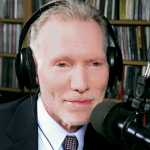
Here's To Your Health with Joshua Lane with Joshua Lane
Cell Tower Battles, Tamiflu's Buried Data, and Iowa's Cancer Fight
Joshua Lane spends the hour alone at the microphone working through health stories in the news, from Jersey Shore towns fighting Verizon's 5G towers to a damning new Tamiflu trial, a disputed Pennsylvania measles death, and Iowa's worsening cancer rates.
Cell Tower Fights Along the Jersey Shore
Joshua Lane opens the show with a report on the growing fight against Verizon's 5G cell towers along the New Jersey coast, citing recent coverage on Fox Business News. He traces Verizon's federal lawsuit against Spring Lake, filed in November 2024 after the borough delayed approval, and notes that residents now worry the borough may settle without input from intervenors like Children's Health Defense. Lane details similar suits against Belmar, filed in 2021, and against Monmouth County after officials denied a 2023 application, plus a new state suit from Lavallette alleging Verizon skipped required environmental reviews. He reads a quote from Spring Lake resident Patrick L. Donnelly calling a proposed settlement, which would let Verizon place antennas inside boardwalk pavilion cupolas without further planning board review, a total capitulation. Lane adds that residents dispute Verizon's claim that new towers are needed at all, since their phones already work fine on the boardwalk.
A New Trial Raises Alarms on Tamiflu
After a break, Lane turns to a newly published randomized trial on Tamiflu, the antiviral Roche has marketed for more than two decades to critically ill influenza patients. Citing reporting by Maryanne Demasi for Children's Health Defense, Lane explains that among 442 patients assigned to five days, ten days, or no antiviral, about twenty percent given Tamiflu died within ninety days compared with fourteen percent who received none, leading the authors to call the drug ineffective and likely to increase mortality. Lane recounts how Roche withheld unpublished trial data for years until the Cochrane Collaboration and the British Medical Journal, led by editor-in-chief Fiona Godlee, forced disclosure of 123 trials, only 74 of them Roche-funded, and found the drug shortened symptoms by less than a day without reducing hospitalizations. He repeats Godlee's phrase describing the medical establishment's decades-long trust in Tamiflu as a false faith built on incomplete evidence.
Antivirals After Tamiflu Repeat a Pattern
Lane broadens the lesson to more recent antivirals, noting that remdesivir was hailed as a breakthrough for hospitalized COVID patients before the World Health Organization's larger Solidarity trial found little effect on mortality or hospital stay. He describes how Merck's molnupiravir was credited in 2021 with cutting hospitalization or death by fifty percent in an early analysis, prompting Australia to order 300,000 courses and the United States to buy 1.7 million, only for the larger Panoramic trial to later find no benefit among vaccinated high-risk adults. Pfizer's Paxlovid, Lane notes, showed stronger results in unvaccinated high-risk patients but has struggled to demonstrate the same benefit in vaccinated populations. He argues that the common thread running from Tamiflu through these newer drugs is governments spending billions on treatments before independent, randomized evidence existed, and he says that obligation to test drugs properly should not require another pandemic to relearn.
A Disputed Measles Death in Pennsylvania
Lane turns to the disputed death of a newborn in Lancaster County, Pennsylvania, the center of the nation's largest current measles outbreak, where the coroner attributes the death to a lacerated spleen. He lays out two competing accounts: Governor Josh Shapiro insists the baby would have survived had the mother been vaccinated, while state health secretary Debra Bogen says she reviewed the case thoroughly, but Lancaster County coroner Stephen Diamantoni tells an NBC affiliate that his office's forensic pathologist found measles was not a factor, since the infant's spleen was neither enlarged nor inflamed. Lane notes that the CDC has left Pennsylvania's measles deaths off its national tally, showing zero deaths for 2026, even though Pennsylvania's health department confirmed last week that two unvaccinated people died, the state's first measles deaths in thirty-five years. He describes the dispute, which pits Shapiro against Health and Human Services Secretary Robert F. Kennedy Jr., as one that has spilled into public argument online.
Iowa's Cancer Rates Become a Campaign Issue
Lane shifts to Iowa, which he says has the second-highest cancer incidence in the country and is one of three states where the rate has climbed for a third straight year, with youth cancer rates also near the top. He cites a report linking Iowa's common cancers to pesticide use and nitrate runoff from fertilizer contaminating drinking water, and highlights Republican gubernatorial candidate Zach Lahn, who has built his campaign around water quality and cancer rates, blaming what he calls big agriculture and big chemical for the state's health crisis. Lane insists the issue is not partisan, arguing that people in both parties either understand the environmental risks or dismiss them regardless of affiliation. He quotes Lahn telling a stump speech at the Iowa State Fair that advisers warned him a Republican could not win a primary criticizing the agricultural conglomerates that, in Lahn's words, are extorting farmers while poisoning the water supply.
Food Policy, Flame Retardants, and History's Lessons
In his closing segment, Lane credits Robert F. Kennedy Jr.'s Health and Human Services with reshaping federal food guidance to favor protein over grains and cereals and to remove certain food chemicals, even as he faults the Trump administration for backing new data centers and, according to reporting in the Guardian, allowing the EPA to use an unusual risk-assessment method to downplay the flame retardant TBBPA, found in household dust, as noncarcinogenic despite findings by European and international cancer agencies. Lane compares the episode to leaded gasoline and paint, which industry defended for decades even after science showed the lead was lowering children's IQ, noting it still took forty years to ban. He closes on an optimistic note, recalling that forty-five percent of American adults smoked cigarettes when he was young, compared with about nine percent today, as proof that public habits and policy can change once good information reaches enough people, before signing off and inviting listener suggestions by email.
Here's To Your Health with Joshua Lane

Here’s To Your Health with
Joshua Lane
The place to hear current thinking about Beauty, Fitness and Longevity.
Hosted by Joshua Lane, Directed by Darrell Wayne
Here’s To Your Health with Joshua Lane playing nationally on:
WBNW 1120AM BOSTON
KKNW 1150AM SEATTLE
KSHP 1400AM LAS VEGAS
KMET 1490AM Riverside, San Bernardino
KMIN 980AM Albuquerque, New Mexico
TRANSFORMATION TALK RADIO
AMERICAONE ATLANTA'S PROGRESSIVE TALK
THAT 70S CHANNEL
THAT 90S CHANNEL
Listen on demand to all archived shows here on our website or on Apple, YouTube Podcasts, Spotify, Pandora, iHeartRadio, Audible, Audacy, search for Here's To Your Health with Joshua Lane.
The show is heard on 7 AM & FM stations broadcasting 14 hours a week of quality wellness talk and ideas that can be helpful to your good health and the health of your family, friends and community.
The show has hosted celebrity guests including:
ROBERT F KENNEDY Jr. United States Secretary of Health and Human Services
CHERYL HINES actor CURB YOUR ENTHUSIASM with Larry David
MARIANNE WILLIAMSON 7 New York Times best selling books, including, A RETURN TO LOVE
SCOTT TIPS president The NATIONAL HEALTH FEDERATION
DEL BIGTREE ceo, Informed Consent Action Network
MARY HOLLAND president CHILDRENS HEALTH DEFENSE
DENNY SEIWELL drummer *WINGS*PAUL McCARTNEY*
DICK GREGORY comedian, civil rights activist, wellness teacher
STEVE FOSSEN founder HEART hit songs, MAGIC MAN, BARRACUDA, CRAZY ON YOU
EDDIE BRIGATI lead singer/songwriter THE RASCALS
ALICE COOPER lead singer/songwriter ALICE COOPER
ROGER EARL founder FOGHAT, SAVOY BROWN BLUES BAND
DEE SNIDER lead singer TWISTED SISTER
KIM ALEXIS fashion model The Face of Revlon
TONY DeFRANCO lead singer The DeFRANCO FAMILY
INGRID NEWKIRK founder PEOPLE FOR THE ETHICAL TREATMENT OF ANIMALS
WEIRD AL YANKOVIC
MARS BONFIRE songwriter BORN TO BE WILD #1 Hit for STEPPENWOLF
NORMAN GREENBAUM songwriter SPIRIT IN THE SKY
NORMA KAMALI
PETER COYOTE
FRANCO COLUMBU Mr. Olympia
Samir Bannout Mr. Olympia
Robbie Robinson Mr. Masters Olympia
TOM PAXTON
TOM RUSH
Viktoras Kulvinskas M.S.
Gabriel Cousens M.D.
Earl Mindell RPh author The Vitamin Bible 12 Million copies sold
Steve Weatherford N.Y. JETS
Ann Louise Gittleman PhD New York Times bestselling author
ZACK BUSH M.D.
BRADY POPPINGA Green Bay Packers, sportscaster, FOX SPORTS
Joel Fuhrman M.D. New York Times bestselling author
Patricia Rillera President CA chapter Mothers Against Drunk Driving
HOW TO FOLLOW
Subscribe to the shows you want to keep up with. Download any episodes you want saved to your device so you can listen to them anytime (with or without Wi-Fi); otherwise, just hit play.
IF YOU’RE ON AN iPHONE OR iPAD:
You can head directly to The Here's To Your Health with Joshua Lane Podcast page on the Apple Podcasts app and hit FOLLOW. (The app comes loaded on Apple devices.) You can also search for the Podcast or any other show from within the app.
IF YOU’RE AN ANDROID USER:
Try Spotify. After you open up the app, hit Search, then Podcasts. You can also search for podcasts by name (the same way you would song titles). Tap FOLLOW on any podcast page and it will show up in Your Library, under Podcasts & Shows.
LAST NOTE:
This podcast is for informational purposes only, even if and regardless of whether it features the advice of physicians and medical practitioners. It is not, nor is it intended to be, a substitute for professional medical advice, diagnosis, or treatment and should never be relied upon for specific medical advice. The views expressed throughout the podcast are the views of the guests and do not necessarily represent the views of Here's To Your Health with Joshua Lane.
PODCASTS ARE FREE
Already have a favorite app? Follow us so you don’t miss an episode.
Speaker Identification
Speaker 1 - Announcer, Announcer
Introduces the show and host Joshua Lane in the opening voiceover.
Speaker 2 - Joshua Lane, Host
Introduced as host Joshua Lane by the announcer and introduces himself as Josh Lane.
[Music: show intro theme]
Speaker 1 - Announcer, Announcer:
Welcome to Here's To Your Health with Joshua Lane. Here's To Your Health discusses the current thinking in wellness, bringing you the most influential thinkers in beauty, fitness and longevity. Your host, Joshua Lane, was part of the Dr. Ann Wigmore team that helped bring wheatgrass sprouts and raw foods to a worldwide audience. And now, the host of Here's To Your Health, Joshua Lane.
Speaker 2 - Joshua Lane, Host:
Welcome to this edition of Here's To Your Health. I'm your host, Josh Lane.
Speaker 2 - Joshua Lane, Host:
There are many stories about wellness making the national news these days, which is a good thing. People are beginning to focus on health more than they ever did before. And here's a story of interest to all of us, and that is it's about growing opposition to cell phone towers in our communities. Residents drew national attention last week as they stepped up to their ongoing fight to keep Verizon 5G cell towers off the town's beachfront. And this was reported in on Fox Business News, Mornings with Maria. And they featured a report and commentary on how all Silver Lake, New Jersey residents who attended an August 25th, 2026 City Council meeting spoke out against the towers.
Speaker 2 - Joshua Lane, Host:
And this local pushback against Verizon towers is similar to the widespread pushback against data centers. Both can involve multi-year fights, many years actually, between local communities and money-making interests of the telecom industry. On November 8th, 2024, the telecom giant Verizon sued Spring Lake in federal court in a bid to push its 5G tower plans through despite local resistance. At this time, now, the borough wants to settle with Verizon to avoid the cost of ongoing litigation. This is from an attorney represents residents who intervened in the lawsuit. And the attorney spoke out that it's just not the right time to settle this. He said, "We haven't started litigating the case yet. It hasn't even gone to discovery."
Speaker 2 - Joshua Lane, Host:
At the October 25, 2026 City Council meeting, notice like a two-year period of time, every resident who spoke was opposed to the towers. The residents voiced concerns about health impacts of 5G wireless radiation and how the towers would negatively affect their property values and harm the boardwalk's aesthetics. One Spring Lake resident and the organizer for Spring Lake Against 5G Towers said that Spring Lake, this is again Spring Lake, New Jersey, said that Spring Lake residents' efforts would benefit other communities in New Jersey that will soon face the same battle.
Speaker 2 - Joshua Lane, Host:
And this fight with Verizon is not just about our town. They're going to try to bully every single town across the Jersey Shore all across New Jersey. Settlement would be premature since related federal and state cases are ongoing. Verizon's lawsuit against Spring Lake is one of several ongoing lawsuits in the area. Going back to May of 2021, Verizon sued Belmar, Belmar a town roughly 3 miles from Spring Lake, in an attempt to install its towers on the town's boardwalk. In September 2023, Verizon sued Monmouth County, where Belmar and Spring Lake are located, after realizing the land in question was under the county's jurisdiction, and after county officials on August 8th, 2023 denied the company's project application.
Speaker 2 - Joshua Lane, Host:
Now, Children's Health Defense, a very good group, and the electromagnetic radiation, EMR, and wireless team are providing legal support to the Belmar residents in their ongoing legal battle. Children's Health Defense is also providing legal support to Spring Lake residents. Children's Health Defense has intervened in both the Belmar and Spring Lake cases. Now, Verizon's suit against Spring Lakes alleges the town, quote, "unreasonably delayed and effectively denied" its application. On August 25th, 2026, residents of, I want to spell that for you, L-A-V-A-L-L-E-T-T-E, New Jersey, Lavallette, New Jersey, filed a new lawsuit in state court alleging that Verizon failed to complete an environmental review process for its 5G towers as required under the Coastal Area Facility Review Act.
Speaker 2 - Joshua Lane, Host:
Lavallette is a small coastal town roughly 10 miles from Spring Lake. This new lawsuit, filed in the Superior Court of New Jersey, Ocean County Law Division, tries to force Verizon to conduct endangered species and environmental reviews for all its proposed 5G towers along the New Jersey Shore. Children's Health Defense is providing legal support for the case. A hearing has yet to be scheduled. It's especially premature for Spring Lake to settle in its lawsuit with Verizon as this new state lawsuit has yet to get underway. In addition, the Belmar federal lawsuit has yet to be decided. We should wait until Belmar, this is in New Jersey, is determined because that's going to be the bellwether of this case.
Speaker 2 - Joshua Lane, Host:
Residents and Children's Health Defense were excluded from drafting a tentative settlement. Although residents and Children's Health Defense are intervenors, that's i-n-t-e-r-v-e-n-o-r-s, intervenors, in the Spring Lake lawsuit, the borough has failed to involve them. The proposed settlement came completely out of the blue because Spring Lake has been categorically excluding us despite promising us to include the intervenors in all major developments. The settlement highly favors Verizon, while failing to address the residents' concern. So says a Spring Lakes resident, Patrick L. Donnelly.
Speaker 2 - Joshua Lane, Host:
Mr. Donnelly said the proposed settlement is a total capitulation by the borough to Verizon. The proposed settlement would allow Verizon to install the 5G antennas inside two enclosed hut-like cupolas on top of pavilion buildings at the north and south ends of the boardwalk. The tentative settlement would remove local control by no longer requiring future wireless infrastructure proposals to be reviewed by the borough's planning board. The settlement puts no future limits on where Verizon could install towers in Spring Lake. Verizon claims its 5G towers are needed to close cell service gaps, but the residents dispute that.
Speaker 2 - Joshua Lane, Host:
The residents say, "Our cellphones are working just fine on the boardwalk." So, I don't even think Verizon has really made a great case as far as why they even need these towers to begin with. So, this is ongoing. And these fights about cell towers and 5G are ongoing all over the United States and they are of major concern to us. And I'm happy to say they really seem that the mainstream individual, the average American person paying attention understands problems associated with our cell phones. They're great technology. We all use them. We all need them. We, I certainly, we understand that, but there are problems associated with the use of this 5G technology, health problems.
Speaker 2 - Joshua Lane, Host:
That's why, for example, some people walk around the shopping malls, you see them with these little white earplugs. Those should not be left in the ear. Those can contribute to problems with serious cancers right around the area where they have those little earbuds. So, I see a lot of teenagers with that and others. And they I guess they like it as a fashion statement and possibly they feel it's a it's useful. But really, it's a bad idea health-wise. And most of us or many of us understand this now. And again, this is ongoing. It is another environmental problem that really must, and I'm guessing will be, adequately addressed.
Speaker 2 - Joshua Lane, Host:
This is Josh Lane. You're listening to Here's To Your Health. We take a short break, and we'll be right back after these important messages.
[Advertisement: The Latest from the Greatest / Darrell Wayne audiobook]
[Advertisement: Ad Council / Sound It Out Together]
[Advertisement: NHTSA and The Ad Council / Car seat safety]
[Advertisement: Mission K9 Rescue]
[Advertisement: FEMA and The Ad Council / Ready.gov emergency preparedness]
Speaker 2 - Joshua Lane, Host:
Welcome to this edition of Here's To Your Health. I'm your host, Josh Lane. Every once in a while, we don't feel well. We take medication. We, you know, need it, just the way it really is. And we like to think that the medications we're using are helpful and well-researched, and good for us, and, you know, really do the job. And here's something that a lot of us, I'm going to mention a medication that really most of us kind of know the name of this one, and it's Tamiflu. And the new information comes out that patients who took Tamiflu are more likely to die than those who don't. And is Tamiflu a life-saving drug? Most of us again know the name, it's been around quite a while.
Speaker 2 - Joshua Lane, Host:
Over the last 20 years, it's entered a routine practice in MDs' offices. And researchers have finally done the randomized trial that should have been done before the drug was widely prescribed for critically ill influenza patients. And the trial found that not only did Tamiflu provide no benefit, more patients died with Tamiflu than without it. Roche, R-O-C-H-E, marketed the drug worldwide. And this was written by Maryanne Demasi, a PhD, who was writing for Children's Health Defense in today's edition.
Speaker 2 - Joshua Lane, Host:
For more than two decades, Tamiflu has been a cornerstone of global pandemic planning. Governments spent billions stockpiling it, the World Health Organization, WHO, placed it on its essential medicines list, and MDs routinely prescribed it to severely ill flu patients on the assumption that it could prevent complications and save lives. Until now, no randomized trial has compared Tamiflu with no antiviral in critically ill patients. And the international trial has now put the assumption to the test, and it has found no benefit.
Speaker 2 - Joshua Lane, Host:
Among 442 critically ill patients with laboratory-confirmed influenza assigned to receive Tamiflu for 5 days, 10 days, or no antiviral, the results were clear. About 20% of patients giving Tamiflu had died by 90 days compared with about 14% of those who received no antiviral. In other words, more patients died when they were given the drug Tamiflu marketed by Roche. The authors concluded that Tamiflu was, quote, "ineffective and highly likely to increase 90-day mortality."
Speaker 2 - Joshua Lane, Host:
And the authors reported it Tamiflu should no longer be routinely administered to critically ill patients with seasonal influenza. The new findings are the latest chapter in Tamiflu's troubled history. Tamiflu arrived in the late 1990s with a promise. The drug Tamiflu blocked an enzyme the virus uses to spread from infected cells. The drug company, Roche, used the logic that if the drug could slow the virus and shorten the aches, fevers and fatigue of influenza, perhaps it could also prevent serious complications, hospitalization and death.
Speaker 2 - Joshua Lane, Host:
The pharmaceutical industry felt that just as antibiotics could treat bacterial infections, antivirals promised to do the same for viral infections. During the 2009 swine flu pandemic, that hope became public policy. Tamiflu sales at the time were over $3 billion, over $3 billion in 2009. And governments accumulated vast emergency supplies. To give you an example of the money that was being given to the drug companies, by 2015, Australia alone had spent about $380 million stockpiling antivirals.
Speaker 2 - Joshua Lane, Host:
Governments were not spending that money to reduce a few hours off someone's flu symptoms. Governments were sold on the idea that Tamiflu was insurance against a pandemic that could overwhelm hospitals and cost lives. Unfortunately, much of the evidence supporting Tamiflu remained in the hands of the manufacturer Roche, and it was never published. Researchers from the Cochrane Collaboration discovered the problem after they published their first analysis. When we did the initial analysis, it was straightforward. Then, they discovered that there were trials they hadn't seen.
Speaker 2 - Joshua Lane, Host:
"When we looked carefully at the data, we became anxious that there might have been some cherry-picking of the trials that had been published and the ones that hadn't been published," said Professor Del Mar. We wondered how many trials had never been published. The Cochrane Collaboration asked Roche for the unpublished data, but the company said no, saying disclosure was unprecedented and citing legal and patient confidentiality concerns. Cochrane Collaboration joined with the British Medical Journal, whose editor-in-chief at the time, Dr. Fiona Godlee, helped lead a public campaign demanding access.
Speaker 2 - Joshua Lane, Host:
For Dr. Fiona Godlee, Tamiflu had become an iconic case. Governments had spent billions stockpiling the drug. Millions of people had taken it, and the evidence needed to independently assess the decisions remained largely inaccessible. I'm quoting now. "There are not only 15 trials of Tamiflu, but actually 123 trials of Tamiflu, of which 74 are entirely Roche-funded. Roche controlled the data. Roche has the data." This was Dr. Fiona Godlee, MD, of the British Medical Journal, the editor-in-chief, speaking to a United Kingdom parliamentary committee in 2013.
Speaker 2 - Joshua Lane, Host:
I'm quoting, "You begin to see the madness of the situation, that we are getting a very, very partial, incomplete, misleading picture of the effectiveness of many drugs." Dr. Fiona Godlee, again, the editor-in-chief of the British Medical Journal, considers the implications much broader than Tamiflu. I'm quoting, "I think it's very hard to explain why this behavior by the pharmaceutical industry in suppressing data over many years is not considered as misconduct. In a scientific experiment, if you suppress data, that's considered misconduct." And I'm quoting again Fiona Godlee, MD, editor-in-chief of the British Medical Journal.
Speaker 2 - Joshua Lane, Host:
This is about patients' health, public health, and we absolutely have to have all the trial data of trials that are performed on members of the public. And now, the missing evidence is emerging. After years of pressure, Roche eventually released the underlying material. When the Cochrane Collaboration reassessed the fuller evidence base, the additional information changed public health policy significantly. The Cochrane Collaboration updated analysis found that Tamiflu shortened symptoms by less than one day, but did not reduce hospitalizations, while the evidence for serious influenza complications was unreliable.
Speaker 2 - Joshua Lane, Host:
Professor Chris Del Mar, speaking to the press, said, quote, "It could be that this drug is really just a kind of expensive aspirin. It just makes you feel better." By then, however, Tamiflu was deeply embedded in medicine and public health policy. And now, the, quote, "unethical argument." That presented another problem. By 2015, influenza experts were arguing that it would be unethical to randomize severely ill patients to placebo because neuraminidase, I'll spell that, n-e-u-r-a-m-i-n-i-d-a-s-e inhibitors had already become accepted treatment.
Speaker 2 - Joshua Lane, Host:
But Dr. Fiona Godlee saw the flaw in that reasoning. I'm quoting Dr. Godlee, "Effectively, what you've got is trust in a drug that has been created based on biased, selected information. And as a result of that so-called trust in the drug, we suddenly find ourselves unable to test it in the real situation against placebo." Dr. Fiona Godlee's conclusions were blunt. Again, Dr. Godlee was the editor-in-chief of the British Medical Journal, a very prestigious publication known worldwide. Dr. Godlee's conclusions were blunt, quote, "That is a false faith in the drug that is preventing us from getting really good evidence about whether this drug works or not."
Speaker 2 - Joshua Lane, Host:
More than a decade later, investigators ran into the same problem. Some participating hospitals refused to randomize patients to a no-antiviral group because clinicians considered it unethical to withhold Tamiflu. When the trial was finally conducted, and the comparison was made, the no-antiviral group had the lowest mortality. That finding contradicted years of observational studies linking Tamiflu with better survival among hospitalized flu patients. The investigators say those earlier studies may have been affected by differences between patients that the researchers could not fully account for.
Speaker 2 - Joshua Lane, Host:
Professor Chris Del Mar had warned about relying on such studies years earlier. Professor Chris Del Mar, I'm quoting him now, "To use observational data, particularly of such poor quality as this, is not a good way to answer a question of whether a drug works or not." And then COVID happened. During COVID-19, antiviral drugs again arrived amid urgency, political pressure and enormous demand for treatments. Remdesivir was hailed as a breakthrough after early results suggested hospitalized patients recovered faster. But now, we know the terrible outcome when patients were forced to use remdesivir, and I'll spell that: r-e-m-d-e-s-i-v-i-r.
Speaker 2 - Joshua Lane, Host:
Governments rushed to secure supplies, but World Health Organization's much larger Solidarity trial found little or no effect on mortality, initiation of ventilation, or duration of hospital stay. And then came a new medication, m-o-l-n-u-p-i-r-a-v-i-r. In 2021, Merck announced that its new COVID-19 pill had cut hospitalizations or death by 50%, 50%, in an interim analysis. Australia quickly ordered 300,000 courses, and the US government bought 1.7 million courses.
Speaker 2 - Joshua Lane, Host:
When the completed trial arrived, the apparent benefit had declined substantially. Later, the much larger Panoramic trial found no reduction in hospitalization or deaths among high-risk vaccinated adults. Pfizer's Paxlovid, P-A-X-L-O-V-I-D, had stronger data initially, substantially reducing hospitalizations or death in high-risk unvaccinated adults. But demonstrating the same benefit in vaccinated populations has proved much more difficult. The two recent randomized trials find no reduction in hospitalization or deaths in those populations.
Speaker 2 - Joshua Lane, Host:
And now, the question is, what are the lessons from Tamiflu? And the Tamiflu story is about what happens when drug company selective press releases of a company of company-controlled data is taken as gold standard science. Let me just repeat that, cuz it's very succinct. What are the lessons from Tamiflu? The Tamiflu story is about what happens when drug company
Speaker 2 - Joshua Lane, Host:
Selective press releases of company-controlled data is taken as gold standard science. Selectively published trials were reported as encouraging. Governments spend billions stockpiling Tamiflu. Public health authorities touted it. MDs promoted it as standard treatment. However, access to the unpublished evidence showed that its benefits were far more modest and uncertain than originally promoted. In an effort to prevent the total loss of the income generated by selling Tamiflu, the drug company said the use of Tamiflu had become so deeply embedded that withdrawing it from critically ill patients was considered unethical. That was their claim. Let me repeat that.
Speaker 2 - Joshua Lane, Host:
In an effort to prevent the loss of income generated by selling Tamiflu, the drug company said the use of Tamiflu had become so deeply embedded that withholding it from critically ill patients was considered unethical. That is one of the most damning parts of the Tamiflu story. Tamiflu had never been properly tested. But doctors, with the backing of the drug company, told us that testing it in critically ill patients was considered unethical. Dr. Fiona Godlee, again, editor in chief of the British Medical Journal, called it a "false faith" more than a decade ago. Now over 20 years after Tamiflu entered routine practice,
Speaker 2 - Joshua Lane, Host:
researchers have finally done the randomized trial that should have preceded its use in critically ill influenza patients. Not only did they find no benefit, more patients died with Tamiflu than without it. Now, pandemics will always create pressure to act quickly. We understand that. And regulatory agencies are sometimes pressured into spending taxpayer money for inadequately tested treatments. However, spending billions on medicines and administering them to tens of millions of people should come with an obligation to find out whether these touted and profitable drugs actually deliver the benefits being claimed.
Speaker 2 - Joshua Lane, Host:
With Tamiflu, that question was left unanswered for decades. It should not take another pandemic to learn the same lesson. And I would like to thank Maryanne Demasi's news story, which was published on MD Reports on the Substack page, again, part of the Children's Health Defense team of reporters and scientists and educators working to improve the health of the American people. This is Josh Lane. You're listening to Here's to Your Health. We're going to take a short break, and we will be right back after these important messages.
[Advertisement: Fatherhood.gov]
[Advertisement: Sound It Out Together]
[Advertisement: NHTSA / The Right Seat]
[Advertisement: Mission K9 Rescue]
Speaker 2 - Joshua Lane, Host:
Welcome to this edition of Here's to Your Health. I'm your host, Josh Lane, continuing our discussion of wellness items in the news that we need to know about. And you probably saw this just just the past couple of days, past week or so on the news, and that is there's conflicting information continuing in the measles-associated death of a Pennsylvania newborn. And there are now at this point two very different narratives on whether measles was at fault for the death of a newborn in Pennsylvania. And this intensified over the weekend. And the baby died of a lacerated spleen,
Speaker 2 - Joshua Lane, Host:
according to the coroner in Lancaster County, Pennsylvania, the center of the largest current measles outbreak in the United States. And there is disagreement on whether a measles infection acquired before birth caused the infant's organ to became inflamed, resulting in the fatal injury. The Pennsylvania governor, governor of the state of Pennsylvania, Josh Shapiro, maintains the baby wouldn't have died if the mother had been vaccinated and therefore protected from measles. And the state's health secretary, Debra Bogen, an MD, said on X that she thoroughly reviewed the case investigation information.
Speaker 2 - Joshua Lane, Host:
The Lancaster County coroner, Stephen Diamantoni, MD, told NBC affiliate WGAL that, according to his office's forensic pathologist, measles was not a factor, as the newborn's spleen was neither enlarged nor inflamed. The CDC leaves Pennsylvania deaths off the measles tally after the vaccine clash between Secretary of Health and Human Services Robert F. Kennedy Jr. and Governor Josh Shapiro of Pennsylvania. Again, we have scientists, one saying measles was a factor, and the other scientist who actually was quoting his office's forensic pathologist who did the autopsy, said that measles was not a factor,
Speaker 2 - Joshua Lane, Host:
as the newborn's spleen was neither enlarged nor inflamed. And again, the Center for Disease Control leaves the Pennsylvania deaths off the national measles tally after the vaccine clash between Robert F. Kennedy Jr., who is the Secretary of Health and Human Services, and Governor Josh Shapiro, the Governor of Pennsylvania. The Centers for Disease Control and Prevention has omitted two measles-associated deaths in Lancaster in Lancaster County from national reporting, and as of August 31st, 2026, the CDC's data shows zero deaths from measles in 2026.
Speaker 2 - Joshua Lane, Host:
This contradicts the Pennsylvania Department of Health's confirmation last week that two unvaccinated people with the disease had died, making this the first measles deaths in the state in 35 years. In a note posted to the CDC's measles outbreak tracker, federal health officials said they are still reviewing the cases and claimed available information does not establish whether measles caused or contributed to the deaths or whether the individuals died from other causes while infected with measles. The message reflects an ongoing dispute between Pennsylvania and national government, which spilled into social media last week.
Speaker 2 - Joshua Lane, Host:
So this is an important case, and we see that there's there's dissension, I guess the way there are on many important topics. This is Josh Lane. You're listening to Here's to Your Health. We're going to take a short break, and we'll be right back after these important messages.
[Station ID]
[Advertisement: Fatherhood.gov]
[Advertisement: Ready.gov / FEMA]
[Advertisement: Mission K9 Rescue]
Speaker 2 - Joshua Lane, Host:
Welcome to this edition of Here's to Your Health. I'm your host, Josh Lane. Now here's a topic that's really kind of frightening. It's been discussed now for a while, and that is rising cancer rates in the United States. And one particular state, Iowa, has been in the news quite a lot the past number of years for a number of reasons. Of course a lot of their young people are moving out of the state, they can't find work, and there's a number of issues. And this one is really frightening. And Iowa has the second highest cancer incidence in the United States
Speaker 2 - Joshua Lane, Host:
and is one of three states where cancer incidence is rising for the third year in a row. And Iowa got the second highest cancer incidence in the country. Its rate among young people was also near the top. And researchers released a report, again, about the state of Iowa, that shows links between Iowa's most common cancers and certain environmental risk factors, like the use of pesticides and also the problems with nitrate runoff from fertilizers. And so this problem with health in Iowa, this is obviously a big issue.
Speaker 2 - Joshua Lane, Host:
And the water quality in Iowa, which has been affected again from nitrate runoff from fertilizer, well now, one of the candidates, Zach Lahn, L-A-H-N, who is running as Republican, although really it doesn't matter what party it is, because this is not a partisan issue. People like to try to divide us Americans saying one party vis-a-vis another party, but that's really bogus. People in both parties understand these environmental issues, and other people in the same party don't understand it, don't get it, or think, "No, no, you're wrong." Okay, so it's not a it's not a political issue. But Zach Lahn has centered his gubernatorial campaign
Speaker 2 - Joshua Lane, Host:
around water quality in Iowa and the high incidence of cancer in Iowa. Zach Lahn tells the people of Iowa that fertilizers, pesticides, and other farm chemicals are contaminating their drinking water supplies. Zach Lahn believes big agriculture and big chemical are to blame for the state's high cancer rates. And I'm not saying that in a lighthearted way. I'm not saying, you know, Big Ag and making a joke, or Big Chemical and making a joke. No, we know that there's a problem. And Zach Lahn, a candidate as Republican candidate for governor of Iowa,
Speaker 2 - Joshua Lane, Host:
is no marginal person. He's obviously a mainstream politician hoping to win and become governor of Iowa. And he's making these statements. And again, Iowa has the second highest cancer incidence in the United States and is one of three states where cancer incidence is rising for the third year in a row. And it got the second highest cancer incidence in the country. Its rate among young people is also near the top. Once unimaginable for a for a politician of either party in Iowa, Lahn's campaign, Zach Lahn,
Speaker 2 - Joshua Lane, Host:
his campaign is putting the state's Republicans in the same bind that has bedeviled the Trump administration during its second term, stuck between the demands of the MAHA movement, Make America Healthy Again, the activists, and the interests of the agricultural and chemical companies that pay large sums of money as political contributions. Quote, "Many people in the primary said, 'You can't win an election in the Republican primary talking about the big agricultural conglomerates that are extorting our farmers, talking about clean water and how we need to lower our cancer rates.'"
Speaker 2 - Joshua Lane, Host:
Zach Lahn said that in a stump speech earlier this month at the Iowa State Fair, where the farm industry's influence loomed large in the form of corporate sponsorships and expensive exhibitions. It just goes to show that health is, I think, for the first time in the upcoming elections, being discussed as a major problem. I do not know of an earlier time in the United States when this has occurred, although the one parallel possibly is in the late '80s when there was a move to ban cigarette smoking in public places throughout the United States.
Speaker 2 - Joshua Lane, Host:
I in my wisdom as a young man thought, "No, that'll never happen. Tobacco industry much too powerful. They'll never ban cigarette smoking in public places." Well, I was wrong. For whatever reason, the American people said, "Listen, we've had it with cigarette smoking. At the restaurant, you go out to a restaurant, and two tables over, you know, people are smoking. And it's obviously, you know, it's they're smoking and they're ruining it for you because you don't smoke." So they actually stopped smoking in public places. And I thought, "Whoa, whoa, enough people have woken up to this?" Because when I was a young man in the early '60s, 45% of the American adults smoke cigarettes.
Speaker 2 - Joshua Lane, Host:
And now, just, you know, 60 years later, the official number, I believe, is 9%. 9% of the American public still smoke cigarettes. But that's a tremendous drop from 45%. And back in the 1890s in the United States, 90% of American men were known as cigar smokers. So things can change. You can influence large numbers of people if the information is good and if the information becomes available. Now, here's something from our president, President Trump, who's doing some very good work in his support
Speaker 2 - Joshua Lane, Host:
with the Secretary of Health and Human Services Robert F. Kennedy, Robert F. Kennedy Jr., who is really helping, you know, take out all sorts of food chemicals from the from our foods that are allowed, reshaping the food pyramids so that we eat more protein-rich foods and really marginalize the use of grain and breakfast cereals, which are, you know, fun maybe, but really not the way to nourish the nation. Unfortunately, a great percentage of Americans are overweight, their health is poor, and this is bad. This is a this is a bad thing, and we're all starting to realize it now and to talk about it and to make our concerns known.
Speaker 2 - Joshua Lane, Host:
And even some lawmakers are addressing the issue. Well, President Trump is actually, unfortunately, from my perspective, firmly behind the controversial data centers. President Trump's EPA is manipulating safety data around a highly toxic flame retardants, and this is what people allege, consumer advocates. And this is reported in the Guardian. The Guardian's reporting, a British important British newspaper, the Guardian's reporting the chemical is TBBPA, T-B-B-P-A. And it has been found in dust in US homes and consumer goods
Speaker 2 - Joshua Lane, Host:
at combined levels that independent research has found may present a danger to the public, and especially small children. The agency is considering restrictions for flame retardants, and advocates say the fight is the latest example of the Trump administration teaming up with the chemical industry to downplay the risks of a highly toxic and profitable chemical. And while European agencies and international cancer organizations have found that TBBPA is or is probably a carcinogen, the Environmental Protection Agency,
Speaker 2 - Joshua Lane, Host:
in its new risk assessment, used what public health groups say is a highly unusual approach to conclude that it is not carcinogenic at levels it suggests the US public and children are exposed to. And so we have a mixed record from the politicians. And we know that there's pressure from industry. They're earning a dollar, making something, and they don't want to change. And let's just go back by way of historical analogy, when there used to be lead in gasoline and lead in paint.
Speaker 2 - Joshua Lane, Host:
And of course, it was helpful to reduce knocking in automobiles. So it had a legitimate use in industry. And everyone said, "Oh yeah yeah, we don't want knocking the cars, and we use lead. Fine." And then they realized over a period of decades with the with so much lead being thrown into the air that it was adversely affecting the health of children and reducing the IQ of children. And this was, of course, validated. And even so, it still took them 40 years. It took 40 years before they finally banned the use of lead.
Speaker 2 - Joshua Lane, Host:
And things got better over a period of time, but it took 40 years. And I mention that because it's upsetting when you have good science that says, "Listen, children are being poisoned here, children are being damaged." And industry was not going to make a change, they were not going to lose the nickel. They didn't care about American children. And that's finally changed, but it did take 40 years. I just mention that because sometimes it takes a long time to achieve these important results. But now
Speaker 2 - Joshua Lane, Host:
many more of us are aware of environmental factors, of nutritional factors. We are concerned, and now more of us are speaking up. This is Josh Lane. You're listening to Here's to Your Health. We take a short break, and we'll be right back after these important messages.
[Advertisement: NHTSA / The Right Seat]
[Advertisement: Sound It Out Together]
[Advertisement: Fatherhood.gov]
[Advertisement: Ready.gov / FEMA]
[Advertisement: Mission K9 Rescue]
[Station ID]
[Silence]
Speaker 1 - Announcer, Announcer:
Thank you for listening to the show. If you have suggestions for guests or topics you would like to hear, please email me at joshlanewellness@gmail.com. That's joshlanewellness@gmail.com, j-o-s-h-l-a-n-e-wellness@gmail.com. On behalf of the cast and crew, I would like to wish you a healthy and safe good evening.