
Ask the Angel with Rachel Corpus, October 5, 2026


Ask the Angel with Rachel Corpus
Shadow Work, Rage Rituals, and Getting Back Into the Body with Melodie Polanski
Rachel Corpus answers a listener's question from Sarah in Boise, Idaho, about whether ongoing inner work is healing her or only digging up more old wounds. Energy alchemist Melody Polanski joins to talk about shadow work, rage rituals, EFT tapping, and the body as a place where emotions are stored.
Sarah's Question and Opening Reflections
Rachel Corpus opens the hour by reading a question from Sarah in Boise, Idaho, who has done a lot of inner work but wonders whether she is digging up more emotional material instead of actually healing. Corpus says the angels remind her that everyone already holds the answers and simply needs to remember them, and she suggests that a guest who works closely with emotion and the body might help. She introduces Melody Polanski, an energy alchemist who has worked with energy for about twenty years and brings together violet flame, Reiki, reflexology, acupressure, massage, sound healing, hypnotherapy and empowerment coaching. Corpus describes Polanski's work as helping people get underneath old wounds and patterns, release what no longer serves them, and reconnect with who they are. Polanski thanks her for having her, and Corpus says she felt a whoosh of brightness when the guest arrived.
Fragments, Dis-ease, and the Rage Beneath
Polanski explains that when she goes deep into healing, old memories surface at random, shaped by a fragmented childhood marked by trauma, and she has learned there is no final point where everything is finished. She says the goal is to stay present, integrate the work, and make friends with the shadow rather than pushing it down. Polanski names what usually hides beneath those layers, especially for women: anger and a little bit of rage, often built up from years of saying yes when they wanted to say no. She calls the buildup dis-ease, a broad word for anything that left a person uneasy. Corpus asks what lies under her own rage, which she once felt while looking at a picture of a beautiful woman in a corset, and Polanski answers that everything comes back to unconditional love for ourselves and for the people who put pain on us. The source transcript is garbled in places here, so Polanski's full description of wholeness is hard to follow.
Rage Rituals and Safe Containers
Polanski describes rage rituals she has done, including screaming into rivers and throwing the temper tantrum she never had as a child, and Corpus recalls breaking objects in a safe container she calls sacred rage. Polanski admits her first ritual frightened her, so she worked through three rounds with a playlist, rising and falling with the music while punching pillows, kicking her bed and head banging, until she was laughing at herself. She says the ritual ends the way a child's tantrum does, with deep breaths, a snack and a snuggle. Corpus connects this to the lack of healthy models for anger, from films like The Purge to the early-years teaching phrase "use your words." Polanski adds that many women were raised to be good little girls who swept things under the rug, so expressing anger feels frightening, and her biggest fear is hurting someone with it. Corpus notes that she kicks things and is loud when alone at home, without having seen it as releasing rage.
Tapping, Body Work, and Integration
Polanski helps people get back into their bodies, because divided attention leaves everything stuck above the shoulders. Her sessions begin with touch, breath and questions about where an emotion sits in the body, and she may guide someone to soften a feeling by a small amount, or to picture its size, shape or texture rather than retelling the story. Corpus asks her to demonstrate EFT tapping, and Polanski taps the top of her head, forehead, eyebrows, under the eyes, the area between nose and lip, collarbone, arm and fingertips while repeating affirmations such as "I am enough." She also uses bilateral stimulation by passing a crystal or pencil across the midline of the body, which she says engages the other side of the brain. Asked what integration means, Polanski describes working an experience into daily life so she can see it from all sides, and Corpus adds that forgiving oneself through the grace period is part of it. Polanski says the real test is whether a person can pause before reacting when a trigger returns.
Shadow Work, Inner Children, and Future Generations
Polanski credits Carl Jung with creating shadow work, which she says began as a look at the dream state, and explains it as bringing hidden parts of oneself to the surface so they can breathe. She compares it to the Disney film Soul, where a guide descends into frightening beings and finds a trapped, scared part of someone inside, often an inner child. Corpus laughs that this sounds like every exorcism she has done, where the spirit misses its mama or is hungry. Polanski describes shadow work as letting protective parts know they are safe now, and says the wounds can reach back into past or parallel lives. Corpus suggests that this work also reaches the next version of us, and Polanski says it may touch DNA so that future generations are not carrying the same thing. The conversation then turns to women's freedom, with Polanski describing the work of her ancestors and her own children, who are twenty-one, eleven and seven, as built differently and more confident in their bodies.
Energy Alchemy, Hair Memory, and Starseed Cards
Polanski explains that the name energy alchemist came from someone who saw her transmuting dense, heavy energy into light, loving energy. Her first Reiki class left her unsure until she gave a distance session to a friend in California, who felt her in the same places she had been working. Corpus says she can still feel people when they are not touching her. Polanski then relays claims that hair is a crystal structure carrying memory, and that low copper may turn hair gray, adding that she is not a doctor. Polanski says a psychic told her that her origins are Pleiadian, Andromedan and Sirius B, and that she feels drawn to all three. Corpus then draws cards from James Van Praagh's deck, Message from the Guides, including one that suggests people need not share their shadow work until it no longer triggers them. Polanski says being of service means holding space, listening without judgment, and offering a choice between feedback and listening. Corpus thanks her and closes by urging listeners to keep their halo straight.
Ask the Angel with Rachel Corpus
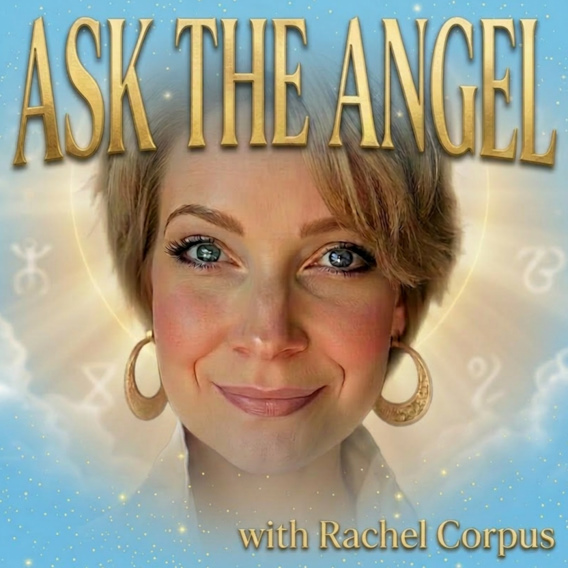
Ask the Angel with Rachel Corpus is a live, call-in show where the sacred meets the spontaneous and nothing is off-limits. Hosted by Rachel Corpus, a Seraphim angel in human form, psychic medium, animal communicator, consultant for TV and film, trained exorcist, author, ordained minister, mom, and wife, the show blends real-time questions from people of all ages with intuitive insight, grounded wisdom, humor, and beautifully unfiltered moments. Call in with your questions about spirituality, life, and the Universe, and Rachel, alongside Spirit, expert guests, and Sarai, her extraterrestrial council, offers perspective, clarity, and answers that are sometimes profound, sometimes playful, and always real.
Speaker Identification
Speaker 1 - Announcer, Announcer
Speaks during the show's recorded intro over music.
Speaker 2 - Rachel Corpus, Host
Self-identifies as the host of Ask the Angel and introduces the show and guest.
Speaker 3 - Melody Polanski, Guest
Introduced by the host as Melodie Polanski, an energy alchemist.
[Music: show intro theme]
Speaker 1 - Announcer, Announcer:
Now welcoming Rachel Corpus, angel incarnate and psychic medium. This is Ask the Angel.
Speaker 2 - Rachel Corpus, Host:
Sarah from Boise, Idaho, hi Sarah! Oh, I love this question because resonates with me so much and I think a lot of us.
Speaker 2 - Rachel Corpus, Host:
First of all, you know my brain, I just jump right in there excited to see all of you. When I have something at the end of the day that I have to do, it either sabotages me because I can't do anything all day until that thing, or I get excited about it all day. Today was I get excited about it all day.
Speaker 2 - Rachel Corpus, Host:
That was today, so maybe you can feel it. Also, I have one of those shirts that randomly comes open, so this could be a really exciting show. It's going to be a great show anyway because of who I have on today, just wait. Sarah, I love your question. Here it is, everybody. This is Sarah's question for the angels.
Speaker 2 - Rachel Corpus, Host:
"Rachel, I've done a lot of inner work." Yes, you have, goddess, I can feel it. "But sometimes I feel like I'm digging up more and more emotional stuff instead of actually healing. How do I know when I'm releasing something that needs to go versus just getting stuck in my old wounds?"
Speaker 2 - Rachel Corpus, Host:
Okay. Wow. I feel that. And so, what This is how I would like to handle this with you, all right? Because you know I don't have all the answers. Mhm. You don't have all the answers, we don't have all the answers, but collectively, consciously, it's in there, right? It's in there. So who do we get to ask that can help lead us back to remember what we know, right?
Speaker 2 - Rachel Corpus, Host:
Because I'm just getting nudged by the angels. They said, "Yes, we do have all the answers for us. We just don't remember." So when we ask our guests their their answers for these questions, when we go into our own meditations, when we reunite with source, however we describe source or God for us, or we go to our cards or divination tools, our sleep, we're really remembering what we know. We're going back because where does source live? Right here, right? Okay. So let me read you read to you about our guest tonight.
Speaker 2 - Rachel Corpus, Host:
My guest tonight is Melody Polanski. Melody is an energy alchemist, and she's been working with energy for about 20 years or so, give or plus infinite lifetimes, right? She brings together all kinds of tools in her work, including violet flame, Reiki, reflexology, acupressure, massage, sound healing, hypnotherapy, and empowerment coaching.
Speaker 2 - Rachel Corpus, Host:
Now, I know you're all thinking about how you want to know more about all of that and how you want her to help you, but just stay focused. Listen. Listen. Really, what she's helping people do is get back to themselves. Okay? You know how sometimes we carry around all this emotional stuff that we don't even realize we're carrying, like old wounds, old patterns, things that happened years ago that are still running the show a little bit or a lot?
Speaker 2 - Rachel Corpus, Host:
Melody works with people to get underneath that stuff. You listening, Sarah? Melody works with people to get underneath that stuff, release what isn't serving them, and reconnect with who they really are underneath all of it. And I think that's such an interesting part of healing because sometimes we think we need to fix ourselves when maybe we just need to remember who we are before we started carrying that other stuff. Actually, I think she is the perfect person to start us on answering this question from dear Sarah. So I want to bring Melody in. Welcome Melody to the show. Welcome to the conversation.
Speaker 3 - Melody Polanski, Guest:
Hello.
Speaker 2 - Rachel Corpus, Host:
Hello.
Speaker 3 - Melody Polanski, Guest:
Thank you for having me.
Speaker 2 - Rachel Corpus, Host:
Oh, my pleasure. I just felt like a whoosh of brightness when you came in.
Speaker 3 - Melody Polanski, Guest:
Good.
Speaker 2 - Rachel Corpus, Host:
I don't know if you saw my face, but my face was like, "Wooh!" when you came in.
Speaker 3 - Melody Polanski, Guest:
I was in the sun all day today, so...
Speaker 2 - Rachel Corpus, Host:
Nice.
Speaker 3 - Melody Polanski, Guest:
Bring a little bit of that light in.
Speaker 2 - Rachel Corpus, Host:
It's you, too.
Speaker 3 - Melody Polanski, Guest:
Thank you.
Speaker 2 - Rachel Corpus, Host:
It's also you. So what do you think Sarah's question about when we're bringing up She's doing her inner work, awesome, but sometimes she feels like she's digging up so much. How do you She's digging up more and more emotional stuff instead of actually healing. How does she know, which she feels like that, she's just digging more and more stuff like a bottomless pit, I'm paraphrasing. Is that what she's doing, or is she actually healing? How do you know the difference? Is she just getting stuck in her own stuff?
Speaker 3 - Melody Polanski, Guest:
I feel like when whenever I've been in that like deep dive where I'm like uncovering a lot of things. Especially, I grew up with a lot of trauma, and so I have a fragmented childhood. And so sometimes things will just kind of randomly come through, and I'm like, "What was that?" But, and the deeper I go into it, the more emotions continue to just come out. One thing is, I don't know that there's like an end point.
Speaker 3 - Melody Polanski, Guest:
I don't know that there's ever a point where you're like, "I'm healed, everything's good now." I think it's important to stay present with where you are right now in that process, and integrate some of the work that you are doing, and implementing it in your life. Because we can get stuck in that need to heal, when there's nothing broken, we just have to kind of learn how to be ourselves with that emotion, you know, with that shadow, making friends with that shadow, and saying, "Okay, you are a part of me. That emotion is a part of me, that experience was a part of me.
Speaker 3 - Melody Polanski, Guest:
Now, how do I integrate that so that I'm not pushing it down more, but letting it breathe, letting it have its moment when it needs to come out, and then over time, I feel like the emotional the the weight of the emotions becomes lighter, and it becomes more, you know, more like a friend. It's like, okay, I see what's coming up here, I see the trigger that's coming up here. Okay, how am I going to process this? Am I going to physically process this? Am I going to emotionally process? Am I going to mentally process this information that's coming through for me?
Speaker 3 - Melody Polanski, Guest:
A lot of the times when we get really deep down into it, it really needs to be physically expressed, whether that's through our own voice, through dance, through walking, through like working out, or punching a bag or a pillow, whatever needs to come out, but it has to like physically express itself. When we get down below like each of the layers of emotions, typically, what hides there, especially for women, is anger and a little bit of rage. When we get below
Speaker 2 - Rachel Corpus, Host:
Rage.
Speaker 3 - Melody Polanski, Guest:
Yeah.
Speaker 3 - Melody Polanski, Guest:
And so, those things, they stay trapped in our bodies, and a lot of us are recovering people-pleasers, and so every time that we've said yes when we really wanted to say no, we internalize all of that. And some of these things that we hold onto aren't even worthy of holding onto, sometimes that was, you know, Timmy that cut you cut you in line in fifth fifth grade, right? But you didn't know how to express that anger, and so you, "Oh, I got to still be quiet, I still got to be good, so I'm going to just hold that in," right? Just suck that in, and then you internalize it, and it starts to compile because that happens over and over and over again, because of conditioning. So
Speaker 2 - Rachel Corpus, Host:
Are those the fragments that come in, the fragments that you're noticing that are coming in? Like, it's not always like big memories, but it's those little, quick things where somebody cuts you in line, or And so it's not a big memory where you remember every scent and every moment of it, and yet it was really big to your system.
Speaker 3 - Melody Polanski, Guest:
Yeah, absolutely. And so all those like soul fragments, right? I just had some shamanic work done for me the other day, and they, you know, talked about bringing some of my soul fragments back to me, and that that's part of it, right? Wow.
Speaker 2 - Rachel Corpus, Host:
How do you do that?
Speaker 3 - Melody Polanski, Guest:
They did it, I just enjoyed it.
Speaker 2 - Rachel Corpus, Host:
So you received it.
Speaker 3 - Melody Polanski, Guest:
I received it, yeah. And I've had that work done Does
Speaker 2 - Rachel Corpus, Host:
that happen to everybody, Melody? Do we all have our part parts of our soul get fragmented? Is that just part of being in this human experience?
Speaker 3 - Melody Polanski, Guest:
I think so. I don't think that there's anybody that's gone gone through life unscathed. And and has ever had a moment where you haven't been like afraid of something or where you've wanted to disconnect or dissociate in some way, some form. And whenever we do that, whenever there's like a big trauma in our life, or even a little trauma in our life where we want to disconnect, and kind of hold back, parts of our fragments of our souls stay behind. And it's they're still attached to us. It's never like they're gone from us, but
Speaker 2 - Rachel Corpus, Host:
Right.
Speaker 3 - Melody Polanski, Guest:
they're they're off in the distance, right? And so we want to bring that back into us, and that can be painful because then you have to accept the pain that came with that dissociation or that disconnection. Yeah,
Speaker 2 - Rachel Corpus, Host:
because you couldn't handle it then, Right. so it's been on pause for a long time and gaining interest.
Speaker 3 - Melody Polanski, Guest:
Mhm. Yep. And compiling, and compacting, and, you know, when we talk about shadow work
Speaker 2 - Rachel Corpus, Host:
Festering, maybe.
Speaker 3 - Melody Polanski, Guest:
Right. Festering, and it just it continues to build, and it becomes bigger and bigger. And starts to collect in our cells, and turns into dis-ease. I call it dis-ease. Me,
Speaker 2 - Rachel Corpus, Host:
too. It's not I heard someone say it once, and I thought, "Well, that's right. That feels right."
Speaker 3 - Melody Polanski, Guest:
Because it can it's such a broad thing, and and we don't want to just When I use the word disease, right, then you're thinking about all the big things, right? But when we say dis-ease, that can be such a broad term. And it's just really anything that made us feel uneasy. Oh,
Speaker 2 - Rachel Corpus, Host:
it reminds me of disharmony. Disharmony, yeah. Harmonic or disharmonic, aligned or malaligned or misaligned, that's where my brain goes.
Speaker 3 - Melody Polanski, Guest:
Yeah, I read something today that was it was just a meme, but it said, "When you're asking for harmony, remember what that means to bring yourself back into harmony." Because there's going to be pieces of yourself that are going to come back in into that balance and to that you've pushed away. And so there is a bit of integration that has to happen, and you have to sit with it, and you have to make space for it. And when I'm in pain, I have to sit with my pain, and, "What do you What do you want? What What can I get for you? What What do you need from me?"
Speaker 3 - Melody Polanski, Guest:
And I and I ask it questions, and usually it just needs to be acknowledged. And that's See,
Speaker 2 - Rachel Corpus, Host:
that's my question. So if we One time, I channeled I I was just looking at a picture, I was at a flea market, and I was looking at a picture of a beautiful woman in a corset. And I just I wanted to just look at it for a minute. And I felt rage. Rage. But she was beautiful. So it got me thinking. What's What's under the rage? What's under the anger? So I would like to pose that question to you. What is under the anger that that we, collectively, are unraveling?
Speaker 3 - Melody Polanski, Guest:
It all comes back to love. Once you work through that rage and and that the turmoil or the pain, what's under everything is love, unconditional love for ourselves and for the people that maybe even put that on us. Yeah, it's an understanding, I think, when we get down to it. It's just but it has to be released, and it has to because otherwise you can't get to that underneath side. Not that you can't feel love in other areas, but to be fully whole, right, to be wholesome, to be
Speaker 3 - Melody Polanski, Guest:
to bring those fragments back in, and it can be really painful, and there can be a lot of anger that comes along with it, like, "Why did this happen to me? Why did you do this to me?" All of those questions are kind of coming up for us in those moments. I do rage rituals. Have you ever done a rage ritual before? Yes.
Speaker 2 - Rachel Corpus, Host:
Yes. Where Oh, I think I have. I've broken stuff in a in a safe container, I let my rage Sacred rage, I call it.
Speaker 3 - Melody Polanski, Guest:
Yeah. I've screamed into rivers, I've, you know, thrown temper tantrums because I never got to throw a temper tantrum when I was little, and Oh,
Speaker 2 - Rachel Corpus, Host:
I think I do that more than I give myself credit for, because I'm alone in my house a lot, and I'm loud a lot, and I kick stuff, and I guess I didn't see it as letting my rage out.
Speaker 3 - Melody Polanski, Guest:
Yeah, get it out. I think it's the intention that you're putting behind it, too, of saying, "This is I'm allowing myself to feel my rage, I'm allowing myself to feel my anger."
Speaker 2 - Rachel Corpus, Host:
So when you were little, there wasn't a safe there wasn't a safe container for that, you couldn't do it. Right. Same here. Peacemaker,
Speaker 3 - Melody Polanski, Guest:
Mhm.
Speaker 2 - Rachel Corpus, Host:
many layers to that. Interesting.
Speaker 3 - Melody Polanski, Guest:
Yeah, I'll be sweet, I'll be quiet, I'll keep to myself. I don't want to cause any more issues, so I'll stay away. And if I get angry, then, you know, that's just going to cause so much more, so I'll just hold it in, and suck that in. Yeah.
Speaker 2 - Rachel Corpus, Host:
Have you found that anger is playful to you, because you're not hurting anyone with your anger? Mhm. Have you found that?
Speaker 3 - Melody Polanski, Guest:
Yeah. I think that once I can The first time I did a rage ritual, I actually scared myself. I was like, "I'm never coming back from this." But then, I So the first time I did it, I did like three rounds of this. I did a song a playlist, and I'd rise up and I'd get into the to the music, and and then it'd come down, and so I did a few rounds of that, just because I felt like I was I hadn't unleashed enough yet.
Speaker 3 - Melody Polanski, Guest:
And so by that third round, I was laughing at myself, and every time that I, you know, like it just felt good to like release, and I was like punching pillows, and kicking my bed, and I was head banging, and I was doing all of these things to just like whatever my body felt, I was doing. And then it got to the point where I was like stomping around, and acting like a child, right? And then what does a child do when they're done with their tantrum? They get up, and they deep breaths, "I'm sorry, Mommy," or
Speaker 2 - Rachel Corpus, Host:
Eat a snack. Want love.
Speaker 3 - Melody Polanski, Guest:
Yeah, get a little get a little snuggle, get some snacks, you know. And
Speaker 2 - Rachel Corpus, Host:
Get some sugar, whether it's for their heart or their body, and then they rest. It's their own integration, whatever they need.
Speaker 3 - Melody Polanski, Guest:
Yeah, so I think it can be If it's
Speaker 2 - Rachel Corpus, Host:
available to them.
Speaker 3 - Melody Polanski, Guest:
Right, if you have the safety to be able to do that, right? And then, you know, most older generation I don't want to say older women. It's
Speaker 2 - Rachel Corpus, Host:
okay.
Speaker 3 - Melody Polanski, Guest:
But us, you know, 30s and up, we'll just say that. You know, we're we were conditioned very much to just be good little girls, Say that. to yeah, to sweep things under the rug, to not bring anything that's going to, you know, if you don't have anything nice to say, don't say it at all kind of. And so our throats were closed down, right, at a young age. And and and so as adult women, we're learning to express ourselves, but anger is so scary, you know, because that's like what are people going to think of me?
Speaker 3 - Melody Polanski, Guest:
One of my biggest fears is what if I hurt somebody with my anger? Because that's never my intention, but sometimes, you know, that happens. And so I allow that
Speaker 2 - Rachel Corpus, Host:
All our models for it are kind of gross, too, because if you think about, like, when we're shown how to work with our angel our anger, our anger, we have stuff like The Purge, we have those movies like The Purge, I mean. We don't We don't remember a healthy model for how to work through our rage. You know, when I worked in the in the teaching system, and I was in the really littles, it was "Use your words. Use your words," but it wouldn't go much farther than that. It wasn't like, "How are you feeling?"
Speaker 2 - Rachel Corpus, Host:
And of course, that was a long time ago. I'm sure there's been tons of progress made. Mhm. But it's like there's there's not much in the middle that we've we've lost the how do we do it. Mhm. So this brings me to the work that you do, because what what I find so healing and fascinating is that you're you are building ways to help people bring back what's right for them to be with their anger in a safe way while remembering how to bring back communication for themselves, talking to their inner monologue better, talking to each other better, how to reconstruct
Speaker 2 - Rachel Corpus, Host:
well, really, the integration of their shadow stuff, cuz it's back, Mhm. and how to reroute their lives without denying this big part of themselves that was hidden for so long. But it's also like with Sarah, Sarah from from Idaho, worried that, okay, is that going to take over? Mhm. You're helping people not let it take over, but also, this is your more complete identity with all the stuff you remember about yourself.
Speaker 2 - Rachel Corpus, Host:
So can you Can you share with us I know that's really big there, but could you share with us a little bit about your professional life and how you help people?
Speaker 3 - Melody Polanski, Guest:
I think one of the biggest things that I do is I help people get back into their body. And I think that that is it's like because of all these fragmented pieces, were you know, our minds are over here, and over here, and over here, and over here, and we've had a big day, we have a lot of thoughts, everything's kind of stuck from the shoulders up.
Speaker 3 - Melody Polanski, Guest:
And so a lot of the work I do is to just get people to feel their body, and then when they have an emotion come up, to just allow themselves to either repeat the mantra, "I am safe to release," or, "I am loved. I am love," or things things of that nature, and just allow them to breathe, to sit with it. If it's uncomfortable, maybe we need to adjust our our position a little bit. You know, if they've got to scream, I just tell them to give me a warning. And I'll scream with them.
Speaker 3 - Melody Polanski, Guest:
Yeah. But all emotions are welcome in my space, and so I think the biggest thing I do for people is just to help them feel in their feel good in their bodies. And through that, that disconnection starts to to dissolve.
Speaker 2 - Rachel Corpus, Host:
Can you Do you feel comfortable walking me through that a little bit?
Speaker 3 - Melody Polanski, Guest:
Through like a like an example, something? Yeah.
Speaker 3 - Melody Polanski, Guest:
Often, what comes through is tears are usually the first to come through, and it's like almost as soon as I put my hands on people. It's like I can feel their breathing starting to shift, and as they are also relaxing, they're also getting more in touch with their emotions. And I can feel the energy starting to shift. I can I I pay attention to their breath, I pay attention to the way that their body is moving,
Speaker 3 - Melody Polanski, Guest:
and if they are beginning to have an emotional release, I continue my work because I don't want them to think, "Oh, I'm doing something wrong." So, I continue my work, and and and if they need me, I'm there for them. But usually just let people process whatever is going going on by themselves. If it is a big release, if someone's sobbing, right, then I will, you know, I'll reach for a tissue for them, and or I might hold them still for just a minute,
Speaker 3 - Melody Polanski, Guest:
Mhm. just to let them continue to process it through their body. I might check in, "Okay, what are we feeling right now? If you had to name it, what would what would you name this? Where in your body are you feeling this?" And so then we'll kind of connect there. "Okay. Well, what do we do if What can you do if you What would happen if you breathed a little bit deeper into that area and tried to soften it just a little bit more, just 10% more? What would that feel like, right?"
Speaker 3 - Melody Polanski, Guest:
And just that neuro-linguistic programming of it, too, of, "Okay, if if it had a size, if it had a shape, if it had a sound, or a temperature, texture, what would that be?" Rather than focusing on the story, it's focusing on what it's doing inside of the body and how it's forming for you. And then we can go even further, "Okay. Well, what would you do to break that up, right?"
Speaker 3 - Melody Polanski, Guest:
Maybe it's a hammer, maybe you get a stick of dynamite and it's like Wile E. Coyote and you, you know, put the the dynamite on it and ex- make it explode. Well, then what do you do with the pieces that break up? And then so we just continue to go deeper and deeper and deeper into that emotion. "Okay, has it moved into another area of your body? If it's there, where do what do we do with it there?" And we kind of go through the same process until it feels like it's moved through.
Speaker 3 - Melody Polanski, Guest:
Mhm. Typically, I have pretty good results for that um, uh, with that process, so. Ooh.
Speaker 2 - Rachel Corpus, Host:
How important is it for people to do this this shadow work with with someone like you versus on their own?
Speaker 3 - Melody Polanski, Guest:
I think when you're doing it on your own, it's always I mean, it's always going to be a good idea to do shadow work. I think when you bring somebody in that is a body worker, or somatic worker, or somebody that knows the body, or knows the the connection, that mind-body connection, it's just going to allow, okay, well, what's next? What do we do with this now? Because I think that when I was doing shadow work by myself, I'd get through, you know, I'd get through my journaling, and then I'd be like, okay, well, was that it?
Speaker 3 - Melody Polanski, Guest:
So one of the things that I give my clients is homework, and so that's something that like that you might not get by doing it yourself. So we do body work. I teach them tapping, like EFT tapping, or we might just do some like nervous system regulation. Might
Speaker 2 - Rachel Corpus, Host:
you demonstrate some tapping for someone who hasn't seen it before?
Speaker 3 - Melody Polanski, Guest:
Yeah. So EFT tapping, it's emotional freedom tapping. And so a lot of times I will use a mantra of some kind or an affirmation while I'm doing it. And so I usually start at the top of my head and I'll kind of anchor in the thought. And then I move through to the different acupressure points. So,
Speaker 2 - Rachel Corpus, Host:
friends, if you're not watching us right now, Melody is tapping the top of her head and then her forehead.
Speaker 3 - Melody Polanski, Guest:
Yep, forehead, and then like it's like right above the eyebrows in the kind of, right directly where the irises it are in the forehead. Down underneath the cheekbone, directly underneath the irises.
Speaker 3 - Melody Polanski, Guest:
Under the nose, between the lips and the nose. And while I'm doing this, I'm usually repeating the affirmation with each tap. There's some, on the jowls is what I call it. And then down in the collarbone, it's like kind of like right in the middle. Again, we're just kind of following the iris down. And so it's right in the middle there. And you might just tap on that.
Speaker 3 - Melody Polanski, Guest:
Down the arm. I go into the elbow, just above the elbow on the forearm. And into the then onto the wrist, on I'm trying to layman's terms, on the inside where the thumb is. And I will go through like each of the fingers, the tips of the fingers as well. And then I do the same on the other arm. When I'm done, Can
Speaker 2 - Rachel Corpus, Host:
you repeat the affirmation as you go?
Speaker 3 - Melody Polanski, Guest:
And I repeat the affirmation as I'm tapping. I'm tapping the the affirmation in. Like, "I am enough. I am worthy," you know, something like that. Or if I have a headache, I'll do this one, too, for people. You know, like, "Even though I have this headache, I love and accept myself." And I'll go through and and do the the process of tapping. When I'm done, I usually will have people just kind of like wipe it, just do like a dry wipe, just release it.
Speaker 3 - Melody Polanski, Guest:
And I find that's really effective. The self-hypnosis tricks, like bilateral stimulation, that's a really helpful one, as well. So it's like, any object. So like I just have a crystal here. And you just take it and you pass through the midline of the body. And so it could be anything. It could be a pencil, it could be a water bottle, a crystal, something. And you're just passing it Yeah, you're just passing it over that midline of the body. And what that's doing is it's starting to activate the other side of your brain.
Speaker 3 - Melody Polanski, Guest:
So when we are in that anxiety mind, we're we're in that the left side of the brain, right? Dolores Cannon, one of my teachers, she calls it Mr. Stupid. Because Because it's so I can hear her. Yeah, so analytical, right? And and so it's like going to Yeah, it's busy and it's going to keep us in that thought process of the story, right? Because it's familiar, and so it's going to keep wanting that. But when you're stimulating, starting to bring in the right side of the brain, that's that side of the brain that's more flowing, more loving, more, you know, like creative. Is that
Speaker 2 - Rachel Corpus, Host:
why it feels good just to go out and play catch and hacky sack and stuff?
Speaker 3 - Melody Polanski, Guest:
Yeah, because you're you're doing that left, right, left, right, left, right, and so the brain doesn't have time to go and just sit in that left side of the brain, and just get absorbed in it. It's like, "Oh, yeah, yeah, yeah. Remember we were thinking about that thing that happened 20 years ago? That thing that you said that was really awkward at that one party with those people that you don't even talk to anymore?"
Speaker 2 - Rachel Corpus, Host:
Yeah.
Speaker 3 - Melody Polanski, Guest:
And so so I'll give like homework like that. Okay,
Speaker 2 - Rachel Corpus, Host:
so like for Sarah, when she's getting bogged down into all of the big stuff that's coming up, when that's too much, even though all that stuff is worthy and great, when she when it feels like it's too much, she can give herself a break with something like this, for example. Absolutely. Or the tapping, "I am worthy, the work I'm doing is working," or, "Even though," she could do one of those like denials and affirmations, "even though
Speaker 3 - Melody Polanski, Guest:
I have this
Speaker 2 - Rachel Corpus, Host:
I feel stuck right now, the work I'm doing is integrating in the way it should," or in her own words, or something like that.
Speaker 3 - Melody Polanski, Guest:
Yeah, absolutely. Yeah, I think that it's okay to take breaks, too. Ah. It's okay to Take a break! Yeah, even take weeks, months, years off, you know. It doesn't It's okay
Speaker 2 - Rachel Corpus, Host:
not to feel spiritual all the time, because you are spirit.
Speaker 3 - Melody Polanski, Guest:
Yes. It can get really daunting to continue that work, and it can can almost get burned out on it. And it can make you feel even You know, you just That's that integration part, right? That's why we do the integration. Like, take a little pause, integrate, do some work, but do some something else that's not heavy, you know? Yes.
Speaker 2 - Rachel Corpus, Host:
What does integrate mean to you? Because it's a word that we hear all the time in spirituality, but what's it mean?
Speaker 3 - Melody Polanski, Guest:
To work it in to your life, right? To work in, like, "Okay, well, yes, and now I know how I really feel about that experience, I can see it from all sides now. I can see the people that hurt me, maybe I see them as children now, and so, you know, maybe I don't maybe it doesn't feel as heavy or or dense when I think about that. But now it's a part of me, and now whenever I think about that memory, how does it feel in my body now?"
Speaker 2 - Rachel Corpus, Host:
Understand it.
Speaker 3 - Melody Polanski, Guest:
Mhm. And just really checking in. And so, that's why I love body work because it really just like helps you integrate into your body. But then, and that's kind of my wheelhouse. But some of the other things that I've done for integration is breath work, meditation, and affirmations are amazing for that, too. So, yeah. So, integrate, yeah, it's like a a broad term, too. Well,
Speaker 2 - Rachel Corpus, Host:
everybody uses it, and then it when people use it so much, it doesn't lose its meaning, but it seems to mean so much. And to me, it means once you understand it, you you bring it into you fold it into your life so you don't forget that you know it. It becomes part of you, part of your internal toolbox.
Speaker 3 - Melody Polanski, Guest:
Yep, and then next time you like a trigger pops up for you, you're able to say, "Oh, I know exactly what this is. I can feel this coming up in my body. I'm either going to take a moment to breathe, I'm going to say an affirmation or do some tool something, pull my toolbox out, and use a tool from there. And then, that way you can maybe not take on the same emotion.
Speaker 3 - Melody Polanski, Guest:
that you did before, you know?
Speaker 2 - Rachel Corpus, Host:
Yes. Yes. And when you do, forgive yourself because there is that grace period where you're still, you know, back and forth. You got this version of you here, this version of you here, and they get to meet themselves. That's part of the integration, too. So, there's self-love there, too, but.
Speaker 3 - Melody Polanski, Guest:
Yeah, so much love, and so much grace, too, because we don't always, you know, even though you've done work on it, the real, kind of test, I would say, is when somebody triggers you in the same way, and you can you respond to it or can you react to it? If your initial is to react, we've got some more work to do, right? It doesn't mean it's
Speaker 2 - Rachel Corpus, Host:
What's your opinion on, I agree. Yeah, that shows you what you need to do.
Speaker 3 - Melody Polanski, Guest:
Yeah. We're not perfect, and so it's we're still going to get angry, and we're still going to have moments of annoyance or frustration come up. But it's how you Can you pause? Can you take a moment and pause before you like jump to a conclusion or jump to Yeah.
Speaker 2 - Rachel Corpus, Host:
Yeah.
Speaker 2 - Rachel Corpus, Host:
Sorry I interrupted you. That's my
Speaker 3 - Melody Polanski, Guest:
No, no. It's okay.
Speaker 2 - Rachel Corpus, Host:
I get really excited. "What about this? What about this? Now let me ask you this."
Speaker 3 - Melody Polanski, Guest:
I love it.
Speaker 2 - Rachel Corpus, Host:
This question may seem like it's coming late, but I really want to ask you. It's kind of one of those same things. What How would you define shadow work?
Speaker 3 - Melody Polanski, Guest:
So, Carl Jung created shadow work. And when he created it, it was more about the dream state. And it can be It can still be very much in that dream world, but shadow work is looking at the parts of yourself that you've hidden, and being able to bring them to the surface and give them space to breathe. It's that I always like to kind of bring in that movie. It's Soul from It's a Disney movie.
Speaker 2 - Rachel Corpus, Host:
Oh, yeah, so good.
Speaker 3 - Melody Polanski, Guest:
So, there's the part in the movie where there's the transcendental meditator who goes and helps these dark, huge, big beings that are scary, right? And when they really get down inside of these monsters, there's just somebody that's like trapped, right, and scared. And it's usually your inner child or it's like a part of you that just needs
Speaker 2 - Rachel Corpus, Host:
That's like every exorcism I've ever done, Melody.
Speaker 3 - Melody Polanski, Guest:
Yeah.
Speaker 2 - Rachel Corpus, Host:
It's somebody who misses their mama or they're hungry.
Speaker 3 - Melody Polanski, Guest:
Yeah. And so, yeah, and that's I think what shadow work is. It's like exorcising parts of yourself and saying, "Hey, it's safe here. I know you've been so good at protecting me, but now I need you to feel safe. I need you to know that we're safe now. We can put that that sword down. We can put that dark shield down a little bit more. You can see that we're okay here." And it's just like letting them out very gently and slowly because it is It's a very scared piece of you,
Speaker 3 - Melody Polanski, Guest:
or it's a shamed piece of you that feels like it has to hide. And it's and it can go back to when you were a child, but it can go back so much further than that, as you know, into other like past lives, or parallel lives, or even our future lives.
Speaker 2 - Rachel Corpus, Host:
Even our future lives? Well, yeah, why not? It's all energetic.
Speaker 3 - Melody Polanski, Guest:
Mhm.
Speaker 3 - Melody Polanski, Guest:
It's also not linear. So, you know, we're on a spiral, so it can It's all happening kind of at the same time.
Speaker 2 - Rachel Corpus, Host:
Of course.
Speaker 3 - Melody Polanski, Guest:
Mhm.
Speaker 2 - Rachel Corpus, Host:
So, this work also affects, if you think about it, the the next version of us. Wow.
Speaker 3 - Melody Polanski, Guest:
I think it really taps into your DNA. And when we can shift that DNA, then like future generations won't have that thing attached to it. They'll be like, "Oh, thank goodness. She worked on that thing." Because Yeah, it's all happening all at the same time, right? And time time is weird. It gets me My brain just explodes with curiosity.
Speaker 2 - Rachel Corpus, Host:
I know, me, too. And then 1,000 more questions come up. That's That is why or how we are moving toward the big expansion into, you know, that the higher vibration. We've got to We get to look at all of our shadow work and know that and get to that, you know, that self-love and that that higher work or that higher living, like individually, but also if we are all connected, that leads to that, like higher consciousness mass evolution, doesn't it? Am I making any sense?
Speaker 3 - Melody Polanski, Guest:
Yeah, I think absolutely. I mean, just think about where women and I I talk about women a lot just because that's been my experience. They've been the most repressed, right? But when we think about
Speaker 2 - Rachel Corpus, Host:
Enforce it. Lady, enforce it.
Speaker 3 - Melody Polanski, Guest:
Right. So, we've been the most repressed, and so it's like think about all the work that the women in our ancestry, the women in our families have done in order to get to where we are now and the freedom that we have now. And while, you know, we don't we're not there yet, but we're getting there. And so, like the next generations that come through are even more empowered. And these young kids that I see, my son my oldest is 21,
Speaker 3 - Melody Polanski, Guest:
and then I have an 11-year-old and a 7-year-old. These kids are built different. They are They're so much more like, "No, I understand. You don't need to tell me. I already get it." And
Speaker 2 - Rachel Corpus, Host:
"Now let me tell you, Mom."
Speaker 3 - Melody Polanski, Guest:
Yeah. Yeah. And the girls that, like my oldest son, the girls that he hangs out with are so free in their bodies and their expressions. And it's so beautiful for me to witness, and I like every time I see them, I just want to tear up. But, you know, I don't want to be awkward, so I'm like, "Oh my god, you're so beautiful." Yeah.
Speaker 2 - Rachel Corpus, Host:
Because if you if you do that, do they have talks with you about playing it cool around their friends? Because I get that talk a lot.
Speaker 3 - Melody Polanski, Guest:
Yeah, yeah, absolutely.
Speaker 2 - Rachel Corpus, Host:
I do, too. My daughter's 20- My oldest's 21, as well. And the way she is in in her in her body and in her spirit, I mean it's inspiring because she'll wear clothes that show her body, and I can tell it makes my mom feel uncomfortable sometimes. But I'm so proud of her because she's she's so good in her skin, and I'm still getting to that point, right? And I I just feel like that's so great. And she's dressed appropriately, right? She's She looks great.
Speaker 3 - Melody Polanski, Guest:
Mhm.
Speaker 2 - Rachel Corpus, Host:
Nobody complains. But it took me forever to feel that way, and even now there's certain things I won't wear, which is totally dumb. But they just know better. They do better.
Speaker 3 - Melody Polanski, Guest:
Yeah. Yeah, they'll they cheer me on if I'm like, "Oh, I don't know about this outfit." Like, you know, I get that perfectionism thing, you know, and I'm like, "Oh, I'm starting to pinch and and pull down and tug." And and they're like, "What are you doing?" And I'm like, "Oh, you know, just trying to like cover up a little bit. Like I feel a little exposed." And they're like, "Excuse me? Ma'am."
Speaker 2 - Rachel Corpus, Host:
Excuse me, ma'am.
Speaker 2 - Rachel Corpus, Host:
Yeah. I've I've noticed the difference in my my children, too, that they're different in this generation and it's it's good because it's nothing that I have taught them. Well,
Speaker 3 - Melody Polanski, Guest:
Mhm.
Speaker 2 - Rachel Corpus, Host:
I'm hearing the angels say we are to take credit as the mothers. But it's not what I thought I would it would be. It's not anything that I sat down and taught them lessons or anything. They know all that stuff.
Speaker 3 - Melody Polanski, Guest:
Mhm.
Speaker 2 - Rachel Corpus, Host:
Yeah, I'm sure there's some teaching by example, right? Because you and I are good We try our best to be good people.
Speaker 3 - Melody Polanski, Guest:
Yes. Yeah, making
Speaker 2 - Rachel Corpus, Host:
So, while they came in knowing,
Speaker 3 - Melody Polanski, Guest:
Yeah, that's the difference that I I witness is that they really just know. And it's I think it's hard for educators. Yeah. Because they don't necessarily know how to educate them because they're already like, "No, we already know. Where do you have all this information?"
Speaker 2 - Rachel Corpus, Host:
Right. Right. And that's one of the systems that's crumbling so it can be rebuilt. And it will be rebuilt by the same children who are not resonating with it. So,
Speaker 3 - Melody Polanski, Guest:
Yeah.
Speaker 2 - Rachel Corpus, Host:
Yeah, it's going to be interesting to watch. Melody, would you also define energy alchemy for us? What does that mean to you?
Speaker 3 - Melody Polanski, Guest:
It was a term that someone said to me when I was trying to figure out I was like, "So, there's all these things I do. Rather than list every single thing that I do, what is a way that I can?" And they're like, "Well, you're an alchemist." And I was like It was so like a matter of fact. Like, "You don't know this about yourself?" I transform We're transforming energy, right? We're transforming or transmuting and changing energy from this dense, heavy energy into this light, loving energy.
Speaker 2 - Rachel Corpus, Host:
So light. Mhm.
Speaker 3 - Melody Polanski, Guest:
Right? And so it's that that alchemist, right? So, that's that's where I came up with that. It wasn't really even my idea. It was someone else's. But I love
Speaker 2 - Rachel Corpus, Host:
They saw it in you.
Speaker 3 - Melody Polanski, Guest:
Yeah, I loved that because it just encompasses every single thing that I do has some form of transmutation in there. So, yeah.
Speaker 2 - Rachel Corpus, Host:
I love it. When you were learning Reiki, did you feel like you knew it already?
Speaker 3 - Melody Polanski, Guest:
Oh my gosh. I was so unsure of myself.
Speaker 2 - Rachel Corpus, Host:
Yes.
Speaker 3 - Melody Polanski, Guest:
But that was I was still very much at the beginning of my healing journey when I took my first Reiki class. And I was like, "What is this?" Like really you can like send this to like people in California or around the world? Like, what? And then I did a distance session on somebody. And I was like, "Oh, this is this is legit." Because I told her to lay down, and I This is my friend who lives in California, and I said, "Please just, you know, lay down while I do this and I'll give you a call when I'm done."
Speaker 3 - Melody Polanski, Guest:
And when I called her, she was, you know, I was kind of checking in with her seeing how she was feeling, and she immediately was like, "Oh my gosh. I felt you here, here, here, and here." And those were the same places that I was
Speaker 2 - Rachel Corpus, Host:
You were working on.
Speaker 3 - Melody Polanski, Guest:
Yep.
Speaker 2 - Rachel Corpus, Host:
Yeah.
Speaker 3 - Melody Polanski, Guest:
And I was like, "Oh my gosh. Well, how does this work?" And so then my brain was like, "Okay, we need to know the science of this." Because this is It feels so woo, right? It feels so like How do we even touch this? How do we even talk about this to people in a way that makes sense? And so I really started diving into like quantum quantum work and the strings that are attached to us and to everyone.
Speaker 2 - Rachel Corpus, Host:
Spooky mechanics.
Speaker 3 - Melody Polanski, Guest:
Yeah. I like that.
Speaker 2 - Rachel Corpus, Host:
Yeah, Albert Einstein coined that, because when we're at one place, someone else is the other, they can still feel us. And that's I'm not trained in Reiki, but I enjoy receiving it, and I always notice that, that I can I can still feel them when they're not touching me. And I'm I'm I'm the person that says at the end, "Were you touching me the whole time?" "No." No, they weren't.
Speaker 2 - Rachel Corpus, Host:
But I ask you that specific question about did you did you feel like you knew it already, because I witnessed when I'm talking to you on this call, I can see your auric field around you so so easily, and so I just I just wondered if you walked into that class and you're like, "I could do this really easy," like. I just wondered if like your spidey skills turned on.
Speaker 3 - Melody Polanski, Guest:
I think subconsciously I probably did. I think that there was a reason that I went into that class. The first class that I did was it was a room full of 100 people. And I'm a little bit socially awkward, and so for me standing there, I was like, "There's so many people here and I don't know I only know like one person here." But it was a it was a community class, and so there was over 100 people there and there was a bunch of different Reiki Masters that were doing the attunements,
Speaker 3 - Melody Polanski, Guest:
and we'd have breakout sessions where we'd go and talk with each of them to kind of ask them questions and things like that, and I
Speaker 2 - Rachel Corpus, Host:
That's my nightmare.
Speaker 3 - Melody Polanski, Guest:
I got it real quickly. Yeah. But it was it was really freeing for me, too, because I didn't know them. And so then I felt like I could really just drop in and be myself because there weren't any judgments coming from outside people in my life, right? They didn't understand what I was doing, but I knew I needed to be there. And I knew that I was going to be taking this class, and I had been wanting it. And then it showed up, and I was like, "Yes. This is the time."
Speaker 3 - Melody Polanski, Guest:
And so, yeah, I didn't know what I was getting into when I first walked into that class, but as soon as it started working and I started feeling it, I was like Because I had had Reiki before, but I hadn't channeled it myself. And so once I started doing that, I was I was like, "Yeah, yeah." But then I wondered, "How is this going to translate to other people? Am I just making this up in my head?" And then I started working on people and just seeing the results, and it just spoke for itself.
Speaker 3 - Melody Polanski, Guest:
And then I just continued educating myself on all of the things on how it works, right, how sound
Speaker 2 - Rachel Corpus, Host:
And how all the other things work kind of the same way with that vibration with the sound and the tapping. I mean, they're all using that same, I call it a phone call, but same channel moving to people. I nerd out on that stuff so much.
Speaker 3 - Melody Polanski, Guest:
Yeah. I know. Frequency, energy, vibration, right?
Speaker 2 - Rachel Corpus, Host:
I love it. I love all of it.
Speaker 3 - Melody Polanski, Guest:
Yeah.
Speaker 2 - Rachel Corpus, Host:
Yeah. It seems like you've created like this really cool modality of your own, combines a lot of like neat stuff that you've put together that's kind of like this sampling of things that kind of already in existence, but you've made it your own.
Speaker 3 - Melody Polanski, Guest:
Yeah. And when people come in, I usually tell them to just book the time that they need, and we'll figure out the rest when you come in. So, they might come in and if they if they want a massage, then of course I'm going to give them a massage. But if they're like, "I don't know what I want, but this is what I'm feeling." And then I'll tap in and say, "Okay, I think I have a plan set up," and I'll run it by them. Like, "Okay, we can do massage, if that's really what you want, but I also feel like maybe some acupressure,
Speaker 3 - Melody Polanski, Guest:
maybe some energy work, maybe some sound might be good, maybe a little bit more gentle today." And we'll see how how you're feeling. If you're like, "No, I really just want that massage," then we'll go ahead with that massage, too.
Speaker 2 - Rachel Corpus, Host:
And people can trust in that, because that energy will go deep into the fibers of you. And our body stores so much for us. There's files in there, there's memories, there's movies in there. Like you said, this lifetime and other lifetimes. It's fascinating what's in there.
Speaker 3 - Melody Polanski, Guest:
Yeah, it is. I love seeing people open up.
Speaker 2 - Rachel Corpus, Host:
This just came to me. Do we store much in our hair?
Speaker 3 - Melody Polanski, Guest:
Oh, yeah.
Speaker 2 - Rachel Corpus, Host:
What do you think about that?
Speaker 3 - Melody Polanski, Guest:
They say that I don't I mean, I can't like quote where it came from, but um that our hair is like a crystal structure. Um so when it grows out of our heads, it's carrying with it all of those memories um in the hair. So a lot of times when people do a big chop, you know, they'll be like, "Oh, I feel so freeing, so liberating," because you're literally cutting off years of growth, not just hair growth, but emotional growth and personal growth um in the hair.
Speaker 3 - Melody Polanski, Guest:
Um I listened to a podcast where they talked about um doing samples on the hair like soil samples, figuring out the different minerals in your hair. And they can decode where you've had um or you've had maybe some trauma, or some depression, or maybe you've had like a really like full life um, depending on your hair. Um and then also like Native Americans, they like their their long hair was very much um a part of their culture just because the way that the wind blew through the hair,
Speaker 3 - Melody Polanski, Guest:
it helped them. It was part of their senses, right? So, I think it's a a little bit alive and I think it holds memory. It definitely is a big part of a lot of people's identity as well. But, yeah, I definitely think it holds holds all of that.
Speaker 2 - Rachel Corpus, Host:
Makes me think of, too, when people have extreme circumstances and I think it makes their hair go white, or gray, or thin. Does respond to us.
Speaker 3 - Melody Polanski, Guest:
Mhm.
Speaker 2 - Rachel Corpus, Host:
Mine's been gray a lot recently. Which there's nothing bad going on in my life, I just notice I'm getting a lot of gray, so I just wondered what you knew about that.
Speaker 3 - Melody Polanski, Guest:
Yeah, there's something about copper with gray hair. And I know that when you're pregnant, you give your child your part part of your copper, and you don't get that back until you like internally take it again or put it on your skin. I think there's like a
Speaker 2 - Rachel Corpus, Host:
No kidding.
Speaker 3 - Melody Polanski, Guest:
protection, but and so that can make your hair turn gray, low low copper. But I mean, I'm not a doctor, so I can't
Speaker 2 - Rachel Corpus, Host:
Right.
Speaker 3 - Melody Polanski, Guest:
say that for sure, but this was the podcast that I listened to and they talked about that, because we were talking It was talking about adrenal fatigue. And so they they talked about the hair a little bit and that's how they determine what minerals you're supposed to take. But, yeah, people that lose hair when they're going through traumatic things, that's a big thing, too. And and then it grows back and it grows back a little different through through the trauma that was a part of that experience.
Speaker 2 - Rachel Corpus, Host:
Yeah. Do you think that in the generations to come, people's bodies will look differently?
Speaker 3 - Melody Polanski, Guest:
I think they always are starting to, if you look at the younger kids. I think more and more people are getting taller, which I've noticed, there And I think if you look through like actual historical records, you'll see that there is like an increase in height. But I do think people's features are starting to change. And I've seen like the videos of the AI where they do the where they generate it and show you what we'll look like in like 50 years, 150 years. And it does seem like it could go that way.
Speaker 3 - Melody Polanski, Guest:
It'd be very interesting to see. Yeah.
Speaker 2 - Rachel Corpus, Host:
Do you think that that physical change could be related to people bringing up their working with their shadow work? Do you think our our our bodies hold in like texture and form due to memories or trauma? Is that possible? Like I feel like I I may look like my ancestors because I still hold their stories. Is it possible we could release some of that and look different?
Speaker 3 - Melody Polanski, Guest:
I bet, you know, because when you see somebody that's gone through a lot of trauma, they look different. And and so I would assume that the genetics, the DNA is getting shifted, and so the best parts of our DNA are going to get passed on. And so through time, we'll just get better looking. Yeah.
Speaker 2 - Rachel Corpus, Host:
Right.
Speaker 3 - Melody Polanski, Guest:
Whatever that means, what better looking is, but
Speaker 2 - Rachel Corpus, Host:
We'll get to define it.
Speaker 3 - Melody Polanski, Guest:
Yeah. Yeah.
Speaker 2 - Rachel Corpus, Host:
I I saw I had a vision once when I was a kid that it was clearly Earth, and people were dressed the way they wanted to dress. Looked like modern clothes, like jeans, and flannel shirts, and t-shirts, and stuff, but the people and I knew in my vision that I knew them. They had all different, like modern hairstyles, but the face faces, skin was still different colors, but the faces looked kind of the same, same facial structures, and it was not scary at all.
Speaker 2 - Rachel Corpus, Host:
But it made me wonder that if there would be some point It was not an invasion or anything. It was like everybody on Earth looked the same. And the other thing I noticed was there were just a few old buildings left. Everything was really modern architecture, and there was a couple of older Victorian homes and city buildings that were being preserved very carefully. And I got the sense that there was some sort of evolution. And that just makes me wonder, like is it possible that we start to look more like
Speaker 2 - Rachel Corpus, Host:
our creator or something? I don't know.
Speaker 3 - Melody Polanski, Guest:
Mhm.
Speaker 2 - Rachel Corpus, Host:
That's always fascinated me. I think about that vision a lot. Because everybody had their own skin color, but everybody looked very, like glowing and pearlescent from inside.
Speaker 3 - Melody Polanski, Guest:
Oh, yeah. That's pretty.
Speaker 2 - Rachel Corpus, Host:
Yeah, it was neat.
Speaker 3 - Melody Polanski, Guest:
When I've done some work traveling to my Starseed family, some visualizations, everybody there on that that planet looks the same, except for the I don't know what you would call it, but like it was kind of like the leaders. They were much taller than the rest of the people.
Speaker 2 - Rachel Corpus, Host:
Mhm. That makes sense.
Speaker 3 - Melody Polanski, Guest:
But, but everybody else sort of had like the same look and that uniformity. And when we look at different animal species, you know, they don't look too far from each other. And so I think as we maybe come into more of our natural selves, maybe that's part of it.
Speaker 2 - Rachel Corpus, Host:
Yeah. I really feel like this shadow work conversation it has so much to it because it's coming up so much lately. And we're all beginning to define it in a we all have our own lexicon with things, you know? But this seems to be something that we're all starting to understand what it is and the need to start working on it. It's not a new thing.
Speaker 3 - Melody Polanski, Guest:
Mhm.
Speaker 2 - Rachel Corpus, Host:
It's not new. But people are starting to really understand that now's the time to do it for themselves and both collectively for the world's got its own Mama Earth has her own shadow work to do, too.
Speaker 3 - Melody Polanski, Guest:
Yeah, she's she's working through it.
Speaker 2 - Rachel Corpus, Host:
Yeah. Do you want to share your planet of origin?
Speaker 3 - Melody Polanski, Guest:
I was told that it was there was Pleiadian, Andromedan, and Sirius B.
Speaker 2 - Rachel Corpus, Host:
Sirius B. Mhm.
Speaker 3 - Melody Polanski, Guest:
Sirius B, yeah. So, sorry. That was a psychic had told me that. And I feel drawn
Speaker 2 - Rachel Corpus, Host:
I bet she's right.
Speaker 3 - Melody Polanski, Guest:
I feel drawn to all of those. So, that felt right to me.
Speaker 2 - Rachel Corpus, Host:
Especially especially Pleiadian.
Speaker 3 - Melody Polanski, Guest:
Mhm.
Speaker 2 - Rachel Corpus, Host:
Yeah.
Speaker 3 - Melody Polanski, Guest:
And when
Speaker 2 - Rachel Corpus, Host:
Absolutely.
Speaker 3 - Melody Polanski, Guest:
I've seen people kind of draw or paint Pleiadian scenes and they're like, I'm I'm looking at them going, "That's exactly what my vision was." And and so it feels very like home for me when I see those those paintings. And it's fascinating to me that someone else had the exact same, and I'm like, "Oh, okay.
Speaker 3 - Melody Polanski, Guest:
That wasn't just a made up thought."
Speaker 2 - Rachel Corpus, Host:
No, not at all. They dropped it in for both of you so you'd know.
Speaker 3 - Melody Polanski, Guest:
Yeah.
Speaker 2 - Rachel Corpus, Host:
Okay. I would like to draw a few cards, if that's okay, and we'll just channel them for the for the audience, if that's okay. This is from James Van Praagh's deck, Message from the Guides. And these are going to be for you and me and for everybody that's watching and listening. And what I did was I, when I pulled this deck, I asked the guides and the angels. The guides, I consider them to be
Speaker 2 - Rachel Corpus, Host:
They could be any of our our families, our animals that have passed, our extraterrestrial guides, ascended masters. And then the angels, to me, they're just non-human guides who are not necessarily religious, unless they want to be. I'm not religious.
Speaker 3 - Melody Polanski, Guest:
Mhm.
Speaker 2 - Rachel Corpus, Host:
at all, except randomly sometimes when I feel it. But I said, "Just help What I asked them, "What do you What do you want us to know about shadow work?" And I said, "I will ask you towards the end." So, this one is be of service. And they are saying that when we are in tune with our shadow work, what they want me to offer is that
Speaker 2 - Rachel Corpus, Host:
we don't have to share out our shadow work until we feel like it won't trigger us.
Speaker 3 - Melody Polanski, Guest:
Mhm.
Speaker 2 - Rachel Corpus, Host:
What does that bring up for you, be of service?
Speaker 3 - Melody Polanski, Guest:
To hold space, to be gentle, to be safe, to not to just listen and not judge, you know? I think that that is my biggest way to be of service to people, is to just give them a space to just feel it, whatever they've got going on. Mhm.
Speaker 2 - Rachel Corpus, Host:
Just listen, right?
Speaker 3 - Melody Polanski, Guest:
Yeah. Active listening.
Speaker 2 - Rachel Corpus, Host:
Active listening.
Speaker 3 - Melody Polanski, Guest:
Mhm.
Speaker 3 - Melody Polanski, Guest:
Yeah, when you're not trying to jump in and and share your opinion and thought, because you can tell that they have something that they want to say and they need to get it out. Or they need to cry or they need And and to not, you know, push them to stop. Just allow it to come. And so I think for me like being of service, that's what that means for me is to just hold the space for them. The container.
Speaker 2 - Rachel Corpus, Host:
Does active listening always mean giving advice?
Speaker 3 - Melody Polanski, Guest:
No. No. Often times if it's if I try to form it like if I do have advice for someone, it's like what would happen if this is if if this changed for you? You know? Try to give them the space to come up with their own advice.
Speaker 2 - Rachel Corpus, Host:
Yeah.
Speaker 3 - Melody Polanski, Guest:
Mhm.
Speaker 2 - Rachel Corpus, Host:
Is it weird if you even ask people, sometimes I'll I'll ask, "Who do you How would you like me to be right now? Just listen, or do you want me to share what I'm getting?" Because sometimes people are asking us as friends, sometimes they're asking us as practitioners, and sometimes you don't really know.
Speaker 3 - Melody Polanski, Guest:
Yeah, and I think that that's like I think the first time someone asked me that, like, "What would you What do you need from me right now?" I was like, "What do you mean? Am I doing something wrong?" But I was like, "Oh, well, I just need you to listen to me." And and it gave me the space to kind of check in with myself. Well, what do I need right now? Do I just need to vent and get it out, or do I need them to give me some feedback? You know?
Speaker 2 - Rachel Corpus, Host:
Yeah.
Speaker 3 - Melody Polanski, Guest:
And so now, you know, I give people that option, that choice. Would you like me to listen and then give you feedback, or you just want me to listen? Both are okay.
Speaker 2 - Rachel Corpus, Host:
Yeah. Yeah, love it. Okay, thank you. All right. Here we go, our next card.
Speaker 2 - Rachel Corpus, Host:
Ask For Guidance is the next card. I'll ask you your input first. Ask For Guidance, what does this mean to you?
Speaker 3 - Melody Polanski, Guest:
Yeah, I think it's good to lean into your to your team, your spiritual healing team for guidance, to ask yourself, okay, what what is it that I need right now? Is this a yes? Is this a no? You know, just kind of asking those questions. For me, I try to start there rather than asking other people, because then I tend to get clouded with their opinions and their thoughts. And I'm like, "Oh, well, maybe I should do it that way. That sounds like a good plan. Maybe I'll do it that way."
Speaker 2 - Rachel Corpus, Host:
Yes.
Speaker 3 - Melody Polanski, Guest:
And so for me, asking for guidance is um I I try to start there. I try to start with my guides. I try to start with my team first, and then listen to myself, "Okay, is this feel good to me?" And then I, you know, move from that that space. If I know somebody is going to give me a genuine answer um and genuine like advice, I guess, um or guidance, then I'll I'll ask those people, those safe people.
Speaker 2 - Rachel Corpus, Host:
Yeah. Good, because you know who's going to give you solid, you know, answers that align with you. And also, I love what you said about going within first.
Speaker 3 - Melody Polanski, Guest:
Mhm.
Speaker 2 - Rachel Corpus, Host:
That takes trust in yourself, right, and trust in your guides.
Speaker 3 - Melody Polanski, Guest:
Yeah, it took some time to get there. I used to look for outside validation all the time, but now I check in.
Speaker 2 - Rachel Corpus, Host:
Me, too. Pendulum, pendulum, pendulum. Pendulum, what do you What can you tell me today? Thank you, thank you, pendulum. Oh yeah, me, too. Melody, it was so great to have you here today. How can people get a hold of you?
Speaker 3 - Melody Polanski, Guest:
Yeah.
Speaker 3 - Melody Polanski, Guest:
My website is gratefulwellnessdsm.com. I'm also on Instagram and Facebook, Grateful Life Wellness. Or you can just look up my name, Melody Polanski, and all it'll come up.
Speaker 2 - Rachel Corpus, Host:
So. Wonderful.
Speaker 3 - Melody Polanski, Guest:
Thank you. You are, too.
Speaker 2 - Rachel Corpus, Host:
Thanks. Thank you. Thanks for teaching us tonight and just being our friend. You really are something wonderful for this world. We're grateful. And everyone, thanks for joining the show, and hope you have a wonderful week. Remember, you can find me on Facebook and Instagram and YouTube and all the places, and be sure to catch Angel Talk season 3. Remember, if you feel like it, keep that halo straight. Love you all. See you next week.
Speaker 1 - Announcer, Announcer:
No perfect questions, no polished disguised. Just real people talking to the other side. Ask the Angel. Come on, ask away. Ghosts, guides, pets, and past lives, all on the show today. Ask the Angel. Nothing's too bizarre. Your soul's got questions, and we've got stars. She'll bring the love. She'll bring the zing. She'll bring the truth with a little swing. Ask the Angel. Turn the volume high. Heaven just walked in with the twinkle in its eye.